免费咨询旅行专家——定制行程、本地贴士、无忧规划。
通常24小时内回复
Three Gorges Dam
The Three Gorges Dam, the world's largest water conservancy project, integrates flood control, power generation, and navigation, showcasing China's engineering marvel. Located in Yichang, Hubei, it offers visitors a chance to witness the grandeur of this modern wonder.
PRACTICAL INFO
Open all year round, daily 8:00-17:00 (may extend to 18:00 in summer).
The scenic area adopts a one-ticket system, covering core attractions such as Tanziling, 185 Observation Platform, and Jieliu Memorial Park. The specific price is subject to official announcement (usually around 100 yuan). Reservation: It is recommended to make reservations and purchase tickets in advance through the official WeChat public account of 'Three Gorges Dam Tourist Area' or partner platforms.
Self-Driving: From downtown Yichang, take the Three Gorges Special Highway (requires a permit) or the Fanba Expressway, about a 40-minute drive. Public Transportation: Take the "Three Gorges Dam Tourist Shuttle Bus" from downtown Yichang (such as Yiling Square or Yichang East Railway Station) directly to the scenic area. Water Tour: You can take a boat from Yichang Port, pass through the Gezhouba Ship Lock, enter Xiling Gorge, disembark at Taipingxi Port or Maoping Port, and then transfer to the scenic area shuttle bus.
To enter the Three Gorges Dam area, you need to apply for a "Vehicle Pass." Self-driving visitors should prepare their vehicle license, driver's license, and other documents in advance. Drones are prohibited in the scenic area (military management zone). Please follow safety regulations during the visit, do not climb over guardrails, and do not approach the water. It is recommended to bring sunscreen, rain gear, and other items, as the weather in the dam area is changeable. The Three Gorges Dam, a monument of the century standing on the Yangtze River, showcases Chinese wisdom and strength to the world with its unparalleled scale, exquisite design, and profound and lasting impact. It is not just a tourist attraction but a thick textbook recording the exploration of harmonious coexistence between humans and nature. When you stand on Tanziling and overlook the feat of "cutting off the clouds and rain of Wushan," what you feel will be not only visual shock but also a spiritual baptism.
INTRODUCTION
On the Yangtze River, the mother river of the Chinese nation, the Three Gorges Dam stands majestically, writing the most magnificent chapter in human engineering history. This world's largest water conservancy project is not only a super project integrating flood control, power generation, navigation, and water resource utilization, but also a monument of the times carrying a century-old dream and embodying national wisdom. It lies across the Xiling Gorge section in Yichang City, Hubei Province, transforming the surging river into a mighty force benefiting millions.
The Three Gorges Dam is not a single structure but a vast system comprising the dam, hydropower station, and navigation structures. Its core data demonstrates the ultimate capability of human transformation of nature:
The concept of the Three Gorges Project can be traced back to the early 20th century. In 1919, Dr. Sun Yat-sen first proposed in his book: "We should build dams to impound the water, allowing ships to travel upstream and also harness its water power." This is regarded as the first written concept for developing the hydropower resources of the Three Gorges. Subsequently, the Nationalist government and American experts conducted preliminary surveys, but due to national limitations and wars, it was not implemented.
After the founding of New China, the Three Gorges Project was put on the agenda. In 1953, Chairman Mao Zedong, while listening to a report on the Yangtze River basin planning, put forward the grand vision of "accomplishing the task in one fell swoop." Over the following decades, extensive scientific demonstrations and heated debates were conducted on core issues such as technical feasibility, ecological and environmental impacts, and resettlement. On April 3, 1992, the Fifth Session of the Seventh National People's Congress approved the "Resolution on the Construction of the Three Gorges Project on the Yangtze River," marking the official implementation of this century-spanning project.
On December 14, 1994, the Three Gorges Project officially commenced. The builders overcame world-class technical challenges: river closure, high-intensity concrete pouring, installation of giant hydro-turbine generator units, and treatment of high slope stability. In 2003, the reservoir reached an impoundment level of 135 meters, the double-line five-stage ship locks opened to navigation, and the first batch of generator units began producing electricity. In 2006, the dam was fully poured to the design elevation of 185 meters. In 2009, the project passed the acceptance check for the normal water storage level of 175 meters, marking the full completion of the main project. In 2012, the last generator unit was put into operation, making the Three Gorges Power Station the largest hydropower station in the world.
The Three Gorges Dam Tourist Area is now a national 5A-level scenic spot, with the "Great National Project" as its core, forming a three-dimensional tour pattern of "one dam, one museum, one park, and one area."
Tanziling, at an elevation of 262.48 meters, is the best place to view the full panorama of the Three Gorges Dam. Visitors can overlook the majestic dam, the full view of the five-stage ship locks, and the magnificent scene of "high gorges and calm lakes." On the hill stands a massive rock weighing over 20 tons—the Ten-Thousand-Year Riverbed Stone—as well as relief sculptures depicting Yu the Great taming the floods and the Three Gorges Project.
This platform is named after its elevation of 185 meters, the same as the dam crest. Standing on the platform, the concrete gravity dam structure is clearly visible, with huge flood discharge holes and power generation intake pipes close at hand. This is the best place to feel the overwhelming scale of the dam and intuitively experience the majestic momentum of "cutting off the clouds and rain of Wushan."
Located on the right bank of the Yangtze River, the River Closure Memorial Park was built to commemorate the two river closures in 1997 and 2002. The park preserves the giant bulldozers, dump trucks, and other construction machinery used during the closures, as well as the tetrahedral concrete blocks thrown during the closure. The park, themed on "ecology" and "technology," vividly recreates the thrilling scenes of the river closure through sculptures, display boards, and other forms.
As a thematic museum comprehensively displaying the Three Gorges Project, it features exhibition halls such as "The Century-Old Dream of the Three Gorges Project," "The Three Gorges Project and Yangtze River Management," and "The Three Gorges Project and Ecological Protection." Through sand table models, historical photos, physical exhibits, and multimedia interactions, it systematically introduces the project's history, technology, environmental protection, and resettlement culture. Among them, the huge model of a hydro-turbine runner is particularly eye-catching.
The Three Gorges Dam adopts a concrete gravity dam design, relying on its enormous self-weight to resist water pressure. This structural form is simple and stable, with a triangular cross-section, a vertical upstream face, and a stepped downstream face. From a distance, the dam looks like a silver-gray giant wall spanning between green mountains and clear waters, showcasing a pure and powerful engineering aesthetic. Its concrete pouring volume reached 28 million cubic meters, setting a world record.
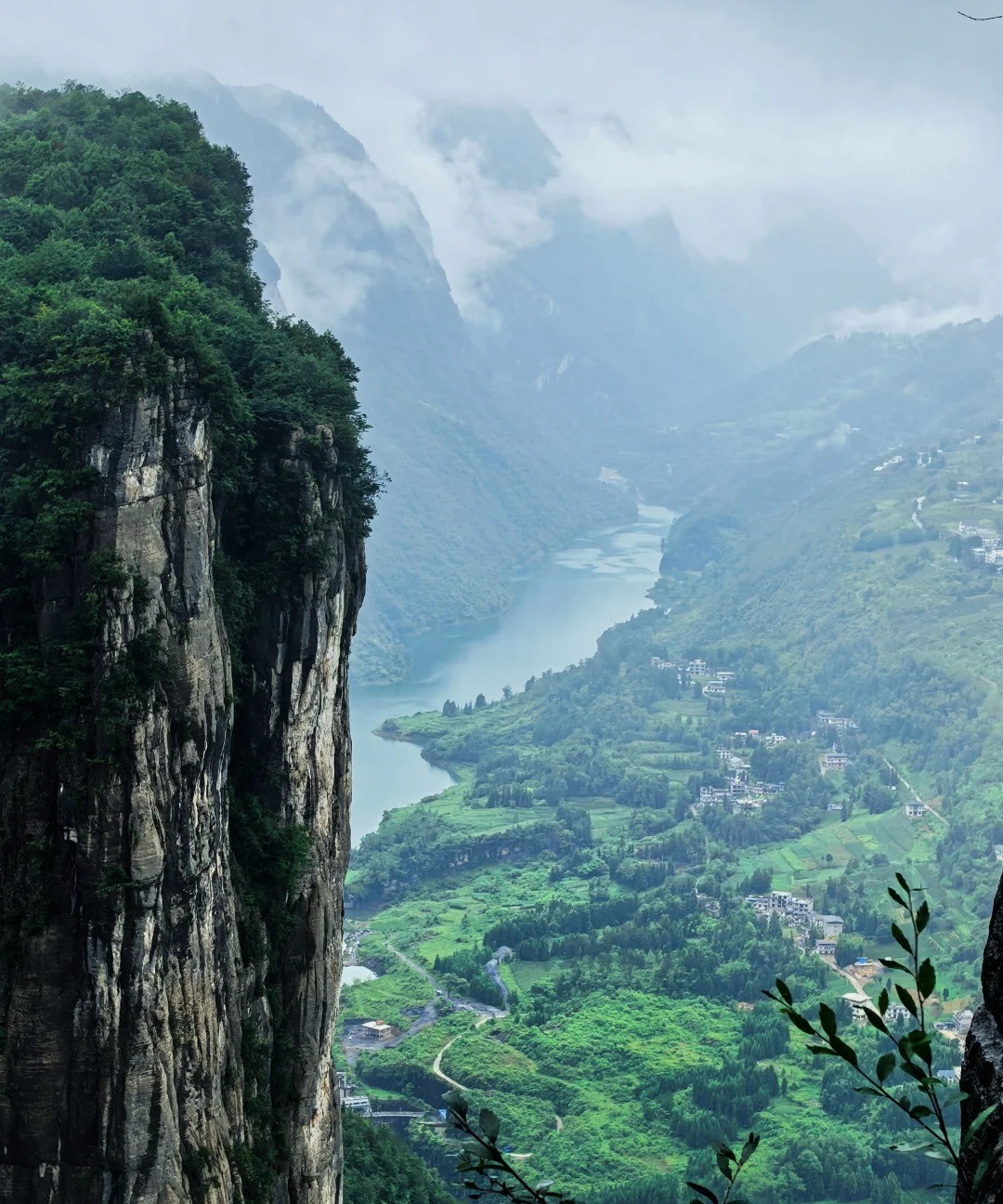
After the dam impounded water, the "danger" of the Three Gorges was replaced by "calm." The once turbulent Qutang Gorge, Wu Gorge, and Xiling Gorge now present a tranquil scene of "high gorges and calm lakes." With the rise in water level, the grandeur of the gorges remains, but the river surface becomes wider and navigation safer. This contrast between "danger" and "calm" is the unique aesthetic value that the Three Gorges Project has bestowed upon the natural landscape.
During construction and operation, the Three Gorges Project has attached great importance to ecological protection. It established the Chinese Sturgeon Research Institute to carry out artificial breeding and release; built a rare plant garden to protect endemic plants in the reservoir area; and implemented geological hazard monitoring and treatment in the reservoir area. The dam itself also adopts several environmental protection technologies, such as energy dissipation and anti-scour design during flood discharge to reduce erosion of the downstream riverbed. Although the project's impact on the ecology is controversial, the series of protective measures it has taken reflect modern engineering's reverence for nature.
The Three Gorges Dam has long transcended the physical scope of a water conservancy project, becoming a symbol of the Chinese nation's spirit of self-improvement and courageous exploration.
Classic One-Day Tour Route: Visitor Center → Transfer to scenic area sightseeing bus → Tanziling (panoramic view) → 185 Observation Platform (close-up view of the dam) → River Closure Memorial Park (review history) → Three Gorges Project Museum (in-depth understanding). The whole tour takes about 4-5 hours.
The Three Gorges Dam, a monument of the century standing on the Yangtze River, showcases Chinese wisdom and strength to the world with its unparalleled scale, exquisite design, and profound and lasting impact. It is not just a tourist attraction but a thick textbook recording the exploration of harmonious coexistence between humans and nature. When you stand on Tanziling and overlook the feat of "cutting off the clouds and rain of Wushan," what you feel will be not only visual shock but also a spiritual baptism.
NEARBY