01Guangzhou is the capit…
Guangzhou is the capital of Guangdong Province; also known as the City of Rams and the City of Ears of Grain, it lies where the Pearl River meets the sea, a warm city that layers more than two thousand years of commercial life onto a contemporary metropolis, where cloud-capped mountains and pearl waters lean on one another all year round amid abundant flowers, and it is also the starting point of the ancient Maritime Silk Road. It administers 11 districts — Yuexiu, Haizhu, Liwan, Tianhe, Baiyun, Huangpu, Huadu, Panyu, Nansha, Conghua and Zengcheng — with 19,101,000 permanent residents at the end of 2025 and a forest coverage rate of 41.6%; the whole city is shaded by banyans and rich in flowers and trees, hence the name "City of Flowers". It lies in the subtropical coastal zone and has a maritime subtropical monsoon climate, warm and humid in all four seasons with a long summer and short winter, suitable for travel almost all year round. Tradition says "Chuting" was its earliest place name; in 214 BCE the Qin general Ren Xiao built the city of Panyu here, later generations regarding this as the beginning of its founding; in 204 BCE Zhao Tuo established the Nanyue Kingdom and made Panyu its capital; in 226 CE the name "Guangzhou" appeared, and thereafter it was long the administrative and commercial center of Lingnan, and the foreign trading port with the longest history in China and the only one never closed. The city has 33 major historical and cultural sites protected at the national level; the Chen Clan Ancestral Hall, the Museum of the Nanyue King, Guangxiao Temple, Shamian and Yongqingfang each have their own appeal, Baiyun Mountain offers high views, and Canton Tower lights up the Pearl River at night. The "pot of tea and two pieces" of morning tea, the winding Cantonese opera, the Spring Flower Market before New Year's Eve, together with the criss-crossing metro and railways, have carried this city's everyday warmth and convenience down through generation after generation.
Guangzhou is the capital of Guangdong Province, set on the northern edge of the Pearl River Delta where the river meets the sea, facing the South China Sea. It is a city that layers more than two thousand years of commercial life onto a contemporary metropolis: the qilou arcades, teahouses, ancestral halls and ancient temples of the old town still keep to their ordinary days, while across the Pearl River the city's new central axis has long since raised tower upon tower. Here it is warm and humid all year round, the whole city shaded by banyans and full of flowers, with something in bloom in every season, and it has been rated an "International Garden City" by the United Nations. In Guangzhou there is no need to hurry: wander beneath the qilou, sit a whole morning in a teahouse, watch the night fall once by the river, and you will slowly come to read it. Its goodness often lies not in any single sight, but in the unhurried ease that flows through the whole city.
Tradition says Guangzhou's earliest place name was "Chuting". In 214 BCE, the Qin general Ren Xiao built the city of Panyu here, which later generations regard as the beginning of Guangzhou's founding; in 204 BCE, Zhao Tuo established the Nanyue Kingdom and made Panyu its capital. In 226 CE, Sun Quan split Jiaozhou in two — historically "the division of Jiao and Guang" — and from then on the place name "Guangzhou" appeared. Afterwards Guangzhou was long the administrative and commercial center of Lingnan, briefly the capital of the Southern Han Kingdom in 917, saw the founding of the Guangzhou municipal government and its formal establishment as a city in 1921, and was liberated in 1949. As early as the Qing dynasty, the Thirteen Factories of Guangzhou reached their height during the "single-port trade" period, with merchant ships coming and going and goods reaching the four seas, making this city a key window on China's foreign trade for a very long time. As one of the first batch of national historical and cultural cities proclaimed by the State Council, Guangzhou's urban site has not moved for more than two thousand years; through the ages its walls were mostly built in the area of today's Beijing Road and Zhongshan Fourth Road, and it is also known as the City of Rams and the City of Ears of Grain.
Today Guangzhou administers 11 districts — Yuexiu, Haizhu, Liwan, Tianhe, Baiyun, Huangpu, Huadu, Panyu, Nansha, Conghua and Zengcheng — with 34 towns and 143 subdistricts, a total area of 7,434.40 square kilometers, and 19,101,000 permanent residents at the end of 2025. The urban terrain is high in the northeast and low in the southwest, with clouds, mountains and pearl waters leaning on one another, the Pearl River threading through the city and its channels crossing and recrossing. In the north the hills run on, and the city's highest peak, Tiantangding, rises 1,210 meters; in the middle, Baiyun Mountain and Yuexiu Mountain sit like two green lungs set into the city. The city's forest coverage reaches 41.6%, and flowers never cease all year, which is why Guangzhou also bears the name "City of Flowers", with flower markets and flower events to be seen the year round.
02Liwan is the corner of…
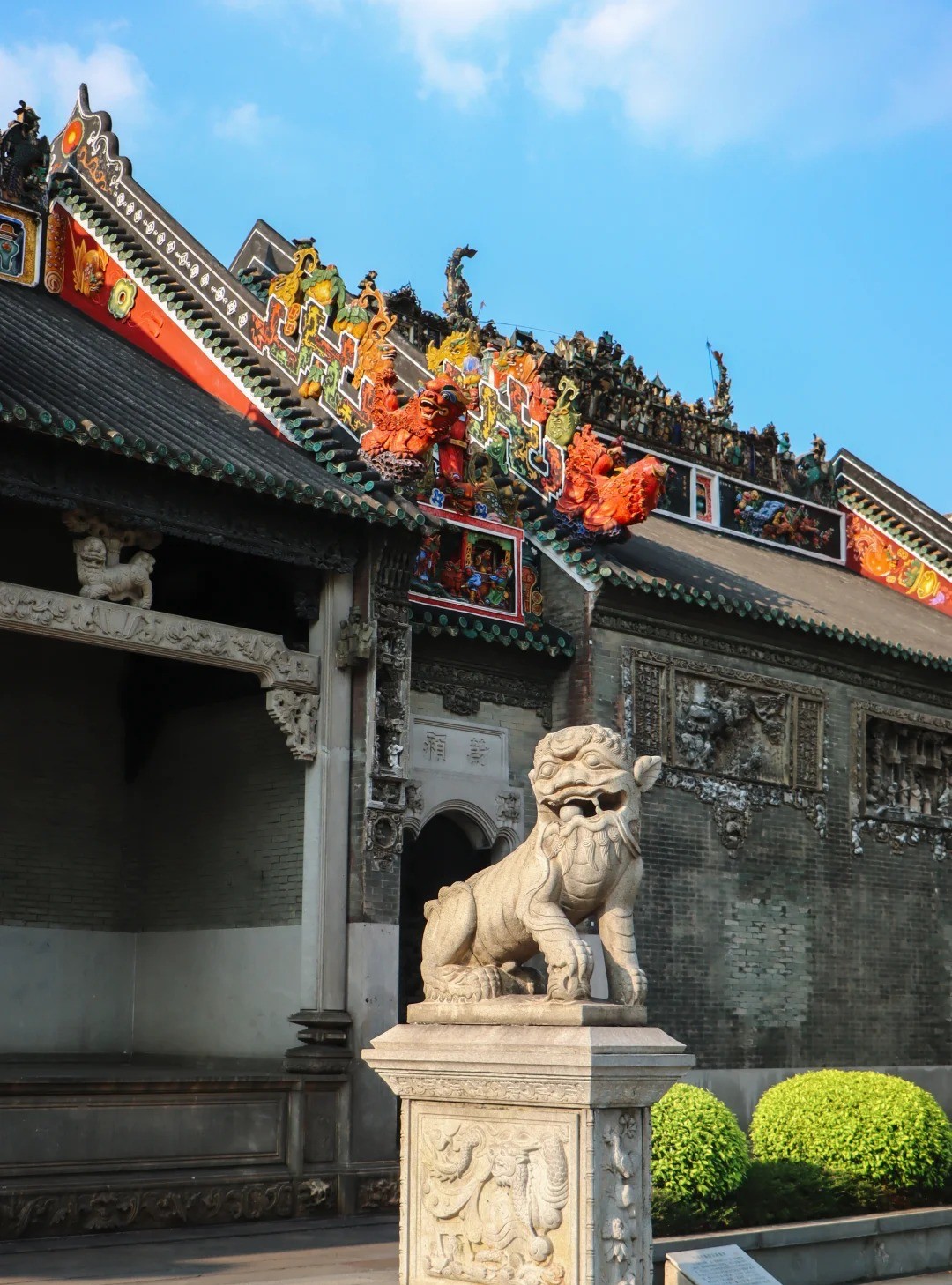
Liwan is the corner of old Guangzhou richest in everyday bustle, and the Chen Clan Ancestral Hall stands here. Completed in the nineteenth year of the Guangxu reign of the Qing dynasty (1893), it is a joint ancestral hall built in Guangzhou with pooled funds by Chen clans from all over Guangdong in the Qing dynasty, and in 1988 the State Council proclaimed it a major historical and cultural site protected at the national level. Inside the hall there are wood carvings, brick carvings, stone carvings, pottery sculpture, lime sculpture, brass and iron casting and painted decoration, all of them; it is praised as the "pearl of Lingnan architectural art", and is the largest, best-preserved and most exquisitely decorated ancestral-hall-style building surviving in China. It is also the site of the Guangdong Folk Craft Museum, where Lingnan craft treasures such as Shiwan pottery, Guangzhou painted porcelain, ivory carving, Yue embroidery and Guangzhou wood carving are gathered under one roof; behind each exhibit is a craft passed down through several generations, well worth viewing slowly.
To know Guangzhou of two thousand years ago, you must go to the Museum of the Nanyue King. In 1983, archaeologists discovered here the tomb of Zhao Mo, the second king of the Nanyue Kingdom, and in 1996 the tomb of the Nanyue King was listed as a major historical and cultural site protected at the national level. It is the largest and only painted stone-chamber tomb of the Han dynasty yet found in the Lingnan region, its chamber preserved in situ; more than two thousand years later one can still glimpse the burial system of the Nanyue king. Many relics were unearthed from the tomb — the gold seal "Seal of Emperor Wen", a green jade horn cup, a tiger tally with inlaid gold inscription and others — each bearing a strong southern flavour; the tomb occupant wore a jade suit of silk-threaded tablets, the only complete jade suit of its kind yet found in China. Today the museum is divided into two exhibition areas, the king's tomb and the king's palace; the former preserves the chamber in situ, while the latter connects to the site of the Nanyue Kingdom's palace offices, where stretches of floor tiles and pond-garden remains tell the city's starting point clearly, so that "two thousand years of Guangzhou" is no longer merely a slogan.
Guangxiao Temple, in the old city of Yuexiu, is a quiet spot in the midst of noise. Guangzhou people often say that "before there was the City of Rams, there was Guangxiao"; the temple site was originally the residence of Zhao Jiande, a king of Nanyue in the Western Han, and was later given up as a temple, proclaimed a major historical and cultural site protected at the national level in 1961, and long known as "the crown of Lingnan Buddhist monasteries". Ancient trees tower within the temple, and the Mahavira Hall, the Sixth Patriarch Hall, the Wind-Banner Pavilion and the Hair-Burial Pagoda are scattered among them. Tradition says that in the Tang dynasty the Sixth Patriarch Huineng held the "wind and banner debate" here and had his head shaved here too, and the Hair-Burial Pagoda holds the hair of his ordination; Bodhidharma's alms-bowl-washing spring and the bodhi tree brought by the Tripitaka master Zhiyao have also made this a witness to Buddhist exchanges between China and abroad. Strolling slowly within, one feels the summer heat and the clamour shut out beyond the walls.
Shamian is a small island on the bank of the Bai'etan stretch of the Pearl River, also known as Shicui Islet. In 1861 Shamian became a British and French concession, and in 1946 the Chinese government formally took it back; in 1996 the Shamian building complex of Guangzhou was included by the State Council in the fourth batch of major historical and cultural sites protected at the national level. The island preserves 169 European-style buildings — the red-brick customs house in British Romantic style, the Gothic Our Lady of Lourdes Catholic Church, the old HSBC bank building in classical revival style and others scattered among them — and its streets follow a "three horizontal, five vertical" layout, praised as a "museum of European architecture". Ancient camphor trees give shade and the river breeze blows softly; today this is a fine place to stroll, look at old houses and take wedding photographs, and it is also the stretch of riverbank that newcomers to Guangzhou most easily fall for.
03West of Shamian
West of Shamian, in the heart of Liwan, is what Guangzhou people call Xiguan. Here whole stretches of qilou arcade streets and Xiguan grand houses are preserved, with their tanglong doors, blue-brick walls and Manchurian windows still in place. Yongqingfang on Enning Road was completed and opened in 2016, using a "repair the old as the old" micro-renovation to keep the texture of the old lanes and alleys; today it is a national 4A-level tourist attraction, one of the first national tourist and leisure districts, and a China Overseas Chinese International Cultural Exchange Base. The quarter gathers master studios of intangible cultural heritage such as Guang embroidery, ivory carving and olive-stone carving, with cafés, bookshops and cultural-creative shops threaded among them, so that old houses and new trends coexist strangely. The Cantonese Opera Art Museum in the district is an important base for transmitting and displaying Cantonese opera; if you tire of walking, you may as well step in and sit a while.
Another thread of the old city runs through Yuexiu. The Zhenhai Tower in Yuexiu Park, with its red walls and green tiles, is a city landmark familiar to Guangzhou people and now serves as a museum; the Five Rams Stone Statue in the park is taken from the legend of the five immortals who rode rams and gifted ears of grain, and has long been a symbol of this city; at the southern foot of Yuexiu Mountain a memorial archway inscribed "Chuting of old" still stands. Not far to the south, the Sun Yat-sen Memorial Hall is an octagonal palace-style building erected to commemorate Dr. Sun Yat-sen, solemn and imposing. Further south still, beneath the Beijing Road pedestrian street, glass covers protect the road surfaces of successive dynasties; the old temple by the street, its incense never ceasing, forms a contrast with the bustling market outside. This stretch of road is Guangzhou's urban vein and cultural vein, and shows best how the old town and the new streets are layered together.
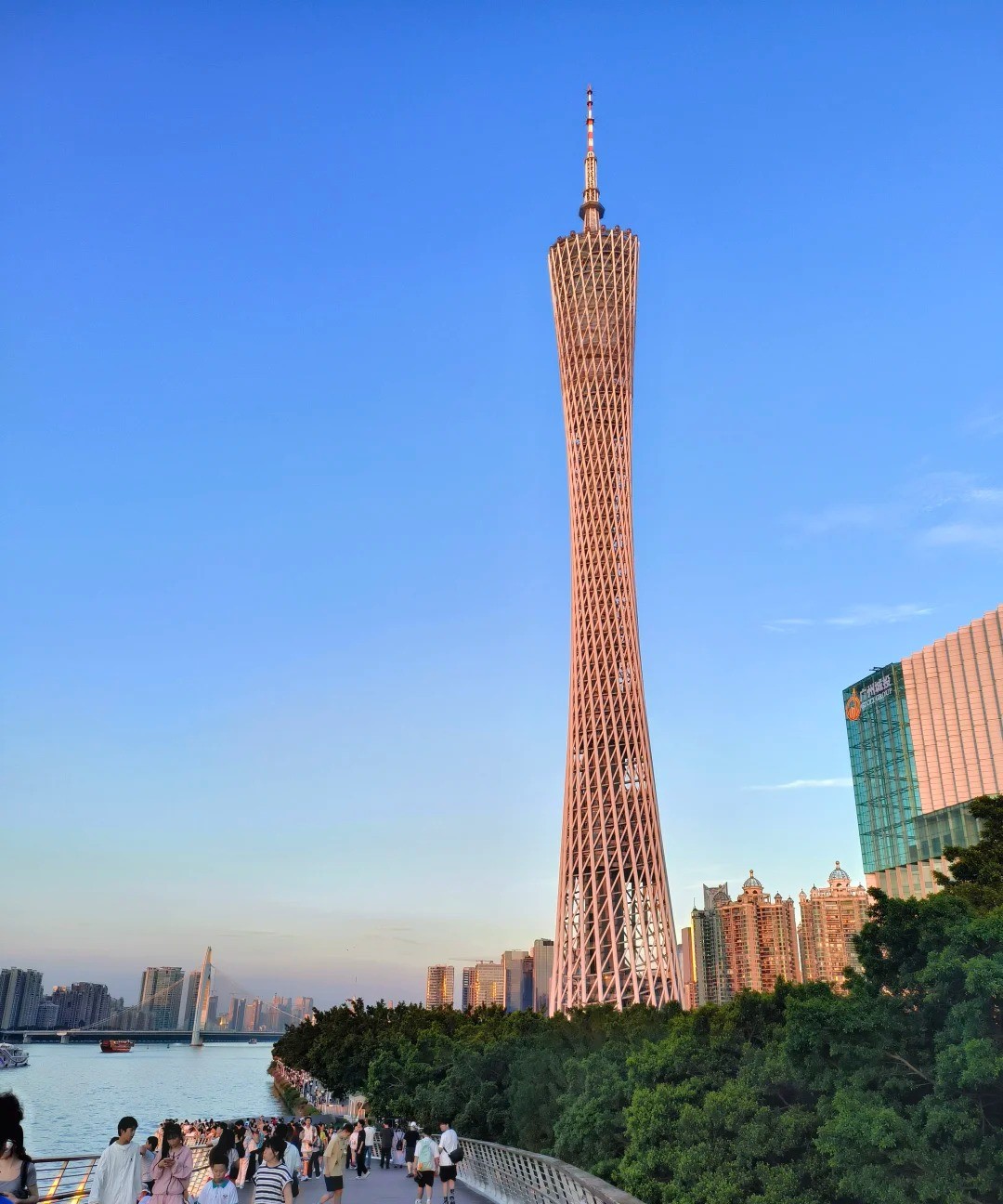
Across the Pearl River, Canton Tower stands at the meeting point of the city's new central axis and the Pearl River landscape axis. It is 600 meters in total height, with the main tower body about 450 meters and the antenna mast 150 meters, wide at both ends and slender in the middle, affectionately nicknamed "Slim Waist"; it is China's first and the world's third tallest sightseeing tower. Canton Tower was completed in 2009, formally opened to the public in 2010, and joined the World Federation of Great Towers the same year; the Huacheng Square below the tower is the best place to view it — by day you can make out the geometric lines of the buildings, and at night the lights flow and shift. Climb the tower to look down on both banks of the Pearl River, or do not climb it — looking up from the riverside is beautiful too, and the stretch of sky around sunset is the loveliest.
If you want a change of air, go to Baiyun Mountain. Since ancient times it has enjoyed the reputation of "the first beauty of the City of Rams"; it is a national scenic area and a national 5A-level tourist attraction, with a total area of 21.8 square kilometers and its main peak, Moxing Ridge, at 382 meters. The trees on the mountain are lush, and after rain clears or in late spring white clouds often wreathe it, which is where the name "Baiyun Mountain" ("White Cloud Mountain") comes from. Climbing slowly along the footpath, at the summit the whole city spreads out below, the Pearl River like a white silk ribbon. Ringed by the urban districts, Baiyun Mountain is an old haunt of Guangzhou people for morning exercise, climbing and flower-viewing, and one of the new "Eight Sights of the City of Rams"; climbing in autumn to watch the afterglow is especially fine, and one gust of mountain breeze dispels the summer heat at once.
04At dusk the Pearl Rive…
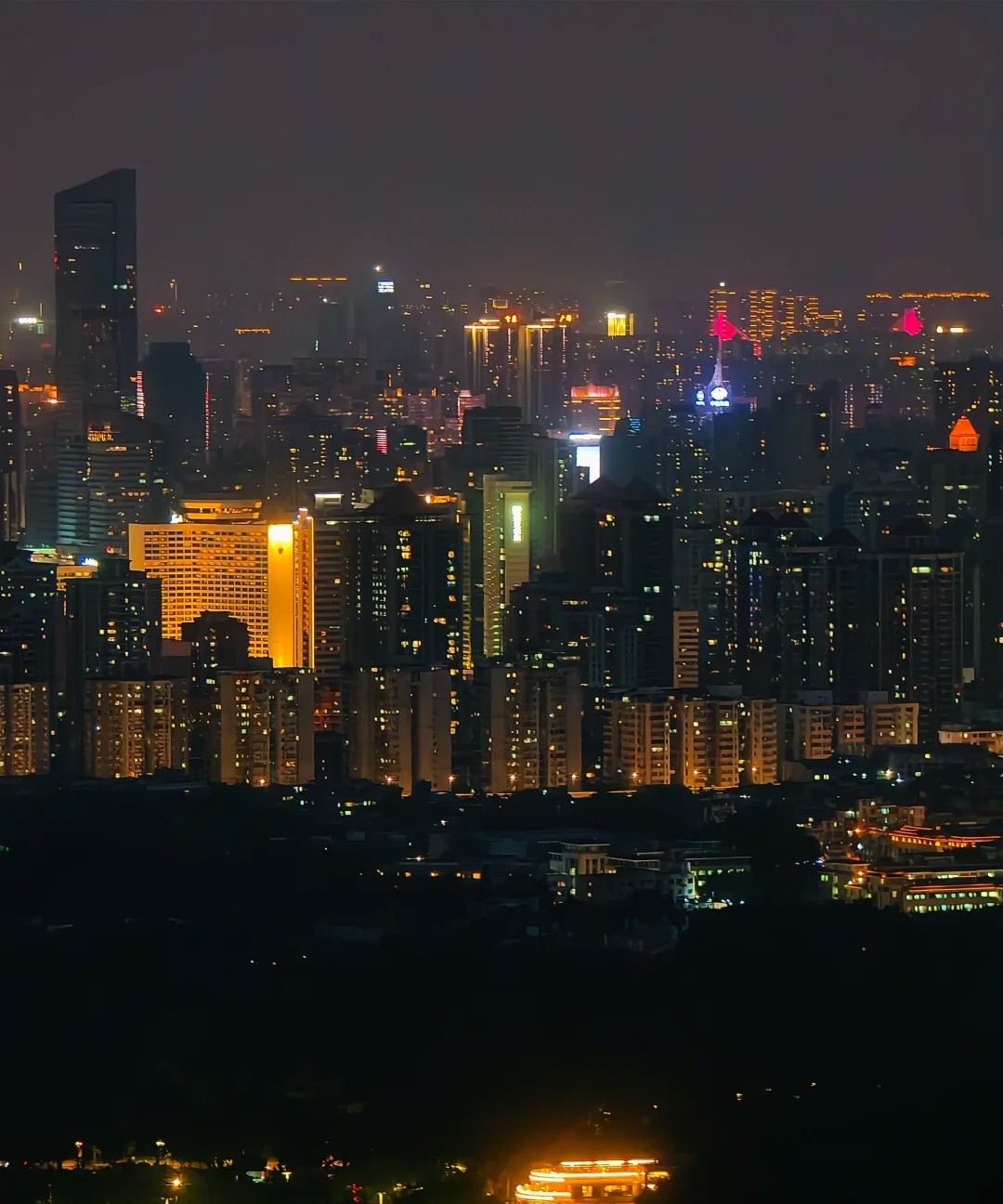
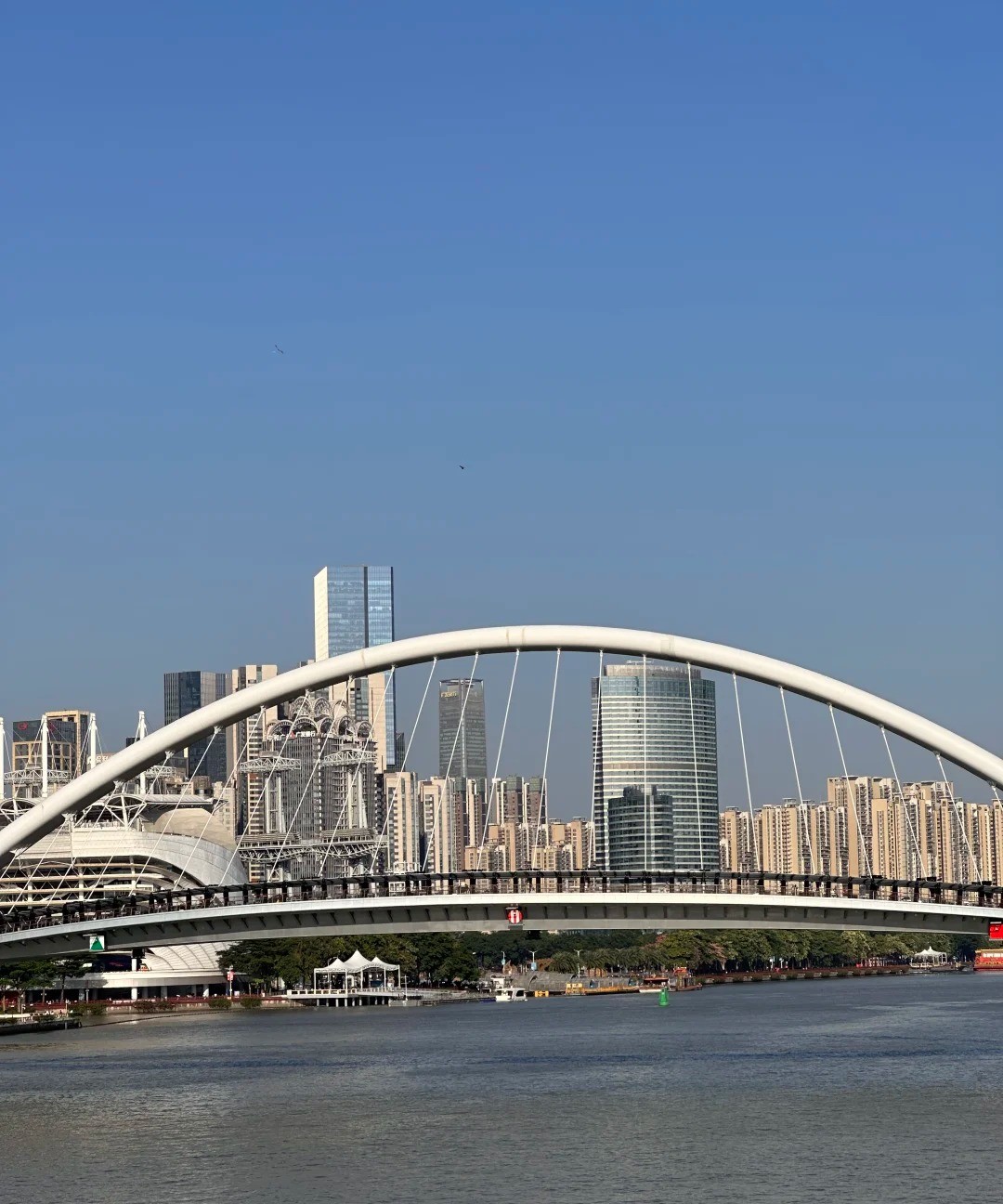
At dusk the Pearl River is at its most moving. The water is broad, and lights on both banks come on one after another; from Bai'etan to the city's new central axis, bridge after bridge and building after building cast flowing reflections on the surface. A night cruise on the Pearl River is an old programme for Guangzhou people entertaining guests: standing on deck in the river breeze watching Canton Tower change colour is the easiest evening to remember Guangzhou by. The waterfront footpaths along the river are also worth a slow walk: by day there are joggers and children flying kites, and at night it is a good time to stroll and sit idly. Many bridges, broad water, long lights — the water has given this city its flowing spirit and also its open character.
A Guangzhou person's day mostly begins with morning tea. In the teahouses of early morning, over "a pot and two pieces", the fragrance of tea and of dim sum twine together. Shrimp dumplings with thin translucent skins, soft barbecue-pork buns, with a pot of hot tea, and one can sit a whole morning; neighbours leaf through newspapers and chat about daily life, and a sitting lasts half a day. The Guangfu tea-drinking custom has been included in the Guangdong provincial list of representative items of intangible cultural heritage, and morning tea originated in the Qing dynasty from tea sheds set up for dock workers to rest and quench their thirst. "Guangzhou Morning Tea Inheritance and Protection Regulations" took effect in 2026, the country's first local regulation made specifically for morning tea, giving this "handmade warmth" an institutional safeguard.
Guangzhou cuisine is an important branch of Yue cuisine, seeking clear freshness and original flavour and eating only what is in season. Even an ordinary meal is often particular, whether blanched or steamed, eating just the taste of the ingredient itself. Guangzhou is China's first city to hold both the titles "Capital of Chinese Cuisine" and "Capital of International Cuisine", and "eating in Guangzhou" has long been one of its loudest calling cards. Street snacks should not be missed either: between sweet and savoury lies the unhurried rhythm of Guangzhou people's lives. Find a small street-side eatery and sit down; watching how the neighbours at the next table order and refill their tea will teach you this city's tastes and temper better than reading a menu.
Guangzhou people love to listen to Cantonese opera. In its early days Cantonese opera was called Guangdong grand opera and praised as the "red bean of the south"; in 2006 it was listed in the first batch of national intangible cultural heritage, and in 2009, jointly nominated by Guangdong, Hong Kong and Macao, it was inscribed on UNESCO's Representative List of the Intangible Cultural Heritage of Humanity. The Cantonese Opera Art Museum on Enning Road in Liwan is an important base for transmitting and displaying Cantonese opera; with silken strings and winding arias, even those who cannot understand the lyrics are often moved by that charm. Beyond Cantonese opera, Lingnan traditional crafts such as Guang embroidery, Guangzhou painted porcelain, ivory carving and Guangzhou wood carving are also passed down in this quarter, and the studios of many craftsmen hide in the lanes of Xiguan — push the door open and you can watch a skill at first hand.
05When Guangzhou people …
When Guangzhou people celebrate the New Year, they must "walk the flower street". The flower markets run from the twenty-eighth of the twelfth lunar month all the way to New Year's Eve; the large and small flower markets of each district open together, and the flower sheds are filled with New Year flowers and potted plants, as crowds shoulder past one another to carry a year's good fortune home. In the Guangfu region there is a saying, "walk the flower street, turn the great fortune"; the Yuexiu West Lake Flower Market is the oldest traditional central flower market, enjoying the fame of a "century-old flower market". In 2021, the Spring Festival "walking the flower street" folk custom nominated by Yuexiu District was included in the fifth batch of the national list of representative items of intangible cultural heritage. Flowers never cease to bloom — the most vivid footnote to the name "City of Flowers", and it also makes one understand why Guangzhou people celebrate the New Year so merrily.
Guangzhou lies in the subtropical coastal zone and has a maritime subtropical monsoon climate, warm and humid in all four seasons with ample light and heat. The annual average temperature is between 21.7 and 23.1 degrees Celsius, the average annual precipitation is 1,923 millimeters, and the average annual number of rainy days is 149; rainfall is abundant, summer is long and winter short, and frost and snow are almost never seen. In spring it is damp and rainy, and flower branches along the streets open layer by layer; summer is hot and long, with typhoons and thunderstorms often calling; autumn is clear and brief, best for climbing and night cruising on the Pearl River; winter is mild, a good time for flower markets and morning tea. Come to Guangzhou with an umbrella and a thin coat, and they will serve you almost the whole year.
Guangzhou is China's "southern gateway", with transport reaching in all directions. It is the junction of many railways including the Beijing-Guangzhou, Guangzhou-Shenzhen, Wuhan-Guangzhou and Guangzhou-Shenzhen-Hong Kong lines, and also the center of civil aviation in South China, making travel to and from everywhere very convenient. To get around the city, the metro is the least trouble: by the end of 2025 Guangzhou's urban rail transit had 805.9 kilometers in operation, of which the metro accounted for 779.9 kilometers, with an average daily passenger volume of 9,332,000 trips, covering almost all the main sights in the urban districts. Bridges and tunnels link the two banks of the Pearl River, and pleasure boats also ply the river. The lively commercial districts and old streets are mostly clustered in the city center; on foot plus by metro, you can cover the best parts.
In Guangzhou, three to four days will let you take in both the old town and the new city at leisure. Give the first day to the old town: in the morning see the Chen Clan Ancestral Hall and Guangxiao Temple, at noon have morning tea in Liwan, in the afternoon stroll Enning Road to Yongqingfang and the Cantonese Opera Art Museum, and in the evening go to Shamian for the river breeze. On the second morning go to the Museum of the Nanyue King, in the afternoon tour Yuexiu Park and Beijing Road, and at night climb Canton Tower or take a boat for a night cruise on the Pearl River. On the third day climb Baiyun Mountain, and after coming down walk around the Huacheng Square area to see the new city's skyline. If you have energy left, pick another day to go to the old water towns of Panyu or the wetland parks on the city's edge, and let your steps and your mood slow a little more.
06Guangzhou is a city th…
Guangzhou is a city that does not hold people at a thousand miles. It has the stillness of ancient temples and ancestral halls, and the clamour of teahouses and street markets; it keeps its old foundation of more than two thousand years, and is also willing to leave room for the grandeur of a tower and a new central axis. Its richness is not on a checklist of sights, but hidden in the shade of the qilou, in the steam of morning tea, in the evening breeze on the river. The fragrance of tea in the early morning, the shadows of trees in the afternoon, the lights at nightfall, spreading out layer by layer — this is what Guangzhou truly looks like. Come to Guangzhou and there is no need to follow a map, and you may as well get lost once: pause beneath the qilou, sit a while longer under the banyan tree, and let the days slow down. Slow your steps, and at some ordinary street corner you will suddenly understand why it has been lively for more than two thousand years and never lost its true colours.