01This city of Zhuhai li…
This city of Zhuhai lies in the south of Guangdong Province, on the west bank of the Pearl River estuary; to the south it is joined to Macau by land and, across the Lingdingyang, is 36 nautical miles from Hong Kong by water, and after the Hong Kong–Zhuhai–Macau Bridge opened it became the only mainland city connected by road to both Hong Kong and Macau. The city administers three districts — Xiangzhou, Jinwan and Doumen — with a land area of 1,725.07 square kilometers and a permanent resident population of 2,543,100, and has 10 national first-class ports in all; it is an important port city and special economic zone of China. Lovers' Road, 55 kilometers long, stretches along the coast and strings together the Zhuhai Fisher Girl and the Zhuhai Grand Theatre; on Hengqin Island there is a national-level tourist resort, the Tangjiawan old town and the New Yuanming Palace keep the charm of Lingnan, and Dong'ao, Wailingding and Guishan islands of the Wanshan Archipelago offer blue seas and silver sands. The coast here lies where salt and fresh water meet, and such seasonal delicacies as Hengqin oysters and Baijiao sea bass are known far and wide, while island routes link city and islands very closely. From the laughter of the large ocean-themed resort to the grey bricks and dark tiles of Tangjiawan, from climbing an island to watch the sunrise to cycling along Lovers' Road to watch the sea, a journey here can always switch freely. Zhuhai has a transitional maritime climate between the southern subtropics and the tropics, with high temperatures all year round, no severe cold in winter and no scorching heat in summer, making it good for travel in all four seasons. This city has both the openness of a port city and the unhurried rhythm of small-town life; whether you come to see the sea or to seek out the past, it is worth slowing down to read it carefully.
Zhuhai lies on the west bank of the Pearl River estuary. To the south it is joined to Macau by land and, with the Lingdingyang between it and Hong Kong, is 36 nautical miles away by water; after the Hong Kong–Zhuhai–Macau Bridge opened, it became the only mainland city connected by road to both Hong Kong and Macau. This city tends its shoreline, greenways and islands with uncommon care: the sky is blue, the sea is wide, the wind carries a salt-damp breath, and walking the streets there is none of the breathless crowding of a great metropolis. The city administers three districts — Xiangzhou, Jinwan and Doumen — with a land area of 1,725.07 square kilometers and a permanent resident population of 2,543,100, so its size is modest and its pace unhurried. It is both a special economic zone and an important port city, with 10 national first-class ports, and the stream of vehicles and people crossing the border never stops. Mountains and sea embracing each other, land and islands facing one another — that is the most immediate impression Zhuhai leaves on a traveler.
Zhuhai's history reaches far back. In the Spring and Autumn and Warring States periods this was the land of Baiyue; in the 33rd year of Qin Shi Huang (214 BC) the Nanhai Commandery was established, and Zhuhai came under its jurisdiction; in the 6th year of Yuanding of the Western Han (111 BC) the Nanhai Commandery was re-established, and Zhuhai belonged to Panyu County. In the 2nd year of Zhide of the Tang (757), Bao'an County was renamed Dongguan County, and a Xiangshan town was set up in what is now the Shanchang area of Xiangzhou District; in the 5th year of Yuanfeng of the Northern Song (1082) a Xiangshan stockade was established, still under Dongguan County. In the 22nd year of Shaoxing of the Southern Song (1152), the Xiangshan stockade was separated from Dongguan County and merged with parts of the coastal lands of Nanhai, Panyu and Xinhui to form Xiangshan County, under Guangzhou Prefecture; from then on Zhuhai long belonged to Xiangshan County. In the Yuan dynasty Xiangshan County came under Guangzhou Route, and in the Ming and Qing under Guangzhou Prefecture. In 1925, to commemorate Dr. Sun Yat-sen, Xiangshan County was renamed Zhongshan County.
Modern and contemporary Zhuhai has shed its frontier edge and become a special zone. In 1953 Zhuhai County was founded, with its county government seated at Tangjia; in 1959 it was once merged into Zhongshan County, and in 1961 its separate status was restored. In 1979 Zhuhai was made a city in place of the county, in 1980 the Standing Committee of the National People's Congress approved the establishment of the Zhuhai Special Economic Zone, in 1983 Doumen County was merged in, in 1984 Xiangzhou District was set up, in 2001 Doumen was made a district in place of the county, and in 2002 Jinwan District was founded, finally forming the three-district pattern of Xiangzhou, Jinwan and Doumen. Today Zhuhai lies in the Guangdong–Hong Kong–Macau Greater Bay Area, with many ports and a lively port economy, and mountain, sea, city and island interweave within the single city, keeping its fishing-village undertone while also growing the modern bearing of a seaside metropolis.
02Lovers' Road is Zhuhai…
Lovers' Road is Zhuhai's most moving line: 55 kilometers long, it stretches along the coast and threads Xianglu Bay, Yeli Island, Gongbei Bay and other scenes into a string of pearls. It was first called Xiangwan Avenue and was given the name Lovers' Road in the mid-nineties of the 20th century. Xianglu Bay, named because fishermen used to come ashore here to worship at the Xianglu Cave on Shijingshan, is the loveliest crescent along Lovers' Road; the seaside bathing beach, the city living room, the Zhuhai Fisher Girl, the seaside park, Yeli Island and the Zhuhai Grand Theatre line the bay in a row, strung into a 'city mountain-sea chain'. In the early morning people jog and walk their dogs; in the evening, when the street lamps come on, cyclists pass by in pairs. When you tire of walking you can sit on the steps at any time and watch the sea, watch the fishing boats come home, watch the clouds roll and unroll — the whole city's romantic air gathers here.
The Zhuhai Fisher Girl statue by Xianglu Bay stands on a huge reef, a pearl at her throat, a fishing net over her shoulders, her trouser legs lightly rolled, lifting a pearl high in both hands. The statue was created by the sculptor Pan He and completed in 1982; it is 8.7 meters high and weighs 10 tons, assembled from 70 blocks of granite, and is the city's landmark; in 2011 it was designated a protected cultural relic of Zhuhai. About the Fisher Girl a beautiful legend has long circulated among the people: it is said that the daughter of the Dragon King of the South China Sea fell in love with a young fisherman of Xianglu Bay, and after many twists and turns finally offered up a precious pearl to the elders. Not far from the statue is the seaside park, its lawns like waves — Zhuhai's first comprehensive cultural and leisure park, carrying the memories of several generations.
Looking out from Yeli Island, two huge 'shells' lie on the sea — that is the Zhuhai Grand Theatre, which people also call the Sun-Moon Shell. It is the only grand theatre in China built on an island, set to the north of Yeli Island and made up of two 'shells', one large and one small, its design inspired by a famous painting. The theatre was designed chiefly by the architect Chen Keshi; work began in 2010, its floor area is 59,000 square meters and its cost 1.08 billion yuan, and it opened to the public on New Year's Day 2017, with sound, lighting, electrics and stage design all first-rate. By day it gives off a half-translucent soft glow in the sunlight; at night lights trace its delicate outline, and across the water it faces the Zhuhai Museum and the Zhuhai Planning Exhibition Hall at a distance. The Haiyun City and the island-ring greenway on the island are fine places to walk and watch the sea.
To see a historical garden, the New Yuanming Palace is worth a visit. It stands at the foot of Shijingshan and covers 1.39 square kilometers; it is a large cultural tourism area that Zhuhai built with great effort to welcome Hong Kong's return, reproducing at one-to-one scale eighteen of the most representative of the forty scenes of the Old Summer Palace in Beijing, and it was completed and opened on the eve of Hong Kong's return in 1997. The eighteen large landscape features inside fall under three themes — classical imperial architecture, Jiangnan classical garden architecture and Western architecture — with halls and pavilions scattered about, and the Western building area re-creating European-style waterworks and terraces. The area ranks among China's first batch of national 4A-level tourist attractions, and visitors often linger in it, walking slowly among winding paths and covered corridors and imagining the garden's former splendor.
03The Tangjiawan old tow…
The Tangjiawan old town shows another face of Zhuhai. It lies on the west side of the Lingdingyang channel of the Pearl River estuary; in the Neolithic period the ancient Yue people already lived here, in the Tang and Song periods northern clans migrated and settled, and in the Ming and Qing it belonged to the Gongchang du of Xiangshan County; in 2007 it was proclaimed a Chinese historic and cultural town. In 1929 it was designated the county seat of Zhongshan County, a model county, and Tang Shaoyi, the first cabinet premier of the Republic of China, returned home to take charge of affairs and planned the duty-free port 'Zhongshan Port'. The town's Gongle Garden was first built in the 2nd year of Xuantong of the Qing (1910) and covers about 34,000 square meters; it was originally Tang Shaoyi's private garden, first named the Xiaolinglong Mountain Lodge, and in 1932 he gave it to the villagers of Tangjia to share; in 2008, together with Tang Shaoyi's former residence and the Wangci Mountain House, it was proclaimed a protected cultural relic of Guangdong Province. The Three Temples of Tangjia, made up of the Shengtang Temple, the Civil and Military Emperor Hall and the Jinhua Temple standing side by side, is a corner of the old town not to be missed.
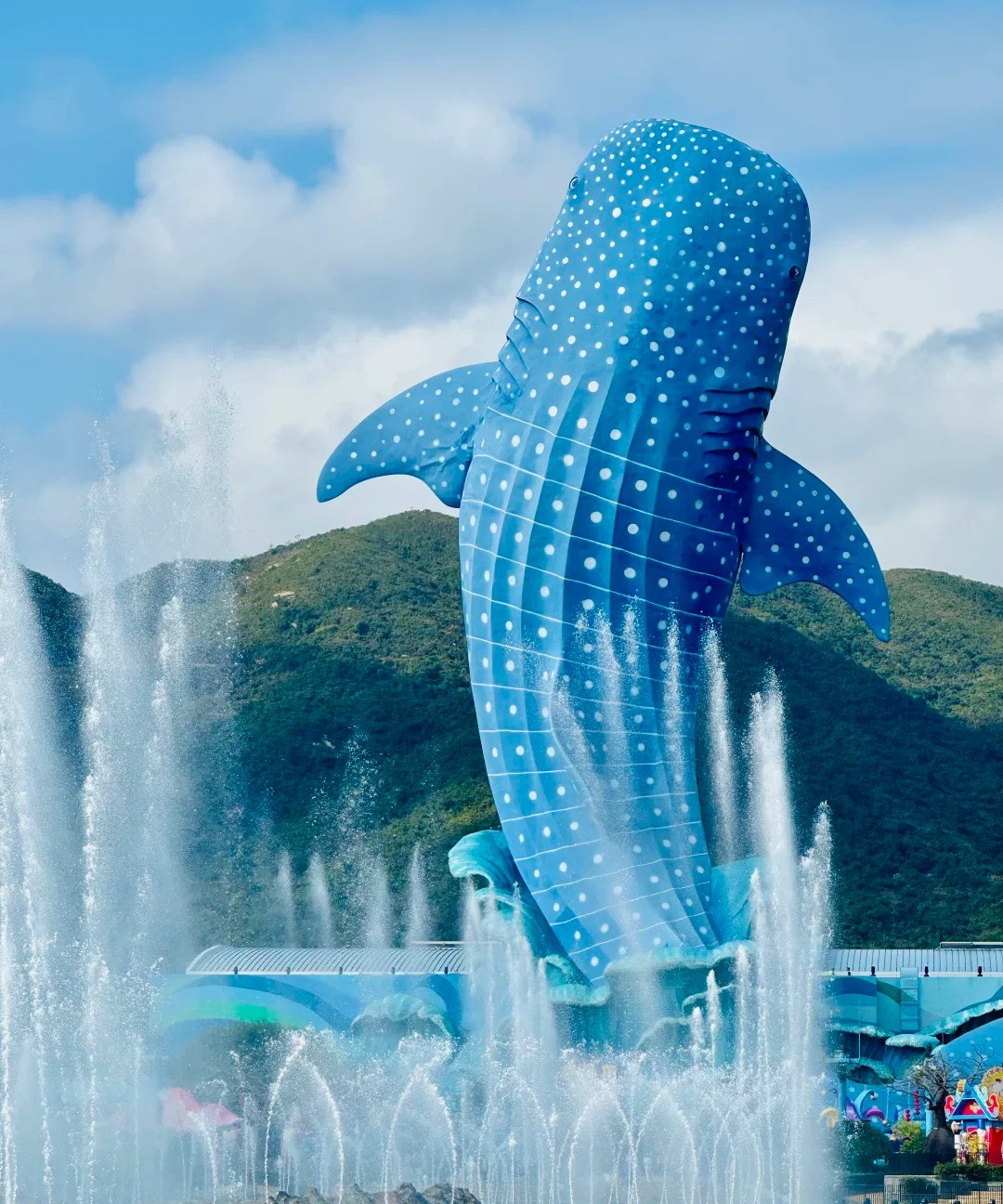
Hengqin is Zhuhai's youngest area. It lies at the southern tip of Zhuhai, separated from Macau by a strip of water and one bridge, and the cooperation zone's implementation area totals about 106 square kilometers. In 2009 the Party Central Committee and the State Council decided to develop Hengqin; in 2021 the 'Overall Plan for the Construction of the Guangdong-Macau In-Depth Cooperation Zone on Hengqin' (Yue-Ao) was published, and the construction of the zone entered a new stage, with integration between Macau and Hengqin accelerating here. The island has a national-level tourist resort, and within the large ocean-themed resort the ocean-themed amusement park, performance venues and resort hotels join into one stretch, a paradise for families; the waterfront greenway and campsite on the island suit a leisurely holiday. On the port side tall buildings stand in rows, facing the skyline of Macau across the water.
Zhuhai's islands are the city's extra gift to travelers. The Wanshan Ocean Development Experimental Zone was approved for establishment by the Guangdong Provincial People's Government in 1998, the country's first local comprehensive ocean development experimental zone, and it administers three organic towns — Guishan, Dan'gan and Wanshan. Its sea area covers 4,567 square kilometers, its islands total 88.87 square kilometers, it has 147 islands large and small with a total island coastline of 289 kilometers, and Guishan, Dawan Shan, Dong'ao, Wailingding and Dan'gan islands are inhabited. The sea temperature here averages 22.7 °C, suitable for yachting, sailing, diving and sea fishing; the islands are thickly vegetated, with a forest coverage rate as high as 64.29 %. Dong'ao, Wailingding and Guishan islands are all rated national 4A-level tourist attractions.
Dong'ao Island is known for its beaches and its mountain-sea boardwalk. The island is thickly vegetated and mild in climate; Nansha Bay has white sand and is famed as a 'diamond beach'; the island has an outlying seaside boardwalk and a cantilevered glass viewing platform, and climbing the forest walkway along the hillside gives a view over the whole island's sea. Visitors can also go sea fishing, tour around the island and gather at the ebb tide, or quietly watch a sunset by the beach. In 2023 Dong'ao Island was selected among the nation's 'harmonious and beautiful islands', and a number of resort hotels have been built on it, making it one of the top choices for an island holiday in Zhuhai.
04Wailingding Island is …
Wailingding Island is surrounded by sea on all sides, with fantastic rocks and beautiful water, and it has both mountains and water on the island, a typical island scene. It lies in the eastern sea area of Zhuhai and is a place the international shipping lanes in and out of the South Pacific must pass. The island's Lingding Peak is 311.8 meters above sea level; from the summit you can look down over the whole island's mountains and sea, and on clear days even gaze far toward Hong Kong. Walk slowly along the 'Jade Belt' boardwalk that girdles the waist of the island, reefs on one side and sea on the other; Shuangzi Pavilion beach is a good spot to watch the sunset. Here too is the island with Zhuhai's only diving base, where you can dive to explore coral reefs and schools of fish. In 2017 Wailingding Island successfully became a national 4A-level tourist attraction, and it has also been rated one of 'China's ten most beautiful islets'.
Guishan Island takes its name from the heroic warship 'Guishan', commemorated for its landing operation; its land area is 6.92 square kilometers. The island has the site of the Wanshan naval battle, a cliff-inscription boardwalk, the Wen Tianxiang Square and the Guishan Lighthouse Park, and rows of stone-built homestays line the coast, while the long terraced fishing-village settlement has a distinctive charm. Rent an electric scooter for a spin around the island, and in the evening watch the sea turn gold by the lighthouse — a most pleasant way to pass the time. Guishan Island is a national 4A-level tourist attraction; in 2023 it was selected among the nation's 'harmonious and beautiful islands', and in 2025 Guishan town also won the title of 'National Civilized Town'.
Besides the outlying islands, Zhuhai's near shore also has many places to go. In the northwest of Qi'ao Island in the High-Tech Zone lies the Guangdong Zhuhai Qi'ao–Dan'gan Island Provincial Nature Reserve, with a total wetland area of 5,103.77 hectares and about 500 hectares of mangroves — the largest single-area artificially restored mangrove in China, and an important staging post on migratory bird routes, where flocks of migratory birds often rest in autumn and winter; the greenway on the island is screened among the mangroves, and a stroll on the wooden boardwalk lets you watch egrets in flight. Farther west, in Doumen, water-town villages are scattered about, their traditional dwellings and ancestral halls well preserved, keeping the old days of Lingnan rural life in place.
When it comes to food, Zhuhai is a city of 'freshness' in the truest sense. Hengqin oysters are plump and sweet, known for being 'first big, second fat, third white, fourth tender, fifth crisp'; winter and spring are the best seasons, and a local saying goes, 'from the winter solstice to Qingming, the oyster flesh is fat and glistening'. Its production technique was inscribed on Zhuhai's municipal list of intangible cultural heritage in 2016. Zhuhai has farmed oysters by hand for nearly two hundred years; its coast lies where salt and fresh water meet and the water is rich, making it a natural oyster farm. Eating oysters is best done freshly dredged, freshly shucked and freshly cooked; iron-plate grilling, charcoal grilling and plain steaming each have their own taste, and eaten with the sea breeze, the mouth fills with sweetness.
05Doumen's river fish is…
Doumen's river fish is not to be missed either. Around Baijiao town in Doumen District sea bass is abundant; the Baijiao sea bass is a nationally protected product of geographical indication, with a farming area of about 42,500 mu and an annual output of about 160,000 tons, and the whole industry chain's output value reaches 18.6 billion yuan. Its flesh is fine and tender and its flavor delicious, and plain steaming brings out its true taste best. The Shangheng yellow-sand clams around Lianzhou are a local seasonal delicacy, and their traditional technique has been inscribed on the intangible cultural heritage list; Doumen's water-network country also teems with all kinds of river fish, with fat crabs and tender fish prepared each in its own careful way. If you want Cantonese dim sum, a pot of hot tea and Yue-style dim sum in Zhuhai's old teahouses will while away a standard Lingnan morning.
Zhuhai has a transitional maritime climate between the southern subtropics and the tropics, with a marked alternation of winter and summer monsoons, high temperatures all year round and occasional spells of cold, and small annual and daily temperature ranges. The city is rich in solar energy and heat: in 2025 the sunshine duration was 1,808.1 hours, rainfall 2,001.2 millimeters, and the average temperature 23.7 °C. In spring and summer the sea breeze is mild and moist, and the flowers and trees along the streets bloom in succession; summer is cool on the islands, good for swimming and playing in the water, though the sun is fierce and sunscreen is a must; in autumn the sky is clear, a fine time to watch the sea and trace the bridge's outline; and winter has none of the bleakness of the north, the temperature warm and mild, the very season for slowly strolling the old town and carefully tasting seafood. There are occasional typhoons in summer and autumn; just keep an eye on the weather before setting out.
Reaching Zhuhai from outside is quite convenient. During the fourteenth Five-Year Plan period Zhuhai Airport's routes reached as many as 89 cities, and the airport connects directly to the city area; the first phase of the Jinhai Highway Bridge and the second phase of the Zhuji intercity railway were completed and opened in 2024, and the Zhuji intercity line links Zhuhai Station with Hengqin and Zhuhai Airport in one line, with the fastest run from Zhuhai Station to Zhuhai Airport taking 36 minutes. The Hong Kong–Zhuhai–Macau Bridge, 55 kilometers long, officially opened to traffic in 2018 and leads directly to Hong Kong and Macau, and the Zhuhai highway port operates customs clearance around the clock. The city's expressways now total 259 kilometers and its open railways 117.8 kilometers, and the "five horizontal and six vertical" high-grade and express road network makes intercity travel still more convenient.
Within the city, buses and taxis cover the main sights, while shared bikes best suit this city's rhythm — with the sea breeze for company, you can stop by the roadside at any time to take in the view. To reach the islands you take a boat from Xiangzhou Port or the Hengqin wharf, and the Wanshan district now has 20 island routes, with about 38 sailings in the low season rising to 62 in the high season. Island schedules are much affected by weather, so it is best to check the sailings before setting out, and around holidays to make arrangements early. Into the city and out of it, onto the islands and back off them, Zhuhai's transport always keeps the distance between mountain and sea very short.
06Zhuhai suits slow trav…
Zhuhai suits slow travel, and in three or four days you can comfortably walk a route that takes in both mountain and sea. Give the first day to the Lovers' Road line, cycling all the way from Xianglu Bay, seeing the Zhuhai Fisher Girl and going onto Yeli Island to see the Sun-Moon Shell, then to the Tangjiawan old town for a coffee and a stroll through the old streets; on the second day go to Hengqin and give the whole day to the ocean-themed resort; on the third day head out to sea and onto an island, choosing Dong'ao or Wailingding for an overnight stay, hiking, swimming and eating seafood; on the fourth day return to the city area and add the New Yuanming Palace, giving the itinerary a layer of historical depth beyond the sea and modernity. If you have only two or three days, choose one of the islands and the old town; the scale is just right, and there is no need to rush.
Zhuhai is a place that does not hurry to prove anything to anyone, but quietly keeps watch over the ebb and flow of the tides at the Pearl River estuary. From the laughter of the large ocean-themed resort to the unchanging sound of the waves on Wailingding Island, from the lovely scenery of Lovers' Road to the grey bricks and dark tiles of Tangjiawan, this city — the only one in the country whose urban landscape as a whole was selected among China's 'Forty Best Tourist Attractions' — can always leave different memories for different people with its vastness and its attentiveness, its modernity and its tradition. What truly enchants may not be any single sight, but the everyday feeling of seeing the sea without meaning to when you take a walk, and of a sky that is especially blue when you look up. That is perhaps Zhuhai's romance — unshowy, yet everywhere.