01Baoding lies in the ce…
Baoding lies in the central part of Hebei Province, leaning against the Taihang Mountains to the west and facing Baiyangdian, the pearl of North China, to the east; named for "defending the great capital and bringing peace to the realm", it has long been called the "southern gateway" of the capital and is a National Historical and Cultural City designated by the State Council, and in the Qing dynasty it was the capital of Zhili Province. The city administers 4 cities, 5 districts and 15 counties and has 2 further development zones; Dingzhou City is a pilot for direct provincial administration, and the three counties of Xiong, Rongcheng and Anxin are administered by Xiong'an New Area. Its total area is 19,300 square kilometers (excluding Dingzhou City and the three entrusted counties) and its permanent population is 9.2426 million; its center is 140 kilometers from Beijing, within the Beijing-Shijiazhuang-Tianjin golden triangle, and it has joined the Beijing-Tianjin-Hebei "one-hour transport circle". Baoding is the leading city of Hebei Province in cultural relics, with 59 major historical and cultural sites protected at the national level, 74 protected at the provincial level and 18 items of national intangible cultural heritage; the Zhili Governor-General's Office bears the praise that "one governor-general's office is half a portrait of Qing history", and the Ancient Lotus Pond is one of China's ten famous gardens. The Western Qing Tombs in Yi County were inscribed on the World Heritage List in 2000, and Yesanpo in Laishui and Baishishan in Laiyuan are both national 5A-level tourist attractions; the Xushui Caohe donkey-meat processing technique is on the provincial intangible cultural heritage list of Hebei, and the aroma of huoshao drifts through the streets and lanes, where landscape and culture are both rich. The city has a warm-temperate continental monsoon climate with four distinct seasons; spring and autumn are the best times to travel, while summer in the mountains and winter snows over the tombs each have their own charm - a place worth slowing down to savor.
Baoding lies in the central part of Hebei Province, leaning against the Taihang Mountains to the west and facing Baiyangdian, the pearl of North China, to the east. Its name, meaning "to defend the great capital and bring peace to the realm", has earned it the long-standing title of the capital's "southern gateway". The city sits in the Beijing-Shijiazhuang-Tianjin golden triangle and forms the strategic hinterland of Xiong'an New Area; its center is 140 kilometers from Beijing, 145 kilometers from Tianjin and 125 kilometers from Shijiazhuang. Close to four major aviation hubs - Capital International Airport, Beijing Daxing International Airport, Tianjin Airport and Shijiazhuang Airport - it has joined the Beijing-Tianjin-Hebei "one-hour transport circle" and "half-hour living circle", making it a key regional central city of the Beijing-Tianjin-Hebei region.
Baoding is a famous cultural city with more than 3,000 years of history. It was once the seat of the capitals of the Yan and Zhongshan states and of the Later Yan; under the Yuan it was Baoding Route, under the Ming Baoding Prefecture, and under the Qing the seat of the Zhili Governor-General's Office, and after liberation it was twice the capital of Hebei Province. It has long borne the name "a bulwark north of Ji and a screen south of the capital". Today Baoding administers 4 cities, 5 districts and 15 counties and has 2 further development zones; Dingzhou City is a pilot for direct provincial administration, while the three counties of Xiong, Rongcheng and Anxin are administered by Xiong'an New Area. The whole city covers a total area of 19,300 square kilometers (excluding Dingzhou City and the three entrusted counties) and has a permanent population of 9.2426 million. Its administrative map has changed many times, yet the city's place in the capital region has never shifted.
A weighty history has left the city a rich inheritance. Baoding now has 59 major historical and cultural sites protected at the national level and 74 protected at the provincial level, making it the leading city of Hebei Province in cultural relics; its folk culture is just as flourishing, with 18 items of national and 99 items of provincial intangible cultural heritage. From government offices to academies, from tombs to mountain passes, the remains of each age spread out one after another along the foothills of the Taihang Mountains and across the plains, forming a visible corridor of history. For travelers, what moves most about Baoding is precisely that the marks of time are not locked away in display cases but scattered through the lanes and the hillsides, to be met as soon as you lift your feet - one step carries you from an ordinary alley into a few hundred years of the old days.
02In the heart of Baodin…
In the heart of Baoding's old city, beside West Yuhua Road, the Zhili Governor-General's Office stands as quietly as ever. It is the best-preserved provincial-level government office of the Qing dynasty in China today, built in the seventh year of the Yongzheng reign (1729) and covering more than 26,000 square meters; in 1988 the State Council named it a major historical and cultural site protected at the national level. The whole complex is divided by two night-watch lanes into an eastern, a central and a western route, each laid out as a series of courtyard compounds; along the central route the Great Hall, the Second Hall, the official residence and the inner chambers unfold in order, restored and displayed according to Qing official regulations to recreate the governor-general's conduct of government, his councils and the life of his household, and it bears the praise that "one governor-general's office is half a portrait of Qing history". Walking into this compound of gray walls and gray tiles, you can almost touch the rules and dignity of the Qing bureaucracy, while the carved stones of the western stele corridor silently fill in the rest of the building's story.
Through the Qing dynasty the office spanned 187 years and eight emperors; 74 men held the post of governor-general of Zhili across 99 terms, and such famous officials as Tang Zhiyu, Li Wei, Fang Guancheng, Zeng Guofan, Li Hongzhang and Yuan Shikai all presided here. Because Zhili lay in the capital region and shielded the capital, the post of governor-general carried great weight and could only go to a trusted minister, and the business conducted in the office was always bound up with the politics of the court. Today the restored displays and special exhibitions in the museum present the duties of the Zhili governors-general and the regional history of Zhili, so that walking through the rooms is like following the spine of Qing politics from beginning to end.
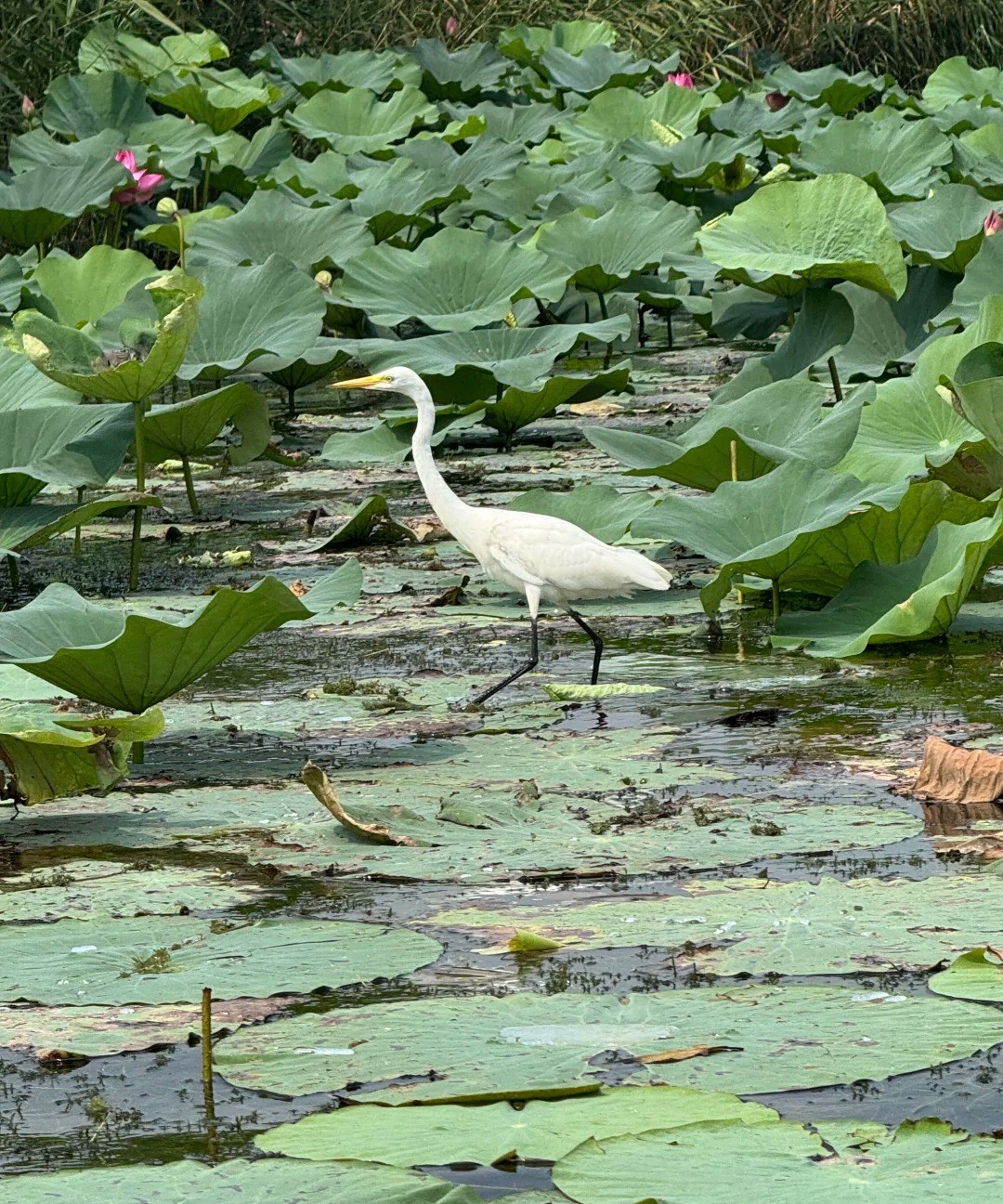
A short walk from the governor-general's office brings you to the Ancient Lotus Pond. The garden was originally called Xuexiang Garden and was first laid out in the Yuan dynasty; in 1227, when Zhang Rou rebuilt the city of Baozhou, he led water into the city and built a garden beside it, and it has now endured for eight hundred years. Known as a "city Penglai", it is a major historical and cultural site protected at the national level and was once listed among China's ten famous gardens. The garden covers 30,000 square meters in all, of which the water surface takes up 7,900 square meters; a lotus pond lies at the center with pavilions and towers ranged around it, and countless old stelae and inscriptions, the ink of many generations set into the corridor walls, keep the pool quiet company. When the lotus blooms in summer, leaves reaching the sky mirror the old buildings, a scene with the airy, clear freshness that is peculiar to gardens of the north.
The Ancient Lotus Pond became truly famous throughout the land because of the Lianchi Academy. In the eleventh year of the Yongzheng reign (1733), the governor-general of Zhili, Li Wei, received an imperial order to found an academy in the garden, and it became the highest seat of learning in Zhili during the Qing; from 1745 the garden's halls were converted into a temporary palace, creating the twelve scenes of the Lianchi temporary palace, among them Spring Noon Slope, the Ten Thousand Volumes Tower and the Pianliu Cave. The academy lasted 170 years, gathering famous teachers and producing notable pupils; the Qianlong Emperor visited it four times and bestowed plaques and poems, and in the Guangxu years it opened classical studies and promoted new learning, setting a new fashion for a generation. Today the garden houses the Lianchi Academy Museum, where stelae and old traces survive, a place suited to slow walking and slow reading.
03Heading southwest out …
Heading southwest out of the city, in the sea of forest below Yongning Mountain in Yi County, lies another heavyweight legacy of Baoding - the Western Qing Tombs. This is the last imperial tomb complex of the Qing dynasty, begun in 1730 and completed in 1915 after 185 years of construction, which produced 14 tombs in succession and formed an 83-square-kilometer tomb area centered on the tombs and supported by a temporary palace, the Yongfu Temple and other structures. Buried here are four emperors - Yongzheng, Jiaqing, Daoguang and Guangxu - together with empresses, consorts, princes and nobles, 80 people in all. The layout of the Tai Mausoleum, the carved nanmu dragons of the Mu Mausoleum and the bronze beams and iron columns of the Chong Mausoleum each have their own appeal, while the stone statues and the spirit way line up one after another among ancient pines and cypresses, solemn and grand.
The value of the Western Qing Tombs has been recognized in stages: in 1961 they were listed among the first batch of major historical and cultural sites protected at the national level; on November 30, 2000, as part of the Imperial Tombs of the Ming and Qing Dynasties, they were inscribed on the World Heritage List; and in 2020 the Ministry of Culture and Tourism rated them a national 5A-level tourist attraction. Ancient pines grow thick inside and around the tomb area, which has been praised as a natural oxygen bar where you can breathe deeply; the soft light of spring and autumn makes it an ideal time to photograph the old buildings and the pine woods, while after snow in winter the golden glazed tiles under a thin white cover give the year's most tranquil scene. A visit to the Western Qing Tombs deserves the better part of a day; driving in and out is more relaxed, and at dusk, when the visitors disperse, the wind in the pines and the calls of birds shut the noise outside the mountain gate for you.
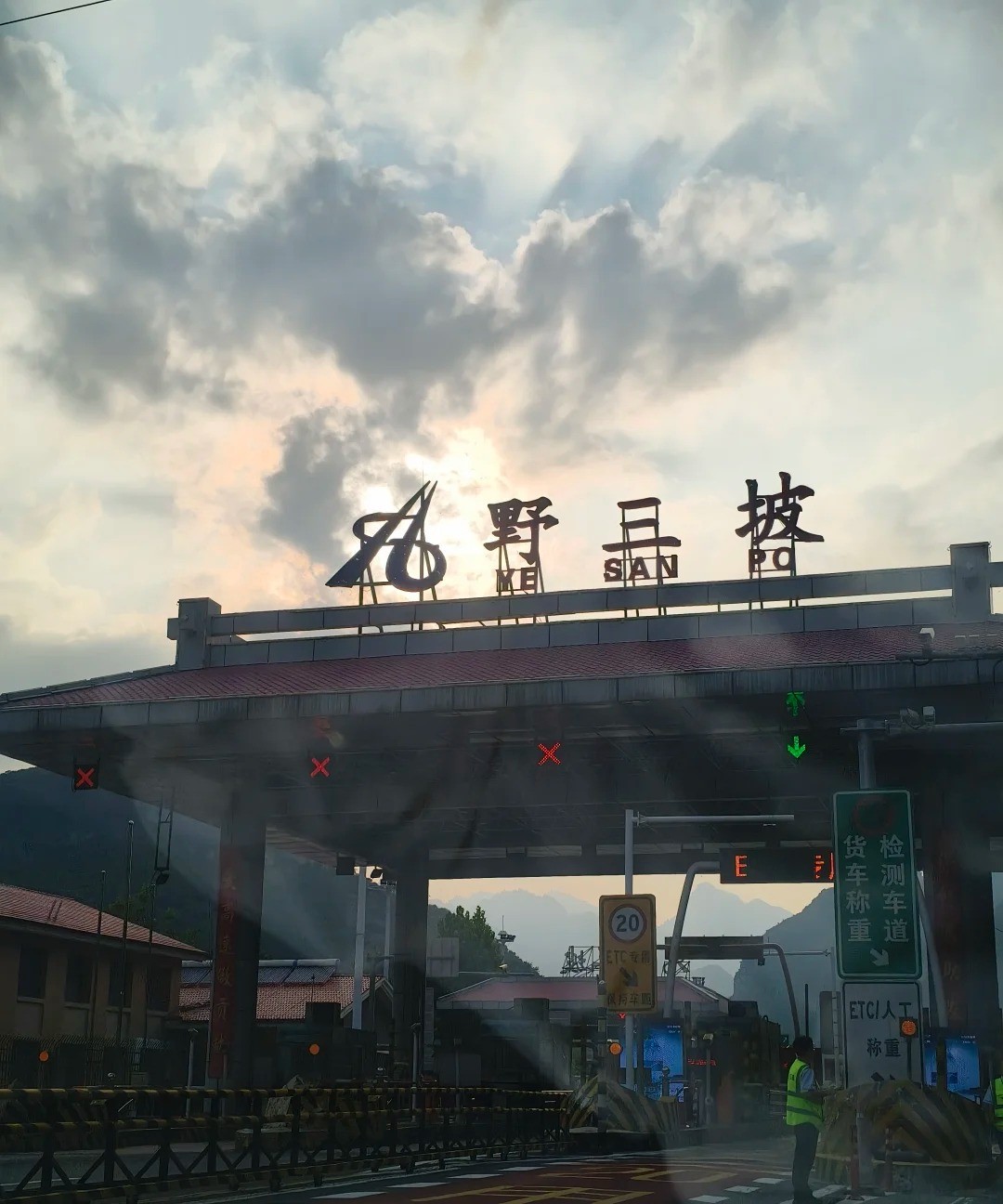
The mountain scenery is found at Yesanpo in the northwest of Laishui County. This scenic area lies where the Taihang Mountains meet the Yan Mountains, covers 498.5 square kilometers in all and is about 110 kilometers from the Beijing urban area; it is a national 5A-level tourist attraction and a global geopark. Geological movements over hundreds of millions of years have carved gorges, cliffs and curious springs here, concentrating the grandeur of the Taihang and the grace of the Yan; flowers in spring, coolness in summer, red leaves in autumn and ice and snow in winter make it a rare all-season destination around the Beijing-Tianjin-Hebei region, and for nearby visitors a single weekend is enough for the round trip.
The core sights of Yesanpo each have their own character. Bailixia, the Hundred-Li Gorge, is a well-known canyon landscape in China: its three gorges run 105 li in total, and such geological wonders as "One-Line Sky" and "Tiger's Mouth" are astonishing to see, with sheer cliffs closing in and waterfalls linking clear pools, so that summer's heat vanishes as soon as you step inside. Longmen Tianguan was once a place armies fought to hold and still preserves a group of Ming-dynasty cliff inscriptions. The main peak of Baicaopan rises 1,983 meters above sea level and has long been called "the green pearl of the Taihang Mountains". The Yugu Cave Spring runs about 1,800 meters. The Juma River cuts through the area, joining the beauty of a "little Guilin on the capital's outskirts" with the thrill of rafting. Staying a night in a guesthouse at the foot of the mountains, walking the gorges by day and falling asleep to the sound of the stream is the choice of many visitors.
04Also in the Taihang Mo…
Also in the Taihang Mountains, 15 kilometers south of Laiyuan County town, Baishishan offers a different mood. Its slopes are largely white marble, which gives the mountain its name; the main peak rises 2,096 meters, and it boasts "three summits, six terraces, nine valleys and eighty-one peaks". Its core marble peak forest is the only landform of its kind in China, the pinnacles like pillars, sails and bamboo shoots, with sheer cliffs laid across and mist and cloud drifting through the gullies all year round, and seas of cloud surging after rain in summer and autumn. Baishishan was approved as a national geopark in 2002 and newly rated a national 5A-level tourist attraction in 2017. Walking the plank roads along the cliffs and looking down on the peak forest is an experience seldom found in the mountains of North China.
Baiyangdian has long been called the pearl of North China. The three counties of Xiong, Rongcheng and Anxin, in whose territory the lake district lies, are now administered by Xiong'an New Area, so the travel content of this water town is given under the Xiong'an New Area entry and will not be repeated here. The red memories inside and around Baoding, on the other hand, deserve a journey of their own: Baoding is the birthplace of the work-study movement in France, Baoding Military Academy was China's first modern regular army academy, and such red classics as Keep the Red Flag Flying, Tunnel Warfare, Five Heroes of Langya Mountain and Little Soldier Zhang Ga all take this land as their setting - modern upheavals and the years of resistance all have their concrete marks here, and walking the lanes you can still touch the lingering warmth of those days.
At night the old city offers another Baoding accent. Baoding laodiao, also called laodiao bangzi, grew out of the popular tunes sung at rural flower fairs around Baiyangdian; by the Daoguang and Xianfeng years of the Qing it had taken on the rudiments of opera, and it takes its name from the early practice of the sheng and jing role types singing the laosheng melody together. Its singing belongs to the banqiang metrical style, plain and stirring, robust and generous, carrying the generous, tragic strain of the old Yan and Zhao lands, and it most often tells the legends of emperors and ministers and of heroes from the wilds. In 2008 Baoding laodiao was inscribed on the second batch of the national intangible cultural heritage list. The city's humanistic spirit reaches beyond the stage: a famous city of sports champions, Baoding has produced 27 world champions, among them Guo Jingjing and Wang Han.
Baoding's signature taste is donkey-meat huoshao. This snack holds a place in the city's food culture almost equal to a city emblem: the pastry, fresh from the oven, is golden and crisp, and when it is filled with richly savory braised donkey meat, the flavors of meat and wheat burst on the tongue at the same moment. Its origins can be traced: the Caohe donkey-meat huoshao originated in Caohe Town in Xushui District, and old local records show that Xushui's small donkey meat was already famous in the Yongzheng years of the Qing. Folk tradition holds that in the Song dynasty the grain-barge guild and the salt guild quarreled over a wharf; the grain-barge men slaughtered and stewed the donkeys they had captured and tucked the meat into huoshao to stave off hunger, and from this grew the custom of eating donkey meat. Another tale says the Kangxi Emperor once came here in disguise to taste it and could not forget it after returning to the palace.
05The craft has an offic…
The craft has an official standing: in 2013 the Xushui Caohe donkey-meat processing technique was inscribed on the list of representative items of provincial-level intangible cultural heritage in Hebei. Traditional Caohe donkey meat calls for choosing the animal by "looking, touching, walking and asking" and cutting the carcass into 16 pieces such as rib meat and shank; the meat is then stewed in a great pot of stock that is replenished and enriched from batch to batch. The whole process has 4 stages and 25 steps, and once the meat is cooked it is left in the pot, sealed under hot oil and steamed overnight, so that the flavor soaks fully in. The huoshao itself is made of unleavened dough, first griddled and then baked until it is golden all through, only then filled with meat. A pot of old stock and a crisp huoshao look simple, but all the skill lies in the heat and judgement of long practice.
Beyond the huoshao, Baoding's table is far from monotonous. The noodles and pickles of farm kitchens on the plains, the dried mountain produce of the Taihang, and the homely stews of ordinary lanes all take their turns in the restaurants of the old city; the breakfast stalls of early morning and the night markets after dark are good places to feel the rhythm of local life. A bowl of hot porridge with a freshly baked huoshao, or half an afternoon whiled away in a teahouse on the old street, and the pace of travel slows of itself. On market days and temple-fair days the food is livelier still - an index of the place more vivid than any written description. For these everyday flavors, it is better to taste as you go than to seek out shop after shop, leaving the choice to the day's appetite and mood.
Baoding lies in a warm-temperate continental monsoon climate zone with four distinct seasons: spring is dry and windy, summer hot and rainy with rain and heat in the same season, autumn bright and brisk, and winter cold and dry. The urban area has a long-term average temperature of 13.4 degrees Celsius, a January average of -4.3 degrees Celsius and a July average of 26.4 degrees Celsius, with an average annual precipitation of 498.9 millimeters concentrated in the months of June to August. The difference in feel between the mountains and the plains is marked: the western mountains are cool in summer and a fine place to escape the heat, while the eastern plains are dry and cold in winter, best visited through the city's cultural sights and indoor exhibitions. When planning a trip, Baoding is most comfortable in spring and autumn.
Baoding's transport strengths are written into its location. The Beijing-Tianjin-Hebei "one-hour transport circle" and "half-hour living circle" make travel between Beijing and Baoding especially easy, and the surrounding airports and seaports give long-distance visitors a variety of ways in and out. The sights of the old city are relatively close together, and the Zhili Governor-General's Office and the Ancient Lotus Pond are within walking distance of each other; the outlying scenic areas such as Yesanpo, the Western Qing Tombs and Baishishan are farther away, so driving is the most flexible option and time should be allowed. Visitors using public transport can transfer at the city's passenger hubs to buses for the various counties and districts, checking the schedules before setting out. Whether you head southwest into the mountains to the tombs or northwest through the gorges and up the river, the road runs past mountains, rivers and villages in succession, and the journey itself is part of the scenery.
06For an itinerary
For an itinerary, a single day is best given to the old city: in the morning take in the Zhili Governor-General's Office and the Ancient Lotus Pond, spend the afternoon wandering the old lanes and alleys, and end at dusk in a huoshao shop. With two days you can set aside a whole day for the Western Qing Tombs, or head north into the mountains for the gorges and waterfalls of Yesanpo. With 3-4 days you can string the city, the Western Qing Tombs and either Yesanpo or Baishishan into one route and pack both the mountains and the tombs, the city and the gardens, into your bag. Families traveling with children will find the plank roads and karst caves of the geoparks more appealing than exhibition halls, while visitors who prefer the humanities may want to look more slowly at the academy inscriptions and the office displays. Baoding's sights are scattered between mountains and valleys, so weighing them against your interests beforehand suits the trip better than trying to see everything.
Baoding is not a noisy destination; its virtues ask you to slow down and take them in. At dawn in front of the governor-general's office, early-rising citizens air their birds and drink tea; in the afternoon on the waters of the Lotus Pond, sunlight shines through the lotus leaves; at dusk below Yongning Mountain, the wind in the pines and the evening glow settle together into the Yi River. More than 3,000 years of urban history have not been turned into a specimen but have become the smell of huoshao in the streets, the laodiao melodies on the stage and the wind on the mountain paths. When you walk from the office to the tombs, and back from the gorges to the old city, you will understand that what the city truly means to say is the original aspiration of its name - to defend the great capital and bring peace to the realm; and what it brings peace to is also the footsteps and the mood of every visitor.