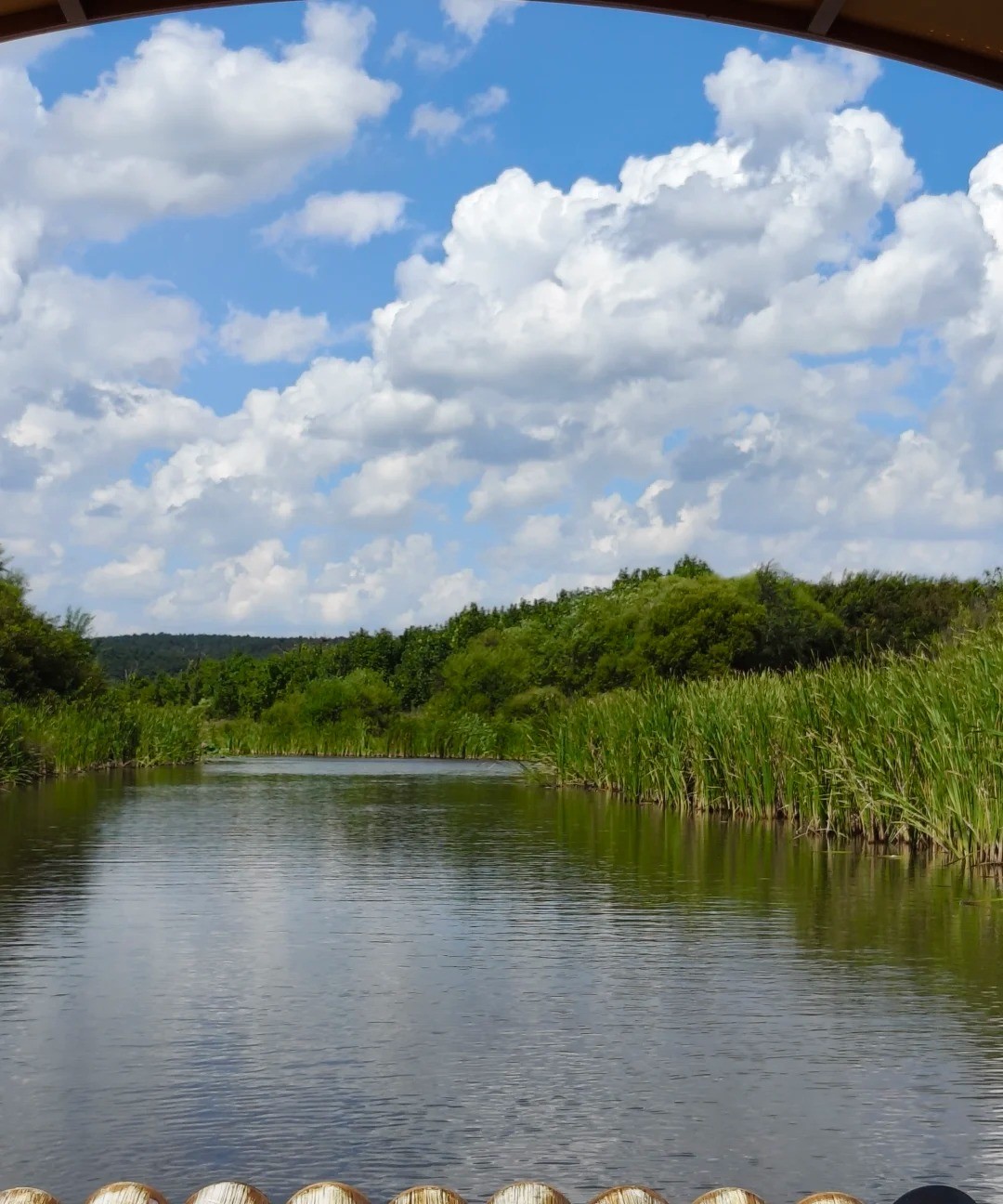
01Changchun is the capit…
Changchun is the capital of Jilin Province, set in the heart of the Songliao Plain on the banks of the Yitong River — a city wrapped in forest and river, long praised as the "Motor City," the "Film City" and the "Forest City," and the birthplace of New China's automobile industry and film industry. It covers a total area of 24,744 square kilometers and had a permanent resident population of 9.105 million at the end of 2025, administering seven districts — Chaoyang, Nanguan, Kuancheng, Erdao, Luyuan, Shuangyang and Jiutai — three county-level cities under its administration, namely Yushu, Dehui and Gongzhuling, and Nong'an County. The terrain is level, with plateau land in the urban area making up about 70% of the total, and the Yitong River running south to north through the eastern part of the city. History has left two marks here: Changchun Subprefecture was established in 1800 and raised to Changchun Prefecture in 1888; in modern times Manchukuo made the city its capital and renamed it "Xinjing," leaving behind rows of early-modern buildings, and the Museum of the Imperial Palace of Manchukuo stands on the old palace where Puyi, China's last emperor, lived as the puppet emperor of "Manchukuo." Today the city is at once the quiet of the Museum of the Imperial Palace of Manchukuo and the green of Jingyuetan, with its 96.38 square kilometers of forest and 5.3 square kilometers of lake, along with the classic images of New China's cinema in the Changchun Film Studio Site Museum. The average annual temperature here is 4.6 degrees Celsius, the four seasons are distinct, and the long snow season makes it a fine place to enjoy ice and snow; Guo Bao Rou, pork with blood sausage and other authentic Jilin dishes, along with Korean ethnic flavors, add a touch of everyday warmth to the journey.
Changchun is the capital of Jilin Province and the political, economic and cultural center of the province. It lies in the middle of Northeast China, in the heart of the Songliao Plain — a city with convenient transport and four distinct seasons. It covers a total area of 24,744 square kilometers and had a permanent resident population of 9.105 million at the end of 2025, administering seven districts (Chaoyang, Nanguan, Kuancheng, Erdao, Luyuan, Shuangyang and Jiutai), three county-level cities under its administration (Yushu, Dehui and Gongzhuling) and Nong'an County. First-time visitors to Changchun often remember it first for being "big and flat": the streets are broad and straight, and the city spreads out over the plain, open and unforced, with no mountains blocking the way and no sense of being hemmed in. Broad streets, rows of trees and large parks make up the face of the city at its first and most enduring. It does not try to catch the eye with strange peaks or perilous waters; instead it lays comfort across its roadways and plants it beneath the street trees.
Spread out a map and Changchun's landforms are not complicated. The southeastern part of the urban area is low hills and ridges, mostly between 250 and 350 meters above sea level; the city proper is mainly plateau plain, with plateaus accounting for about 70% of the total area, the ground sloping gently, and nearly 80% of the urban area sitting on slopes of less than 10 degrees; to the southwest, around Datun and Fanjiatun, a few volcanic cones rise above the undulating plain. Rivers are the city's other network of veins. The Yitong River runs south to north through the east of the city, dividing it into two banks; the rivers that flow through Changchun belong to two great basins, those of the Songhua River and the Liao River, and there is also a closed drainage area in the northwest of the territory. The hills are not high and the waters are not swift, and it is this gentle terrain that has raised Changchun's unhurried character and given the city room to spread out at ease. When it rains, the water follows the gentle ground into the river channels; when the freeze comes, the whole plain falls quiet like a sheet of paper spread out.
Changchun did not rise early as a city, yet it carries a weight of history. Before the Qing established administration here, the land was the pastureland of the Gorlos Front Banner of Mongolia, and displaced people from inside the passes reclaimed land along the Yitong River and gradually formed villages. In 1800 the Qing government set up Changchun Subprefecture at Xinlicheng on the east bank of the Yitong River, appointing a subprefectural magistrate, in what was called "borrowing land to establish administration"; the name came from the nearby village of Changchunbao. In 1825 the seat of Changchun Subprefecture moved north to Kuanchengzi, which quickly grew from a market town into the center of a reclaimed district. In 1888 Changchun Subprefecture was raised to Changchun Prefecture. In the twentieth century its fate turned sharply: Manchukuo made the city its capital, renamed it "Xinjing" and left behind rows of early-modern buildings; Changchun was liberated in 1948, and in 1954 the People's Government of Jilin Province moved here, after which Changchun became the capital of Jilin Province. In little more than a hundred years this city on the plain grew from a market town in a reclaimed district into a provincial capital — a twisting road, and one well worth pondering.
02In Changchun
In Changchun, the Museum of the Imperial Palace of Manchukuo is a stop no visitor can go around. It stands in Kuancheng District, a museum built on the site of a palace — a palace-site museum erected on the old court where Aisin-Gioro Puyi, the last emperor of China, lived while serving as the puppet emperor of "Manchukuo," and a witness to the fourteen years of Japanese colonial rule over Northeast China. The museum protects an area of about 250,500 square meters, with a building area of 137,000 square meters and more than 30 sites open to visitors, including 47,000 square meters of exhibition space; among them are the original-state displays of the courts, such as the Jixi Building, the Qinmin Building and the Tongde Hall. Step inside, and Western beds stand alongside Chinese screens, air-raid shelters and former prison cells remain, and a sense of oppression hangs between the red walls and yellow tiles. It was founded in 1962 and rated a national 5A-level tourist attraction in 2007; today it is at once a National First-Class Museum, a Major Historical and Cultural Site Protected at the National Level and a National Patriotism Education Demonstration Base.
Against the weight of the Imperial Palace of Manchukuo, Jingyuetan is Changchun's other face. This scenic area lies in the southeast of the city, covering a total area of 96.38 square kilometers, of which 5.3 square kilometers is water and more than 96% is forest, and it enjoys a reputation as the "pearl of the green sea" and the "urban oxygen bar." It began as planted forest and a reservoir, and today its main touring route links sights such as the Goddess Square, the reservoir dam, the forest bathing ground, the China Vasa Museum and the Bisong Jingyue Tower; visitors can ride a sightseeing bus around the loop or stroll slowly along the forest paths. In spring the new green comes up, in summer the shade blocks the sun, in autumn the woods are dyed layer on layer, and in winter all is plain and bare — each season has its own thing to see. It is not far from the city center, yet it leaves the city a whole expanse of green to breathe deep in, and whoever walks in wants to stay a little longer.
Jingyuetan has deep ties to ice and snow. Each winter the Vasa International Ski Festival is held here, and a China Vasa Museum was set up in the park especially to record this romance with ice and snow. Once the lake freezes over, snow sculptures, snow slides and snow tubing are all on offer, and laughter fills the freezing air. In summer it becomes a place for the city to cool off, with temperatures in the woods a few degrees lower than in the city proper; runners and cyclists thread along the lakeside road with the wind and birdsong in their ears. The people of Changchun treat it as a natural gymnasium too, coming at dawn and dusk to walk and jog — long since a part of daily life. For visitors, choosing a day of good weather and renting a bicycle for a slow ride along the lakeside road is the best way to feel the ease of these woods.
Film lovers will mostly put the Changchun Film Studio Site Museum on their must-see list. It stands on Hongqi Street in Chaoyang District, restored on the principle of "repairing the old as the old" while keeping the original "Man'ei" buildings fully intact, and it opened in 2014. Walking into the old studio grounds, you find a group of landmark buildings of the film industry — soundstages, dubbing stages and film-processing workshops — fully preserved, with manuscripts, props and old equipment quietly on display. The Changchun Film Studio, praised as the "cradle of New China's cinema," was founded in 1945 and has since produced, filmed and dubbed more than 3,600 films of every kind, a great many classics that have influenced generations of viewers. In 2020 the Changchun Film Studio was added to the fourth batch of the National Industrial Heritage list. A walk around here is to see the founding chapter of New China's cinema from beginning to end.
03Changchun's name as th…
Changchun's name as the "Film City" is written in the play of light elsewhere too. The Changying Century City tourist area turns film special effects into attractions you can try with your own hands, letting visitors step onto a set and see how an effect is made; the Changchun World Sculpture Park, meanwhile, sets sculptures from around the world among lawns and lake water, with open green space on one side and sculptures of every shape on the other — a fine place for a slow walk and a close look. Both, together with the Jingyuetan scenic area, have been rated national 5A-level tourist attractions. The city's character thus gains a touch of the artistic: film-character sculptures scattered along streets and in parks have folded the mark of cinema into everyday streetscapes, and they make it clear why people call Changchun the "Film City."
To read Changchun's daily life, you may as well walk slowly through the city. The streets are broad, old buildings and commercial districts alternating along both sides; Nanhu Park is a microcosm of residents' life, its lake wide and open, with people walking, boating and admiring lanterns in every season. The Guilin Road area is young people's territory, packed with snack stalls and shops of every kind, the whole street fragrant by evening. In the old districts of Nanguan and Kuancheng hide many long-established restaurants that have been open for years, while farmhouse eateries around Jingyue and Lianhuashan keep to other, more homegrown Northeast China flavors. The city's rhythm is not fast — buses drift slowly through their stops, old people practice tai chi in the parks, children chase kites — and the warmth of life rises from just these plain scenes.
Changchun lies in a mid-temperate semi-humid climate zone with four distinct seasons; its average annual temperature is 4.6 degrees Celsius, average annual precipitation 567 millimeters, and its average frost-free period about 145 days. Spring here comes late, dry and windy; summer is warm and rainy but has few truly hot days; autumn is bright and brief, with a wide swing between day and night temperatures; winter is long and cold, with a long snow season — a fine time to admire ice and snow and try snow sports. Precisely because the seasons differ so much, the same Changchun seems almost like several different cities in different months, and every visit meets a different scene.
When it comes to eating, Changchun has a "cuisine ID card" of its own, and that is Jilin cuisine. Jilin cuisine prizes being "nutritious, natural, green and healthy," with a rich, full flavor led by salt and umami, solid ingredients and generous portions; it inherits the bold generosity of Northeast China cooking while also taking in the refinement of cuisines from elsewhere and the fastidiousness of the Manchu people's cooking. Among its signature dishes, Guo Bao Rou (Crispy Sweet-and-Sour Pork, Northeast Style) is crisp outside and tender within, sweet-sour and appetizing; pork with blood sausage is tangy and cuts the richness; snow-coated sweet bean paste is made by wrapping bean paste in egg white; and chicken stewed with mushrooms and smoked pork with flatbread are the homely best of the black soil. These flavors do not come from nowhere — they have been slowly simmered out of the black soil's produce and several hundred years of accumulation, and one bite tastes the produce of this plain and the solid warmth of northeastern hospitality.
04Changchun is also a ci…
Changchun is also a city where many ethnic groups live together, and the flavors of the Korean ethnic group (Chaoxianzu) have taken deep root here. A bowl of icy cold buckwheat noodles (naengmyeon) goes down and most of the summer heat melts away; bibimbap arrives at the table still sizzling in its stone bowl, and once the chili paste is stirred in, a toasted crust forms at the bottom. Come summer, the barbecue stalls in every street and lane become the city's standard-bearers of everyday life: skewers turned over charcoal, dusted with cumin and chili powder, dipped in a sweet-sour sauce, wrapped in perilla leaves with slices of garlic and served with a bowl of dough-drop soup — that is a table where people open their hearts. A few skewers of grilled meat, a flask of wine and a table of idle talk, lively until late at night — that is the people of Changchun's most straightforward way of expressing life.
The places to find food each have their own role. Guilin Road is a food heaven for young people, crowded with snacks, simple Korean-style meals and specialty shops; the Hongqi Street and Chongqing Road area covers proper meals, snacks and home-style light fare, so shopping and eating can be done in one stop; in the old lanes of Nanguan and Kuancheng are rooted Jilin restaurants that have been open for twenty or thirty years, the old flavors passed down through local generations. The early-morning market is another kind of bustle — fresh vegetables and fruit, stomach-warming snacks — and a single "what would you like to eat?" is the most grounded start to a day in Changchun.
Changchun's external transport is quite convenient. Changchun Longjia International Airport lies east of the city proper and contains Longjia Station on the Changchun–Hunchun intercity railway; from Longjia Station high-speed trains run directly to Changchun Railway Station and Changchun West Railway Station, and passengers can transfer between the railway and the airport through an underground passage. After landing, most people choose to take the intercity train into the city first and then transfer to the metro or a bus to their lodgings — the whole trip is not roundabout. Changchun Railway Station is also the hub of the city's integrated transport, now linked with Light Rail Line 3, Metro Line 1 and dozens of bus routes, so that leaving the station at once connects you to the city's public transport network.
Getting around within the city is mainly by rail transit and bus. Metro Line 1, Metro Line 2 and Light Rail Line 3 string together the railway stations, the main commercial districts and some scenic areas, and the bus network is wide-ranging with affordable fares. For visitors, treating rail transit as the trunk and walking as the supplement will generally get you smoothly back and forth between the Imperial Palace of Manchukuo, Jingyuetan, Nanhu Park and the Changchun Film Studio Site Museum. In winter, be mindful of icy roads; when heading out early to nearby sights such as Jingyuetan, allow enough travel time, and don't forget to wear a hat and gloves and keep a pocket close to the body for your camera and phone.
05If time is short
If time is short, you might arrange things like this. Leave the first day to history and the city: in the morning go to the Museum of the Imperial Palace of Manchukuo and spend the better part of the day seeing the original-state court displays and a few themed exhibitions, walking room by room past the Jixi Building, the Qinmin Building and the Tongde Hall; in the afternoon return to the city proper and stroll along the lake at Nanhu Park, watching locals row boats and take the air; in the evening go to Guilin Road, find a small restaurant, order a plate of Guo Bao Rou with a bowl of cold buckwheat noodles (naengmyeon), and slowly digest the day's impressions. The pace of this day is not tight — walking as you look, you can get a rough sense of Changchun's past and its daily life.
Give the better part of the second day to Jingyuetan. In spring and summer, cycle or hike along the lakeside road and watch forest and lake alternate; in autumn see the woods dyed layer on layer, the lake like a calm gemstone; in winter go skiing or snow tubing and have some fun in the snow. At noon eat a meal of northeastern farmhouse cooking near the scenic area — iron-pot stew and wild mountain vegetables, steaming hot — and return to the city proper in the afternoon. If you are interested in film, you can give the third day to the Changchun Film Studio Site Museum: after seeing the old studio grounds, walk a little more in the Changchun World Sculpture Park or the Changying Century City tourist area to round off the trip.
Each of Changchun's four seasons has its own look. In spring apricot and lilac blossoms open one after another, and the city is steeped in a faint fragrance; in summer the shade is dense, a good time to escape the heat; in autumn the ginkgoes dye the streets gold under a high, clear sky; in winter, under heavy snow, the whole city is quiet and bare. Whatever the season, it does not win by heavy makeup but is like a steady old friend, laying out its best things in ordinary days for you to discover slowly. For just this reason, Changchun is a city worth coming back to again and again — each visit yields a different flavor.
Winter in Changchun deserves special mention. The long snow season turns the city into an ice-and-snow playground; the Vasa International Ski Festival at Jingyuetan draws skiers from far and wide, and the ice lanterns and snow sculptures in the city proper light up the winter nights. Button up your coat and walk on the snow, the crunch underfoot, your breath quickly scattering in the cold air, then duck into a steaming restaurant for a bowl of hot soup — that contrast from cold to warm is the taste unique to a northern winter. Outside is a world below zero, inside are piping-hot dishes, and between the one cold and the one hot, winter suddenly is not so hard to bear.
06Such is Changchun: a c…
Such is Changchun: a city that packs the toughness of industry, the play of cinematic light and the green of forest into one and the same plain. It is not loud, and it does not try to please, yet it always manages to be remembered in some unguarded moment — perhaps the sweet-and-sour of a plate of Guo Bao Rou, perhaps the coolness of a sea of forest, perhaps nothing more than a snow-covered street stretching straight into the distance. After you leave, you will probably still recall its unhurried steadiness, and that plain, solid warmth that belongs to the north. The wind of the north is hard, but the people of Changchun are warm.