01Hangzhou is the capita…
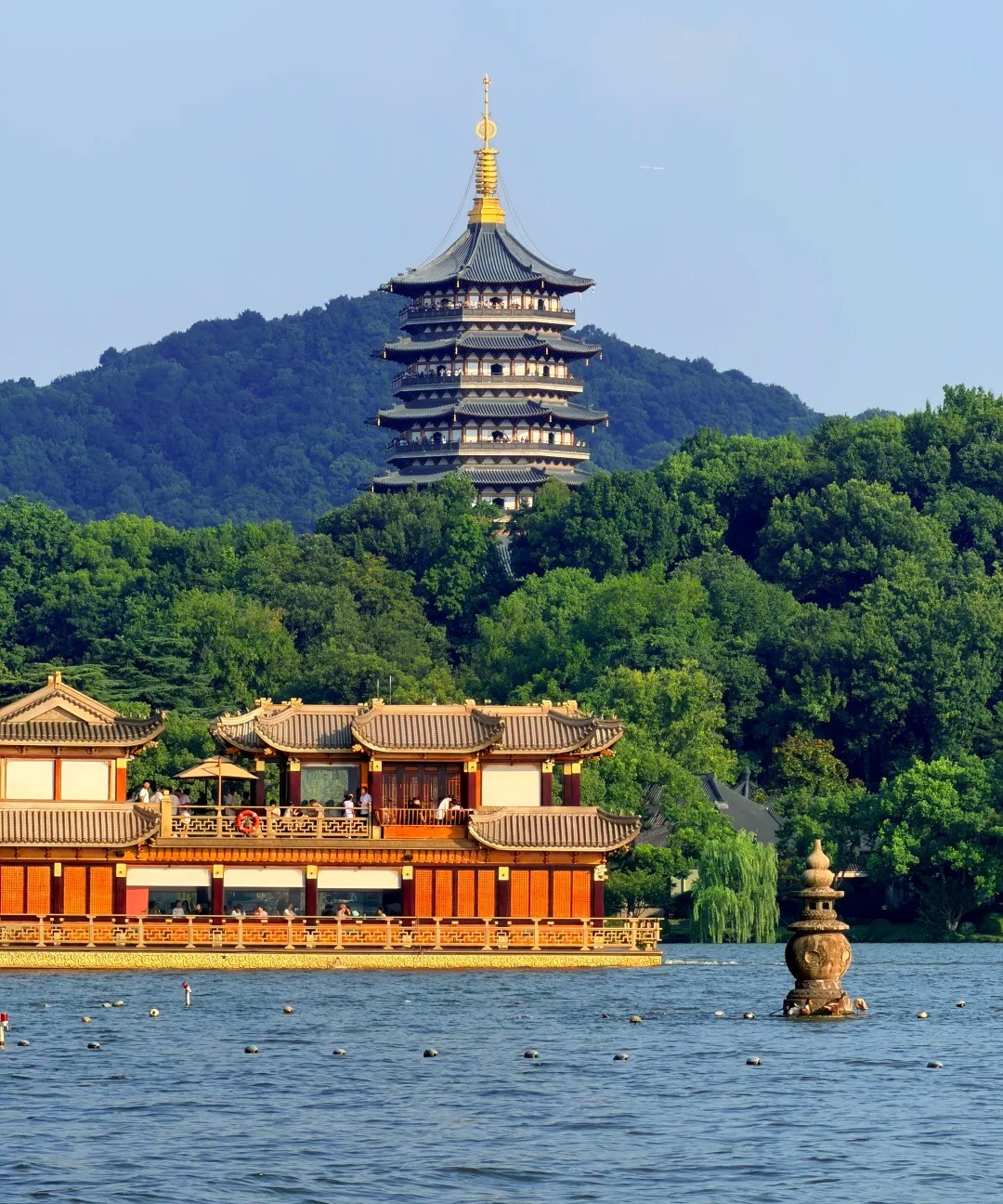
Hangzhou is the capital of Zhejiang Province and one of China's seven great ancient capitals, known as a "famous commandery of the Southeast" and among the first National Historical and Cultural Cities. Three world cultural heritage sites — West Lake, the Grand Canal and the Archaeological Ruins of Liangzhu City — allow the city's landscape and its ancient civilisation to complete each other. The city's land area is 16,850 square kilometers; it administers 10 districts and 2 counties and oversees 1 county-level city, with a permanent resident population of 12.7 million. The Kuahuqiao site pushes human activity here back beyond 8,000 years, while the Liangzhu culture dates back more than 5,000 years; since a county seat was set up in Qin times there have been more than 2,200 years of history. In the ninth year of the Kaihuang era of the Sui dynasty Hangzhou was established, and the name "Hangzhou" appeared for the first time; the Wuyue Kingdom of the Five Dynasties and the Southern Song dynasty both made their capital here, and in the 13th century Marco Polo praised it as "the most beautiful and magnificent city in the world." West Lake has cloud-capped hills on three sides and the city on the fourth, and the pattern of one mountain, two pagodas, three islets, three causeways and five lakes has continued to this day, with the Ten Scenes of West Lake named and formed; Lingyin Temple hides among woods and hills, and the carvings of Feilai Peak have been silent for a thousand years; Xixi Wetland is full of wild charm, and the Beijing–Hangzhou Grand Canal flows slowly under Gongchen Bridge; the city site and jades of the Archaeological Ruins of Liangzhu City bear witness to the 5,000-year history of Chinese civilisation. Having reached Hangzhou, you may as well slow your steps: stroll along the lake in the morning, watch the fresh green on the slopes of the tea hills in the afternoon, and at dusk watch Leifeng Pagoda in the evening glow sink into the heart of the lake. Here the four seasons are distinct and rainfall is abundant: willow mist in spring, lotus breezes in summer, osmanthus scent in autumn, and the feel of snow in winter. Whether you plan three days or four, Hangzhou always offers you a measure of unhurried ease.
Hangzhou lies in the north of Zhejiang Province, on the lower reaches of the Qiantang River. It is the capital of Zhejiang, one of China's first National Historical and Cultural Cities, and an international comprehensive transport hub. The city's land area is 16,850 square kilometers, of which the urban districts cover 8,289 square kilometers; hills and mountains account for 65.6% of the total and plains for 26.4%. The terrain slopes gently from west to east, with ranges rolling on in the west and a dense web of rivers and canals in the northeast. Its five waters — river, canal, lake, sea and stream — flow as one, giving Hangzhou both the spirit of the mountains and the grace of water, and it has long been known as "Paradise on Earth." To travellers, what is most striking about Hangzhou is how closely the landscape meets daily life: people exercise by the lake at dawn, tea is brewed at the mouth of an alley, and ancient relics often stand just one street away from the bustle of the marketplaces.
Hangzhou is one of the cradles of Chinese civilisation and one of China's seven famous ancient capitals. Excavations at the Kuahuqiao site show that people were living and multiplying here more than 8,000 years ago; the Liangzhu culture of more than 5,000 years ago has been called "the dawn of Chinese civilisation." Since a county seat was established here in Qin times, Hangzhou has had a history of more than 2,200 years; in the ninth year of the Kaihuang era of the Sui dynasty the Qiantang commandery was abolished and Hangzhou was established, and the name "Hangzhou" appeared for the first time. The Wuyue Kingdom of the Five Dynasties and the Southern Song dynasty both made their capital here, and under the rule of these two eras the city came to be known as a "famous commandery of the Southeast." In the 13th century the Italian traveller Marco Polo praised Hangzhou as "the most beautiful and magnificent city in the world." In 1912 the two counties of Qiantang and Renhe were merged into Hang County; in 1927 the urban area of Hang County and neighbouring places were turned into Hangzhou City, and Hangzhou was first constituted as a city; in 1949 Hangzhou was liberated, opening a new chapter from then on.
The West Lake Scenic Area lies west of the city and covers a total area of 59.04 square kilometers, of which the lake surface is 6.38 square kilometers and the outer protection zone 35.64 square kilometers. It was once chosen as one of the "Ten Great Scenic Areas of China" and is a national 5A-level tourist attraction. This expanse of lake and hill is known for a city-lake layout of "cloud-capped hills on three sides and the city on the fourth," with mountain colours and city views reflecting each other, and 122 parks and scenic spots set around the shore. In 2007 West Lake was rated a national 5A-level tourist attraction; in 2011 the "West Lake Cultural Landscape of Hangzhou" was inscribed on the World Heritage List, with a total heritage area of 3,322.88 hectares. Walk around the lake and the water is on your left and green hills on your right, the scenery changing stretch by stretch — a whole day on foot never feels repetitive.
02The beauty of West Lak…
The beauty of West Lake lies in the turning of the four seasons. The "Ten Scenes of West Lake," named in the Southern Song dynasty, gathered Spring Dawn at Su Causeway, Breezy Lotus at Quyuan, Autumn Moon over the Calm Lake, Lingering Snow on the Broken Bridge, Fish Viewing at Flower Harbour, Orioles Singing in the Willows, Three Pools Mirroring the Moon, Twin Peaks Piercing the Clouds, Leifeng Pagoda in the Evening Glow and Evening Bell at Nanping into a single scroll. The Bai Causeway and the Su Causeway run across the water, forming with the three islets in the lake the landscape pattern of "two causeways and three islets"; the Su Causeway was built by Su Shi when he was prefect of Hangzhou in the Song dynasty, piled up from the water weeds and silt dredged from West Lake, and the scene name "Spring Dawn at Su Causeway" came from this. Three Pools Mirroring the Moon is one of the three islets on the lake, where bridges and causeways interlace to create the charm of a lake within an islet and an islet within a lake. Dawn and dusk are the best times to walk around the lake: the light is soft, the crowds thin out, and only the sound of oars and birdsong is left among lake and hills.
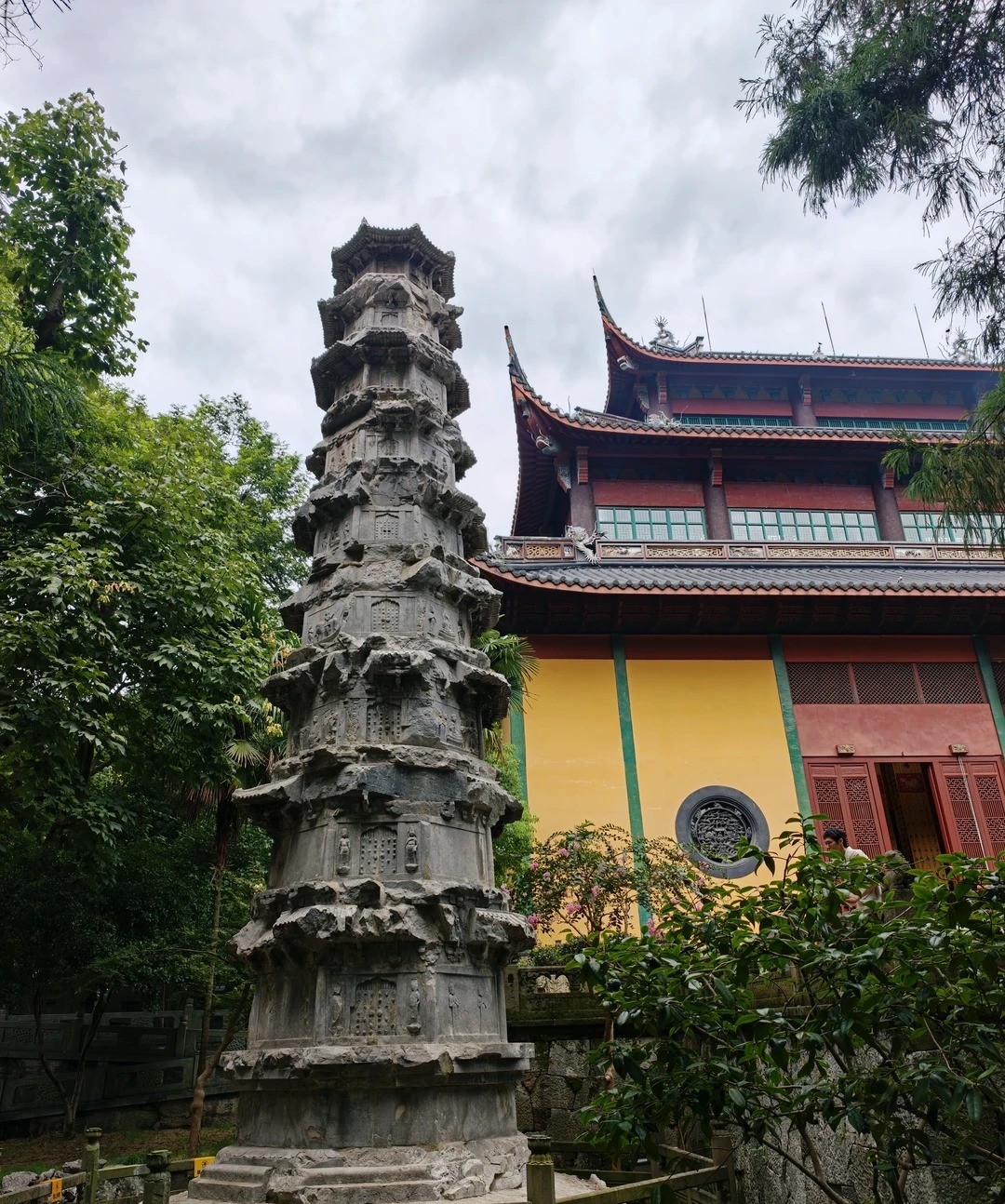
Head northwest along the lake and you come to the deep shade of woods and springs. Lingyin Temple was founded in the first year of the Xianhe era of the Eastern Jin dynasty (326), when the Indian monk Huili opened the mountain and built the temple; the name comes from "the retreat of immortal spirits." Qian Liu, king of Wuyue in the Five Dynasties, had it expanded, and in the Jiading era of Emperor Ningzong of the Song it ranked among the "Five Mountains" of Chan Buddhism in Jiangnan; in the Kangxi era of the Qing it was again granted the name "Yunlin Chan Temple." In front of the temple, Feilai Peak, also called Lingjiu Peak, rises to 168 metres; its rock is limestone and quite unlike the surrounding hills, and its caves and stream-side cliffs are covered with cliff carvings of the Five Dynasties and the Song and Yuan periods — the largest group of grotto carvings in Jiangnan, which made Feilai Peak a key cultural relic under state protection in the second batch nationwide. Early in the morning, visit Feilai Peak first and then enter the temple to pay your respects; there are few people and all is quiet.
The area around West Lake is also the resting and memorial place of many historical figures; the national heroes Yue Fei and Yu Qian both left deep marks on this city. The pine and cypress are green around the Temple of King Yue at the foot of Qixia Ridge, and visitors here mostly soften their steps; the Temple of the King of Qian on Nanshan Road commemorates the rulers of the Wuyue period. Hangzhou has produced many famous people: among writers, Bai Juyi and Su Dongpo; among dramatists, Li Yu and Hong Sheng; among scientists, Shen Kuo and Zhu Kezhen. Around West Lake circulate the legends of Su Dongpo, of Liang Shanbo and Zhu Yingtai, and of the White Snake, adding a layer of imagination to lake and hills. It is said that the story of the White Snake is bound up with Leifeng Pagoda by the shore, handed down by word of mouth among the people for a thousand years.
West of the city, Xixi Wetland is another realm of Hangzhou that has to do with water. Together with West Lake and the Xiling Seal Society it is known as Hangzhou's "three Xi," a rare secondary wetland within a city, nicknamed the "green lung of paradise." The Xixi Wetland now under protection covers about 11.5 square kilometers, of which water and similar surfaces make up about 70%, with a criss-cross of waterways and fish ponds like scales. It is less open than West Lake, yet has a wild charm of its own — cool, untamed, plain and refined: a sculling boat slips through the water lanes, reeds and persimmon trees alternate along the banks, fiery persimmons hang from the branches in autumn, and in winter the reeds are like snow. Xixi National Wetland Park was granted national 5A-level tourist attraction status in 2012, and is the country's first national wetland park combining urban wetland, farming wetland and cultural wetland in one.
03The Beijing–Hangzhou G…
The Beijing–Hangzhou Grand Canal passes slowly through the city. It is the longest artificial canal in the world and an important part of the Grand Canal of China; in 2014 the Grand Canal of China was inscribed on the World Heritage List. This man-made waterway, stretching nearly 3,200 kilometres and flowing for more than 2,500 years, still runs through the life of Hangzhou today. Gongchen Bridge, the landmark of the southern starting point of the Beijing–Hangzhou Grand Canal, spans the water; the historic and cultural district west of the bridge preserves the factory buildings of modern industrial relics and the dwellings of the late Qing and early Republic, and old warehouses and wharves have now become museums and creative spaces. Dusk is the best time to stroll along the canal; after nightfall the lights in the bridge arches are mirrored in the water, and the oar-sound of the old grain transport seems to linger at your ear.
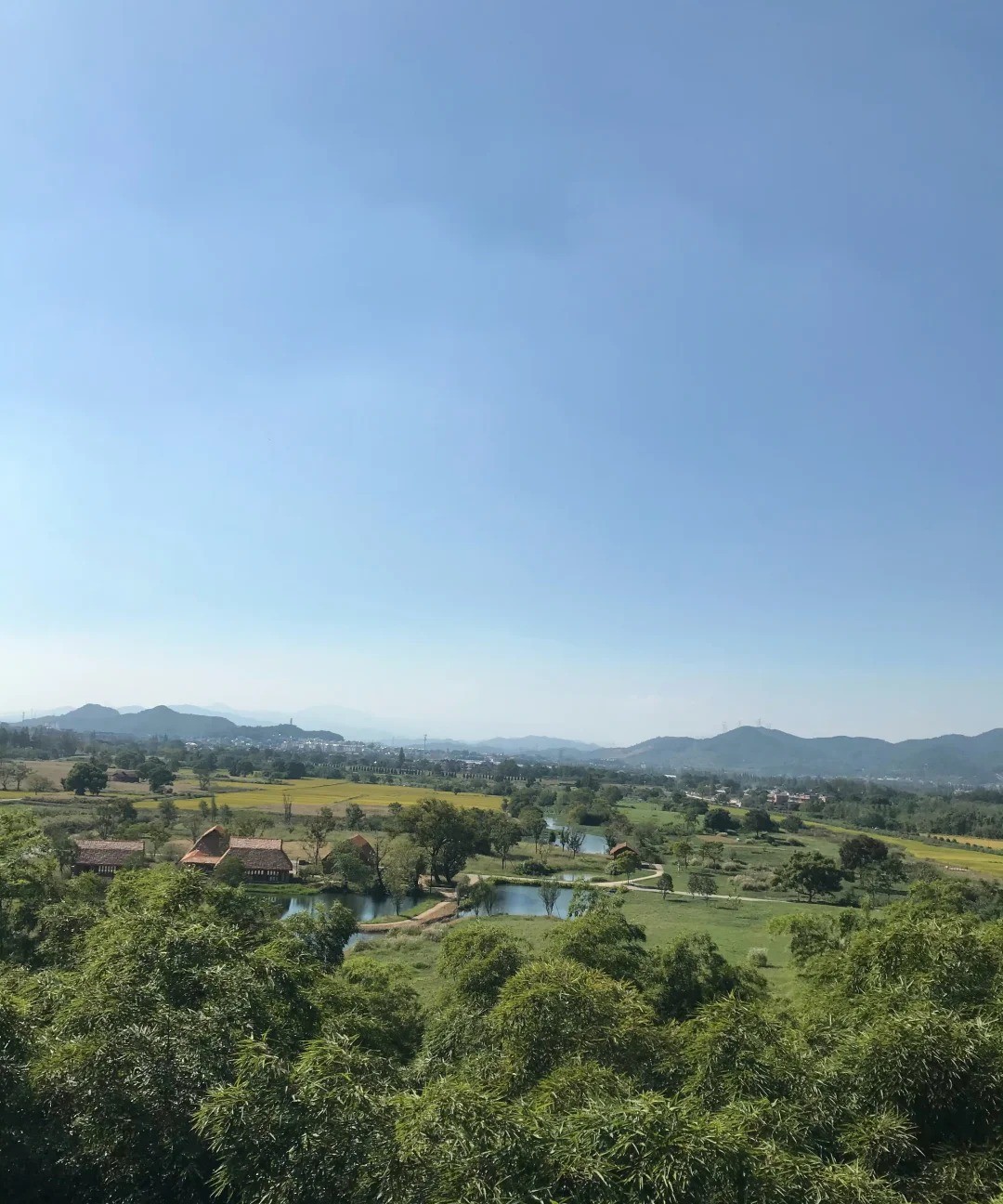
The Archaeological Ruins of Liangzhu City in Yuhang, north of the city, are another key to reading Hangzhou. The Liangzhu culture dates back about 5,300–4,300 years, and the ruins, discovered in 1936, are the site of a capital with a fourfold structure of palace area, inner city, outer city and peripheral water conservancy system — a holy place that substantiates the 5,000-year history of Chinese civilisation. In 2019 the Archaeological Ruins of Liangzhu City were inscribed on the World Heritage List. Inside the heritage park the grassy slopes rise and fall and watercourses encircle them, and on the platforms the foundations of the former palace can still be faintly made out; the jade cong and jade bi displayed in the Liangzhu Museum are finely patterned, telling of the order and beliefs of an early state supported by rice agriculture. It is worth setting aside half a day here to walk slowly and look slowly.
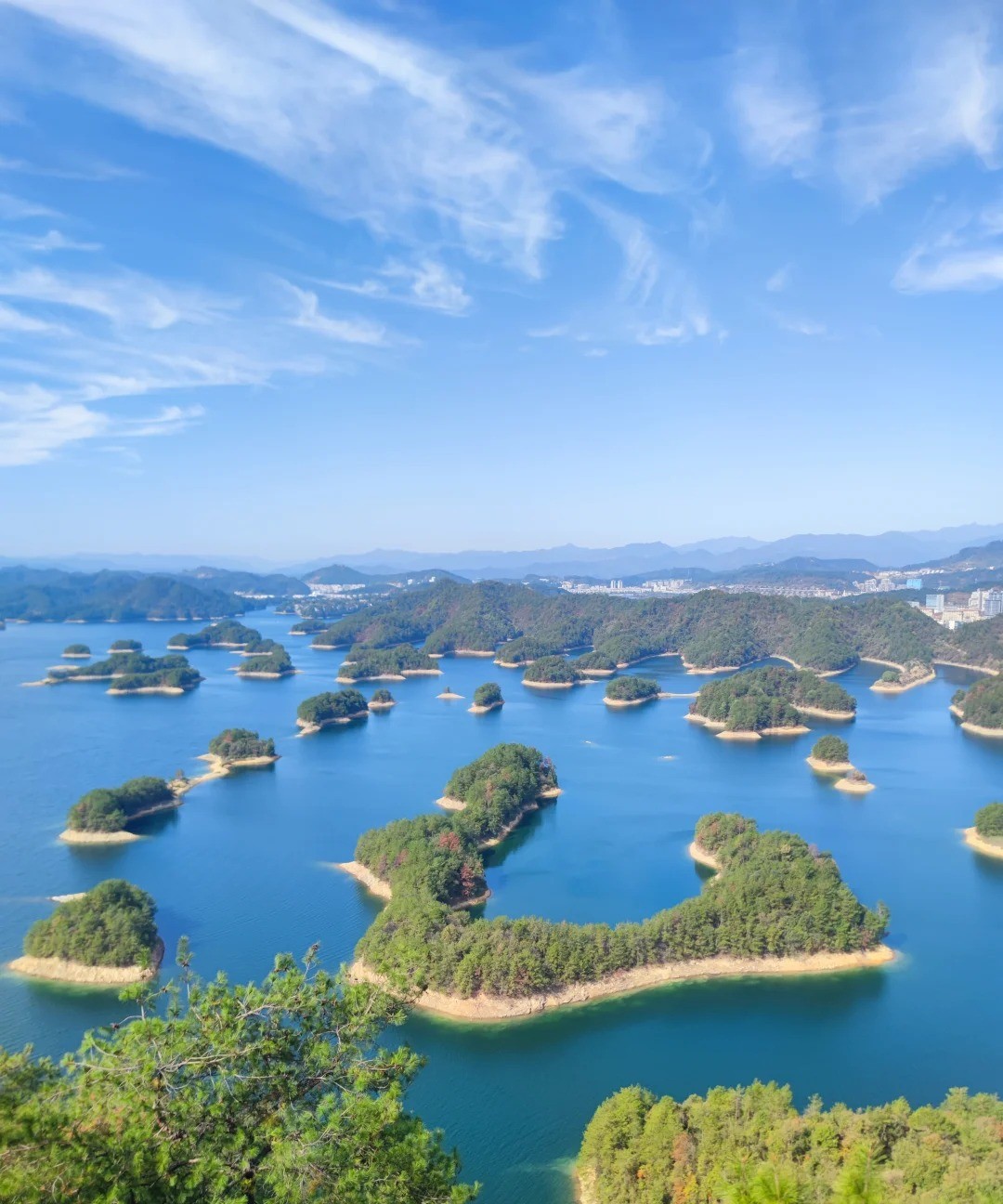
In the southwest of Hangzhou there lies yet another stretch of blue water. Qiandao Lake in Chun'an County, that is, the Xin'an River Reservoir, has a branching shape and 1,078 islands of various sizes; it is the largest reservoir in the coastal region of southern China and also a national forest park. The peaks in the lake dip below the water and rise again, and on clear days the water turns bluer layer by layer from near to far; look down from a height and the islands are like scattered emeralds; sail through them and you see only open water and reflected mountain shadows. The Qiandao Lake scenic area was rated a national 5A-level tourist attraction in 2010. Local cooking cannot do without this water; lake fish are the star of the table, and a pot of fish soup simmers to a milky white, served with mountain vegetables, fresh and light in flavour.
Hangzhou's city and its river are likewise inseparable. The Qiantang River runs through the city and is famed for its great tidal bore: the tide surges in from Hangzhou Bay and raises a line of white surf where the channel narrows, a mighty sight that has always been a spectacle in itself. The city has also grown along this great river: north of the river are the lanes of the old town with white walls and dark tiles, south of it the new city of tall buildings; the riverside walkways, bridges and parks have become everyday places for locals to stroll and run. Given the time, set aside half a day to walk along the river and see Hangzhou from another angle — here there is not only the soft beauty of lake and hill but also the open, modern air of the riverbank. River and lake, one firm and one gentle, have together shaped the character of this city.
04Back in the city
Back in the city, the everyday life of old Hangzhou is hidden among the lanes. The Southern Song Imperial Street was the main street laid out in Lin'an Prefecture, capital of the Southern Song, and the city's central axis at the time; on both sides of its flagstones the old market layout can still be dimly recognised. Hefang Street, which joins it, has been a busy central quarter of Hangzhou since ancient times; walk along it and century-old shops — old traditional-medicine houses, fan shops, scissors shops — stand side by side with food stalls, though today it has taken on something more of creative and fashionable flavour. Climb to the Chenghuang Pavilion on the summit of Wu Mountain: the encircling corridor on the fourth floor is a fine place to look down over the whole city — west to West Lake, north over the markets, east to the Qiantang River — taking in the river, lake, hills and city of Hangzhou at a glance.
If you want to see the origins of this city more systematically, put museums into your itinerary. The Hangzhou Museum focuses on the Wuyue Kingdom of the Five Dynasties and the Southern Song period, stringing the city's historical thread into a single line; the Southern Song Deshou Palace Ruins Museum, built on the original palace site, displays the architecture and relics of the Southern Song; and the Liangzhu Museum devotes itself to that more distant civilisation. Most of these venues lie in the city or its near suburbs, linked with the surrounding streets; after seeing an exhibition, stroll along the street, and a city's past and present are easily joined up. On rainy days or in the muggy heat of midsummer, indoor venues are also a good choice.
Hangzhou's tea is nurtured by its hills and waters. Among the hills around the lake, the tea gardens of Longjing Village and Meijiawu spread along the slopes, terrace upon terrace climbing to the hillside. West Lake Longjing tea is the local speciality; around Qingming the new buds first open, and the tea farmers pick a bud and a leaf on the slopes and then roast them in an iron pan, and the tea fragrance spreads from their fingertips. Find a farmhouse and sit down, watch the host brew: the liquor is clear and bright, and the taste fresh and brisk; come in autumn, when the osmanthus blooms at its best around Manjuelong, and a cup brewed with osmanthus and Longjing together mingles sweet scent with tea fragrance. Beyond visiting the tea, walk slowly along the valley of the Nine Creeks, where bamboo groves keep company with the stream — a rare cool retreat in a Hangzhou summer.
Hangzhou cuisine is known for being light, fresh and fragrant, and for respecting the true flavour of its ingredients. West Lake fish in vinegar, Longjing shrimp, Beggar's Chicken and Dongpo pork are familiar representatives: the vinegar fish is usually made with lake fish, dressed with a sweet-and-sour sauce, and prized for its tender flesh; the shrimp are matched with fresh Longjing tea, fresh and clean with a hint of tea fragrance; Dongpo pork takes its name from Su Dongpo, red and glossy in colour, rich but not greasy, crumbling at a bite. There are also Hangzhou soy-sauce duck, bamboo-shoot and old-duck casserole, West Lake water-shield soup and more, each dish a seasonal and homely taste of this watery town. To try several at once, order a table of small portions and work from the cold dishes through to the soup, slowly savouring the refinement within Hangzhou cuisine's lightness.
05Staples and snacks lik…
Staples and snacks likewise hold the everyday life of Hangzhou people. Pian'erchuan is a bowl of noodles cooked with pickled greens, bamboo shoots and sliced pork, clear in broth and fresh in taste; scallion-wrapped youtiao presses fried dough sticks and scallion sections inside a dough wrapper and grills them crisp and fragrant on an iron griddle; Dingsheng cake is soft and faintly sweet, a common street snack. Silk and tea, paper umbrellas, scissors, bronze work and other traditional crafts are also old skills of this city. Silk fabrics unearthed at Liangzhu date back about 4,700 years, showing how long Hangzhou's bond with sericulture and silk has been; today the city has museums devoted to the subject, telling clearly the past and present of silk and tea.
Hangzhou has a subtropical monsoon climate, with four distinct seasons, ample sunshine and abundant rainfall, and with spring and autumn short while winter and summer are long. Spring comes quickly: the willows turn the lake embankment green overnight, and peaches and plums blossom one after another; early summer brings the plum rains, the air is damp, and grass and trees are deep green; midsummer is hot and clear, and the lotuses on the lake bloom most fully; autumn is the freshest of all, osmanthus scent filling the city and the sky high and far; winter is mostly clear and cold, and now and then a fall of snow turns the area around the Broken Bridge into a scene from a painting. Of the year, spring and autumn are the best for travel — neither too hot nor too cold, and suited to long hours of walking and cycling outdoors.
Hangzhou is an international comprehensive transport hub, and getting in and out is quite convenient. Its air gateway is Xiaoshan International Airport, with routes covering major cities at home and abroad; by rail, Hangzhou East Railway Station, Hangzhou West Railway Station, the City Station, the South Station and the Qiantang Station form five major passenger hubs, and high-speed rail links Hangzhou with Shanghai, Nanjing, Huangshan, Ningbo and other places in one line. Within the city the metro is the backbone, its lines forming a network that reaches West Lake, Lingyin, the canal and the railway stations and other main destinations directly, and both transfers and tickets can be handled on a phone. If you put suburban or outlying destinations such as Qiandao Lake and Liangzhu into your itinerary, high-speed rail plus a short connection is usually less trouble than driving.
After nightfall Hangzhou takes on another face. Around the lakeside and Nanshan Road the lights are gentle, and strollers come in twos and threes; on the bridges by the canal someone leans on the rail to watch the water, the lamp shadows in the arches stirred to pieces by oar-sound; steam rises before the snack stalls in the lanes, and sweet fragrance mixes with the smell of everyday life in the air. If you want quiet, find a waterside teahouse and sit down, watch the night settle little by little, and listen to a snatch of melody drifting now and then from afar. By day Hangzhou is clear, bright landscape; by night it has a little more of the warmth of the marketplace — only with the two faces laid together is it complete.
06Hangzhou suits slow tr…
Hangzhou suits slow travel; three to four days is fairly unhurried. Give the first day to West Lake: set out at dawn from the Broken Bridge, past the Bai Causeway and Solitary Hill to the Su Causeway, take a boat in the afternoon to see Three Pools Mirroring the Moon, and wait for a sunset around the Long Bridge in the evening; on the second morning go to Lingyin Temple and Feilai Peak, and in the afternoon turn to Xixi Wetland for a sculling boat; on the third morning visit the Archaeological Ruins of Liangzhu City and the Liangzhu Museum, and in the afternoon walk along the canal to Gongchen Bridge and the district west of the bridge; if there is a fourth day, choose somewhere farther off, such as staying a night at Qiandao Lake in Chun'an, or strolling and taking tea among the tea hills of Longjing Village and Meijiawu. The itinerary need not be packed too full — much of what is good about Hangzhou lies in the going and stopping.
Hangzhou is a city to be savoured slowly. It does not overwhelm you with strange peaks and perilous gorges, yet with a lake of blue water, a gust of osmanthus scent and a cup of new tea it can hold your steps. At dawn the mist has not yet lifted from the lake; in the afternoon the tea hills glow green; at night the canal lights come on one after another, and the jades of Liangzhu glimmer silently in their cases. Pieced together, these fragments are one city's way of keeping company with time. When you leave, you may not carry away the colours of West Lake, but you will remember a certain bench, a certain cup of tea, a certain soft phrase of Hangzhou speech.