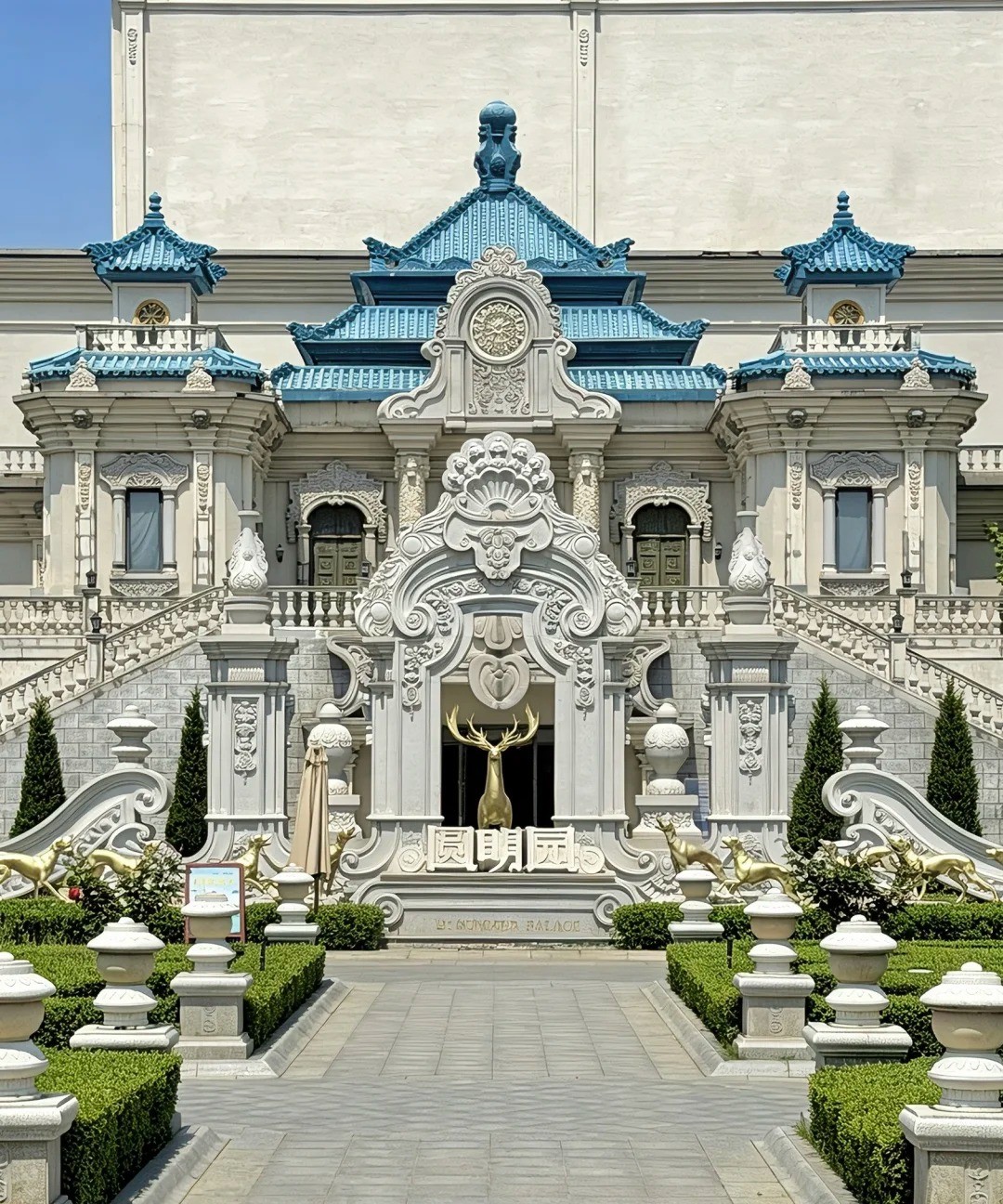
01Ningbo
Ningbo, abbreviated as "Yong", is a separately listed city and sub-provincial city of Zhejiang Province and a National Historical and Cultural City — a city born of the sea and risen through its port, blending a scholarly air with the flavour of a seaport, and one well worth savouring at a slow pace. It lies on the shore of the East China Sea and the south bank of Hangzhou Bay; within the city three rivers meet, beyond it fine harbours open out, and the whole municipality has a total land area of 9,816 square kilometers and vast seas and a long coastline, administering six districts, two counties and two county-level cities. Seven thousand years ago the people of Hemudu planted rice here; the thousand-year-old Tianyi Pavilion and Moon Lake quietly guard the cultural thread, while the giant ships of Ningbo Zhoushan Port link this city to the world. The modern architecture of the Old Bund, the ancient streets and lanes of Cicheng and Shipu, and the landscapes of Siming Mountain and Dongqian Lake make up its varied face; the Grand Canal of China (Ningbo section), inscribed on the World Cultural Heritage List in 2014, adds another layer of weight to the history of Sanjiangkou. The timber main hall of Baoguo Temple, the incense smoke of Tiantong Temple and Ayuwang Temple, and the lake-and-hill scenery of Dongqian Lake allow you to switch freely between tracing history and watching the sea. A subtropical monsoon climate gives the city four distinct seasons, mild and humid, with spring and autumn especially good for travel; both Shanghai and Hangzhou are less than half a day away by high-speed rail, and transport within the city is convenient. Eat a bowl of soft, glutinous lard tangyuan, taste a few salty-fresh raw-drunk crabs with red roe, then walk along Sanjiangkou, and you will feel the city's deep heritage and unhurried daily life.
Ningbo is abbreviated as "Yong" and is a separately listed city and sub-provincial city of Zhejiang Province and a National Historical and Cultural City. Born of the sea and risen through its port, it keeps the deep echoes of seven thousand years of rice-farming civilisation while living the modern rhythm of great ships coming and going and goods flowing across the world. Within the city three rivers meet; beyond it fine harbours open out, and ancient pavilions, old temples, old towns and fishing ports are scattered between hill and sea. Here there is both the ink fragrance of a library and the salty sea breeze of a fishing wharf; the seasons and the sea wind are gentle, and watching boats come and go by day or strolling along the river at dusk is the most ordinary of daily routines. Wandering old streets, climbing an ancient pavilion, watching the sea and eating seafood — the ease and openness of this city can only be felt by walking it slowly.
Ningbo lies in the middle section of the Chinese mainland coastline and on the southern wing of the Yangtze River Delta, with terrain high in the southwest and low in the northeast; mountains and hills together account for more than half of the land area, while plains spread out along the rivers and the coast. The whole municipality has a total land area of 9,816 square kilometers, of which the urban districts cover 3,730 square kilometers; its total sea area is 8,355.8 square kilometers, its coastline totals 1,678 kilometers — about a quarter of the entire coastline of Zhejiang Province — and 611 islands of various sizes are scattered offshore. The Yuyao River and the Fenghua River join at Sanjiangkou in the city to form the Yong River, which flows northeast past Zhaobaoshan into the East China Sea. This pattern of mountains and sea allows Ningbo both to grow rice and raise silkworms and tend its mulberry fields, and to build harbours and ships and set sail for the open sea; the city's character therefore combines the solidity of farming with the openness of the ocean.
Ningbo's history reaches back to the Hemudu culture of 7,000 years ago, and the recently discovered Jingtoushan site pushes the origins of human culture here back to more than 8,000 years ago — the ancestors of this land planted rice, built boats and raised stilt-style houses, and turned fish, shrimps and shells into everyday food. The carbonised rice unearthed at the site confirms that this was one of the earliest places in the world where rice was cultivated by humans. In the Xia and Shang dynasties this area was called "Yin"; in the Spring and Autumn period it belonged to the territory of the State of Yue; by the Qin dynasty several counties had been established here; and in the Tang dynasty it was made the "Mingzhou". In the first year of the Changqing era of the Tang (821), the seat of Mingzhou was moved to Sanjiangkou and an inner city was built — the beginning of the city of Ningbo. After that the city site was never greatly altered, and river and city were bound tightly together.
02In the fourteenth year…
In the fourteenth year of the Hongwu era of the Ming dynasty (1381), taking the meaning "when the sea is calm, the waves are peaceful", Mingzhou was renamed Ningbo, a name that has continued to this day. In the Qing dynasty the Ningshaotai Circuit was once stationed here. In May 1949 eastern Zhejiang was liberated, and the urban area of Yin County was set up as Ningbo City; in 1983 the prefectural office was abolished and the system of cities administering counties was introduced. In 1986 Ningbo was listed as a National Historical and Cultural City; in 1987, with the approval of the State Council, it became a separately listed city; and in 1994 it was designated a sub-provincial city. Since then Ningbo's administrative divisions have been adjusted with the times, and the city has advanced step by step to the present, with openness and pragmatism always its underlying tone.
When it comes to Ningbo's cultural thread, one cannot avoid Tianyi Pavilion. First built in the Ming dynasty, it is China's oldest surviving private library and one of the three oldest family libraries in the world, especially famous for holding the largest collection of Ming-dynasty local gazetteers and imperial examination records, many of them rare copies found nowhere else. Today the Tianyi Pavilion–Moon Lake Scenic Area is a national 5A-level tourist attraction, with the library and its garden standing quietly on the west bank of Moon Lake; lake and library depend on each other across the water, making this the most bookish corner of Ningbo. On a visit here, do linger a while in the garden: looking at the plaques, the pond and the old trees, you can read the care of the book collectors.
Sanjiangkou is where the Fenghua River and the Yuyao River join to form the Yong River, and it is also the origin from which the city of Ningbo grew. On the east bank stands the Qing'an Guild Hall, first built in the thirtieth year of the Daoguang era of the Qing (1850) and completed in the third year of the Xianfeng era (1853); it was the place where the northern shipping merchants gathered to discuss affairs and to worship Mazu, and its architecture brings together a great many red-gold lacquered wood carvings, brick carvings and stone carvings. In 2001 the Qing'an Guild Hall was declared a Major Historical and Cultural Site Protected at the National Level; in 2014, when the Grand Canal of China succeeded in its World Heritage application, the Sanjiangkou heritage area (including the Qing'an Guild Hall) was inscribed on the World Cultural Heritage List as an important part of the Grand Canal (Ningbo section). Nearby, the Old Bund preserves modern European-style buildings, and at night the river breeze and the lamplight set each other off.
To the northwest, Yuyao is the other pole of Ningbo's cultural thread. This is the core distribution area of the Hemudu culture; the Hemudu site dates back about 7,000–5,300 years and is characterised by rice-farming agriculture, stilt-style buildings and an early maritime civilisation. It was listed as a Major Historical and Cultural Site Protected at the National Level in 1982 and selected in 2021 as one of the "Top 100 Archaeological Discoveries in a Century". The old town of Yuyao is one of the first group of historical and cultural cities of Zhejiang Province, and within it is the former residence of Wang Yangming (Ruiyun Tower), where this Ming-dynasty master of the School of Mind spent his childhood. Siming Mountain stretches across the area, its mountain scenery echoing its historical sites; the ancient trails and ancient villages in the hills remain fine places for hiking, and the Yuyao Museum and the Longquan Mountain area in the city are also well suited to a visit along the way.
03Ningbo's temples and a…
Ningbo's temples and ancient buildings are just as rewarding. Baoguo Temple in Jiangbei is a national 4A-level tourist attraction; its main hall is one of the oldest surviving timber structures in China and the oldest and most complete timber structure surviving in Jiangnan, and it is listed among the first group of Major Historical and Cultural Sites Protected at the National Level. Hidden among the hills, Tiantong Temple has deep woods and quiet paths, while Ayuwang Temple keeps a long thread of incense — both are ancient monasteries of long history in eastern Zhejiang. If you are interested in ancient architecture, the bracket sets and beam frames of Baoguo Temple are worth a close look, while Tiantong Temple and Ayuwang Temple are better for a quiet stroll, with towering old trees before the halls and secluded mountain paths. This area is not far from the urban districts, can be visited in half a day, and also fits well into one line with the ancient county town of Cicheng in Jiangbei.
The Fenghua Xikou–Tengtou Scenic Area is a national 5A-level tourist attraction, formed jointly by the Xikou Xuedou Mountain Scenic and Historic Area and the Tengtou Eco-tourism Area. Xuedou Mountain has layer upon layer of green peaks and hanging waterfalls, and the ancient temple and the open-air Maitreya Buddha in the mountain are its landmark sights; below the mountain, Xikou Town preserves streets and courtyards of the Republican period, and the former residence of the Chiang family is right in the town. Tengtou Village is known for its fields and ecology, with flowers and trees in every season and farm courtyards and orchards scattered among them. Coming down from Xuedou Mountain, you can stroll slowly in the town, taste a few snacks and feel the everyday warmth of a mountain village. Mountain and water, ancient town and countryside form a single line, suited to a whole day of unhurried walking and looking as you go.
East of the city, Dongqian Lake is the lake-and-hill country close to the people of Ningbo. The lake is broad, with causeways, islands and villages around it, and the shadows of the hills fall on the water, each season with its own sights: willow colour in spring, lotus in summer, fat and fine lake delicacies in autumn, and clear, cold misty waves in winter. By the lake, the Mashan Leisure and Tourist Area is a national 4A-level tourist attraction, good for cycling, walking and waterside leisure; the greenways around the lake string together wetlands, tea gardens and ancient villages. At the lake you can rent a bicycle and ride a stretch, or take a boat to the middle of the lake to see the hills all around; whether at dawn or dusk, the lake is rarely anything but quiet, good for daydreaming and sitting idly. There are plenty of teahouses and farm restaurants by the lake: sitting down for a cup of tea and a meal of lake delicacies is how the locals spend their weekends.
Heading southeast to the sea, the coastline of Xiangshan is winding and long. The ancient town of Shipu Fishing Port is a national 4A-level tourist attraction, where old streets and shops spread out in layers against the hill and the harbour, the salty freshness of seafood meets you head-on, and masts stand thick in the fishing port, especially lively when the fishing season opens; the Songlanshan Seaside Tourist Resort has fine sand and gentle waves, good for waterside fun in summer; Xiangshan Film Studio is also a 4A-level scenic area, where you can see period sets and filming props. Islands large and small are scattered offshore, a world for birds and marine life and a fine place for sea-angling and birdwatching enthusiasts. After the fishing season opens, boats return to the docks and seafood comes to market — the liveliest moment of the year; if time allows, you can also stay a night in a seaside fishing village and wait for a sunrise over the sea.
04The counties of Ningbo…
The counties of Ningbo each have their own character. Ninghai has the ancient town of Qiantong, whose cobbled lanes and Ming- and Qing-dynasty dwellings are well preserved, a national 4A-level tourist attraction; in the hills, the forest hot springs and the Wushan Grottoes, one lively and one still, each have their own flavour. Cixi has the ancient town of Minghe, where the old streets by the lake and the old houses are relaxed and at ease, likewise a national 4A-level tourist attraction; the Dapeng Mountain Tourist Resort is good for family outings, its mountain paths and tree shade well suited to walking. The seawalls and tidal flats around Xiangshan and Ninghai are also places where locals go to dig for shellfish as the tide goes out, and the ebb and flow hide a good deal of pleasure. Most of these ancient towns are old houses of grey brick and timber, built along rivers, and quiet and unhurried to walk through.
Along the mouth of the Yong River, the Zhaobaoshan Tourist Scenic Area in Zhenhai sits astride the meeting of river and sea; it is a national 4A-level tourist attraction, and from its heights you can look out at the port and the shipping lanes, while old coastal-defence remains are scattered in the hills. In Beilun, the Jiufeng Mountain Tourist Area is lush with trees, and the China Port Museum tells the story of the great eastern port clearly and fully. From the old gun emplacements you look down on the place where river surface and sea surface meet, a very open view. Heading west into the Siming Mountain area, the peaks are high and the valleys deep, with ancient trails, ancient villages, bamboo groves and tea gardens interwoven; green in spring and summer, leaves in late autumn, and occasionally rime in winter and spring — it is the natural parlour where the people of Ningbo climb and hike, and at weekends it is a pleasure to take the family up the hills and rest by a stream.
Ningbo Zhoushan Port is the city's hardest-core calling card. In 2024 Ningbo Zhoushan Port handled a cargo throughput of 1.377 billion tonnes, ranking first in the world for 16 consecutive years; it handled a container throughput of 39.3 million TEU, holding firmly third place in the world. The port's coastline stretches far, great ships come and go, bridge cranes load and unload day and night without pause, and sea-rail intermodal transport extends the port's functions all the way to many inland cities. At night the lamps of the port area join into one sheet of light, mirrored on the river, with a distinctive atmosphere all its own. For visitors, standing on a height in Beilun or Zhenhai to watch the great ships enter and leave, or the cargo vessels queueing to enter port, is itself a piece of scenery belonging to our own era.
Ningbo cuisine puts a premium on the word "fresh", and living by the sea it draws deeply on the sea. Raw-drunk crabs with red roe are a must on the New Year table: select swimming crabs from the East China Sea, quickly pickle them in brine, and the crab meat sets without falling apart, the roe red and the flavour fresh — one sip sends a salty freshness straight to the tip of the tongue. Locals say that "no feast is complete without crab"; a single crab can carry a whole dish, and the New Year's Eve dinner feels incomplete without it. When it is set on the table, the crab shell is bright red and the roe rich; with a bowl of hot congee or a cup of yellow rice wine, it is the people of Ningbo's sense of ritual for the New Year. Each household has its own thoughts on how long to pickle this dish — saltier or lighter — and that is the people of Ningbo's most direct and most fastidious understanding of the taste of the sea.
05Staples and small snac…
Staples and small snacks are just as splendid. Ningbo tangyuan use water-milled glutinous rice flour for the skin and enclose a filling of black sesame, lard and white sugar; once cooked they are soft, glutinous and sweet, with a flowing centre, and they are the city's gastronomic calling card, their making technique having been inscribed on the intangible cultural heritage list of Zhejiang Province. Besides these, snow vegetable soup with large yellow croaker is rich and fresh; niangao can be eaten in many ways, soft, glutinous and springy; on the streets there are also the crispness of youzanzi and the layer upon layer of salty fragrance of qianceng bing, and with a bowl of soy milk or a dish of pickled greens that is a satisfying meal. At festivals and the New Year a family sitting around wrapping tangyuan is also a long-standing custom in Ningbo; these small snacks need no grand restaurant — old shops by the roadside are often more authentic.
Eating in Ningbo, it is best to follow the seasons. In spring and summer there are razor clams, wangchao (a kind of small octopus) and meitong fish, while autumn and winter are when swimming crabs, hairtail and pomfret are at their fattest; a bowl of yellow croaker noodles or a dish of pomfret cured in wine lees are flavours local people have eaten since childhood. Ningbo cooking insists on the union of salt and freshness, and people also like to steam and blanch seafood plain, keeping its original taste as far as possible. If you want to taste it all at once, go round the old streets and the markets by the fishing ports, watch the stallholders clean the seafood, then pick a few things to cook and eat on the spot; the breakfast stalls by the roadside and the small eateries beside the markets are often closer to the ground than fine restaurants, and let you taste the everyday flavours of the locals even more.
Ningbo has a subtropical monsoon climate, mild and humid with four distinct seasons. The municipality's mean annual temperature is 17.5 °C, hottest in July with a mean of 28.9 °C and coldest in January with a mean of 5.7 °C; the mean annual precipitation is 1,566 mm, of which the five months from May to September account for about 60 per cent of the year, and the mean annual sunshine totals 1,701 hours. Spring and autumn are mild and pleasant, the golden season for travel; though summer has its heat, the sea is cool and refreshing; winter is on the damp-cold side, so bringing an extra layer of clothing and an umbrella will never be wrong. Overall, the comfortable season here is very long, and most of the year is good for going out and about.
Ningbo's transport can well be called convenient. The airport connects with major cities at home and abroad; high-speed and bullet trains plug Ningbo into the fast network of the Yangtze River Delta, and both Shanghai and Hangzhou are less than half a day away; the city's metro and buses cover the main sights, and one cross-sea bridge after another links the two shores of Hangzhou Bay into one. Driving by expressway you can reach the seat of every county and the seaside scenic areas directly, and going to Xiangshan or Ninghai to see the sea is not far on the road either. If you come by high-speed rail, changing to the metro on leaving the station takes you straight to the city centre; the port also has passenger routes and water sightseeing lines, offering another angle on Ningbo. In recent years the municipal railway and intercity lines have kept extending, making it more convenient to go to places such as Cixi and Yuyao as well.
06If time is easy
If time is easy, three to four days is a suitable arrangement for Ningbo. Leave the first day for the city centre: in the morning visit Tianyi Pavilion and Moon Lake, in the afternoon walk the Old Bund, Sanjiangkou and the Qing'an Guild Hall, and at night look at the river view and the lights; on the second day go to Fenghua Xikou–Tengtou to see Xuedou Mountain and the ancient town, which just fills a whole day; on the third day go out to Dongqian Lake or the Xiangshan seaside, cycling, watching the sea and eating seafood, slowing the rhythm down. If there is another day, you can go north to Yuyao to see Hemudu and the former residence of Wang Yangming, or climb Siming Mountain to cool off. If you want only to take it easy, you can also string two or three spots into one line and wander slowly; in spring and autumn the weather is fine and the itinerary can be arranged all the more flexibly.
From the rice-farming settlement of seven thousand years ago to the great eastern port that now reaches the whole world, Ningbo puts the ancient and the open in the same city. Moon Lake in the early morning, the old temples in the afternoon, the fishing port at dusk, the river breeze late at night — all are its different faces. There is no clamorous urging here; it suits a slowed step, reading page by page and tasting mouthful by mouthful. When you have finished a bowl of hot tangyuan on an old street and then stroll to the riverside for some breeze, perhaps you will understand the solidity and ease the people of Ningbo often speak of. It is not showy, yet it stands up to close looking, and after a visit most people will want to come again. Whether it is a first visit or a return to an old place, Ningbo always gives just the right amount of relaxation.