III. Architectural Layout and Scenic Area Structure
Overall Layout: Three Palaces, Three Temples, Three Caves, Three Waterfalls
The Mount Lao Taoist architecture complex is built along the mountain, presenting a distribution pattern of 'three palaces, three temples, three caves, and three waterfalls.' The 'three palaces' refer to Taiqing Palace, Shangqing Palace, and Taiping Palace, which are the core Taoist buildings; the 'three temples' refer to Huayan Temple, Fahai Temple, and Chaohai Yuan, which are Buddhist monasteries; the 'three caves' refer to Mingxia Cave, Youlong Cave, and Baiyun Cave, which are Taoist cultivation grottoes; and the 'three waterfalls' refer to Longtan Waterfall, Chaoyin Waterfall, and Feilong Waterfall, which are natural landscapes. This layout reflects the unique cultural characteristics of Mount Lao, where Taoism and Buddhism coexist and mountains and sea blend.
Taiqing Palace: Core Architecture Complex
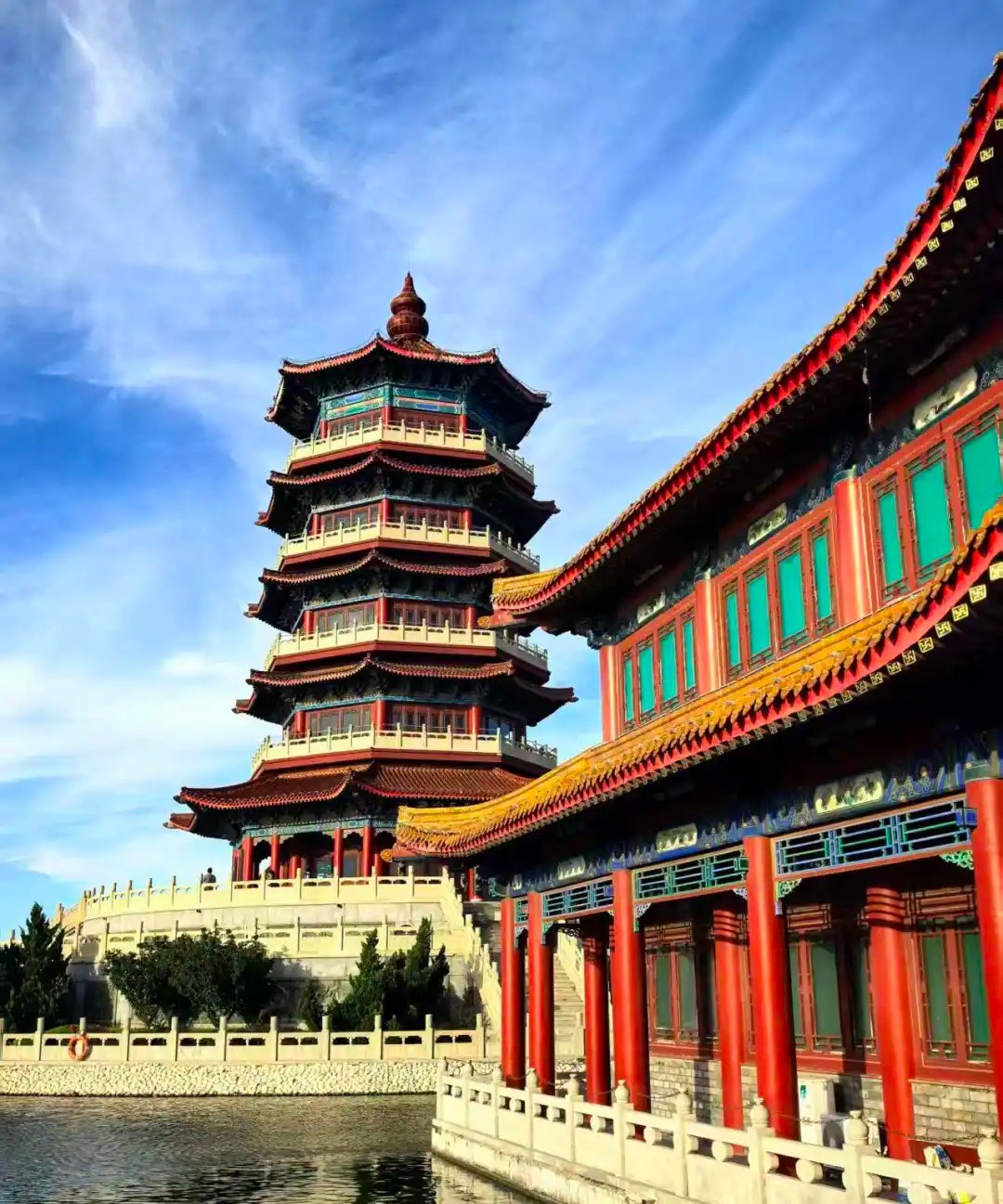
Taiqing Palace is located at the southeastern foot of Mount Lao, surrounded by mountains on three sides and facing the sea on one side, covering an area of about 30,000 square meters. It was first built in the first year of Jianyuan of the Western Han Dynasty (140 BC), originally named 'Sanguan Temple,' and after successive renovations and expansions in the Tang, Song, Yuan, Ming, and Qing dynasties, the existing buildings are mostly from the Ming and Qing dynasties. Taiqing Palace faces south, with the central axis sequentially comprising the Mountain Gate, Sanguan Hall, Sanqing Hall, and Sanhuang Hall. The Mountain Gate has a single-eave hip roof, three bays wide, with a plaque reading 'Taiqing Palace' hanging on the lintel. Sanguan Hall enshrines the Three Officials of Heaven, Earth, and Water, with five bays wide and three bays deep, and exquisite painted caissons inside. Sanqing Hall is the main hall of Taiqing Palace, seven bays wide and five bays deep, with a double-eave hip roof, enshrining Yuanshi Tianzun, Lingbao Tianzun, and Daode Tianzun. In front of the hall is a terrace, with side halls on both sides: Donghua Hall and Xiwangmu Hall. Sanhuang Hall enshrines Fuxi, Shennong, and Huangdi, with two ancient cypress trees in front, over 2,000 years old, said to have been planted by Zhang Lianfu of the Han Dynasty. The Taiqing Palace complex has a rigorous layout and staggered halls, reflecting the typical style of northern Taoist temples in the Ming and Qing dynasties.
Shangqing Palace: Mountain-top Taoist Temple
Shangqing Palace is located in the middle of Mount Lao, at an altitude of about 500 meters. It was first built in the Song Dynasty and rebuilt in the Yuan Dynasty. Covering an area of about 5,000 square meters, it faces south, with the central axis sequentially comprising the Mountain Gate, Front Hall, and Rear Hall. The Mountain Gate is a stone archway with the characters 'Shangqing Palace' carved on the lintel. The Front Hall enshrines the Jade Emperor, and the Rear Hall enshrines the Three Pure Ones. Shangqing Palace is mainly built of stone, with small and exquisite halls that blend with the surrounding rocks and trees. In front of the palace is the 'Qiu Chuji Clothing and Hat Tomb,' a Yuan Dynasty relic.
Taiping Palace: Core of the Eastern Route
Taiping Palace is located on the shore of Yangkou Bay in the eastern part of Mount Lao. It was first built in the Song Dynasty, originally named 'Taiping Xingguo Yuan,' and renamed Taiping Palace in the Ming Dynasty. Covering an area of about 4,000 square meters, it faces south, with the central axis sequentially comprising the Mountain Gate, Main Hall, and Rear Hall. The Main Hall enshrines the Three Pure Ones, and the Rear Hall enshrines Guan Di. The architectural style of Taiping Palace is simple, mainly stone walls and gray tiles. In front of the palace is the 'Lion Peak' rock, shaped like a lion, which is one of Mount Lao's iconic landscapes.
Hualou Palace: Western Route Scenic Spot
Hualou Palace is located on Hualou Mountain in the western part of Mount Lao. It was first built in the Yuan Dynasty and rebuilt in the Ming Dynasty. Covering an area of about 3,000 square meters, it faces south, with the central axis sequentially comprising the Mountain Gate, Laojun Hall, and Yuhuang Hall. Hualou Palace is famous for its 'Hualou Stacked Rocks,' with strange rock formations such as 'Biluo Rock' and 'Yunü Basin' on the cliff behind the palace. In front of the palace is a ginkgo tree planted by the Yuan Dynasty Taoist Liu Zhijian, about 700 years old.
Other Important Attractions
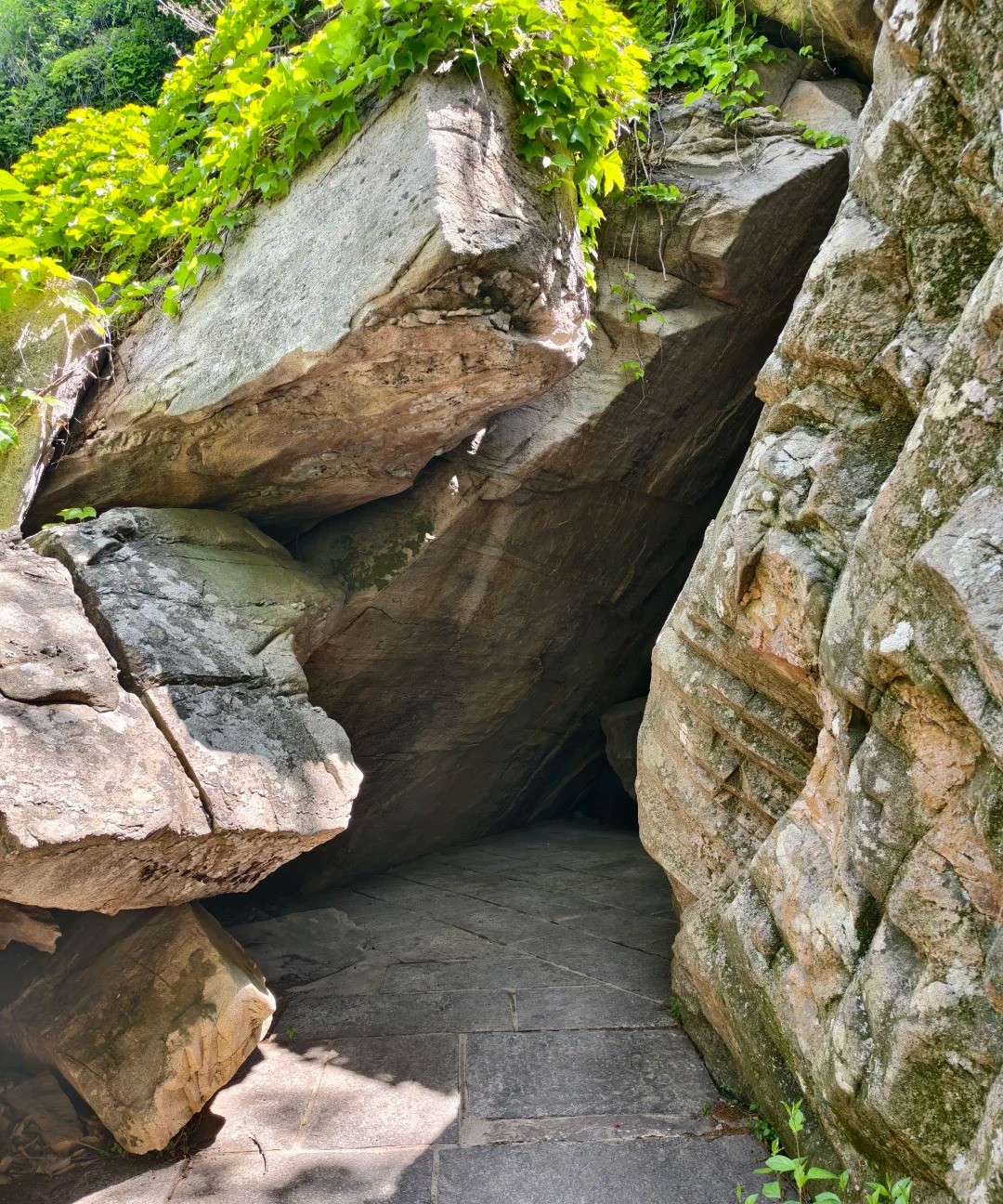
- Mingxia Cave: Located behind Taiqing Palace, it is a natural stone cave enshrining Taoist deities. Outside the cave is the stone inscription 'Mingxia Sanqi,' one of the Twelve Scenes of Mount Lao.
- Longtan Waterfall: Located in the upper reaches of Bashui River, with a drop of about 20 meters. During the rainy season, the waterfall resembles a dragon spitting water, with sound echoing through the valley.
- Chaoyin Waterfall: Located at Beijiushui, with a drop of about 30 meters. It is named for its tide-like sound and is the largest waterfall on Mount Lao.
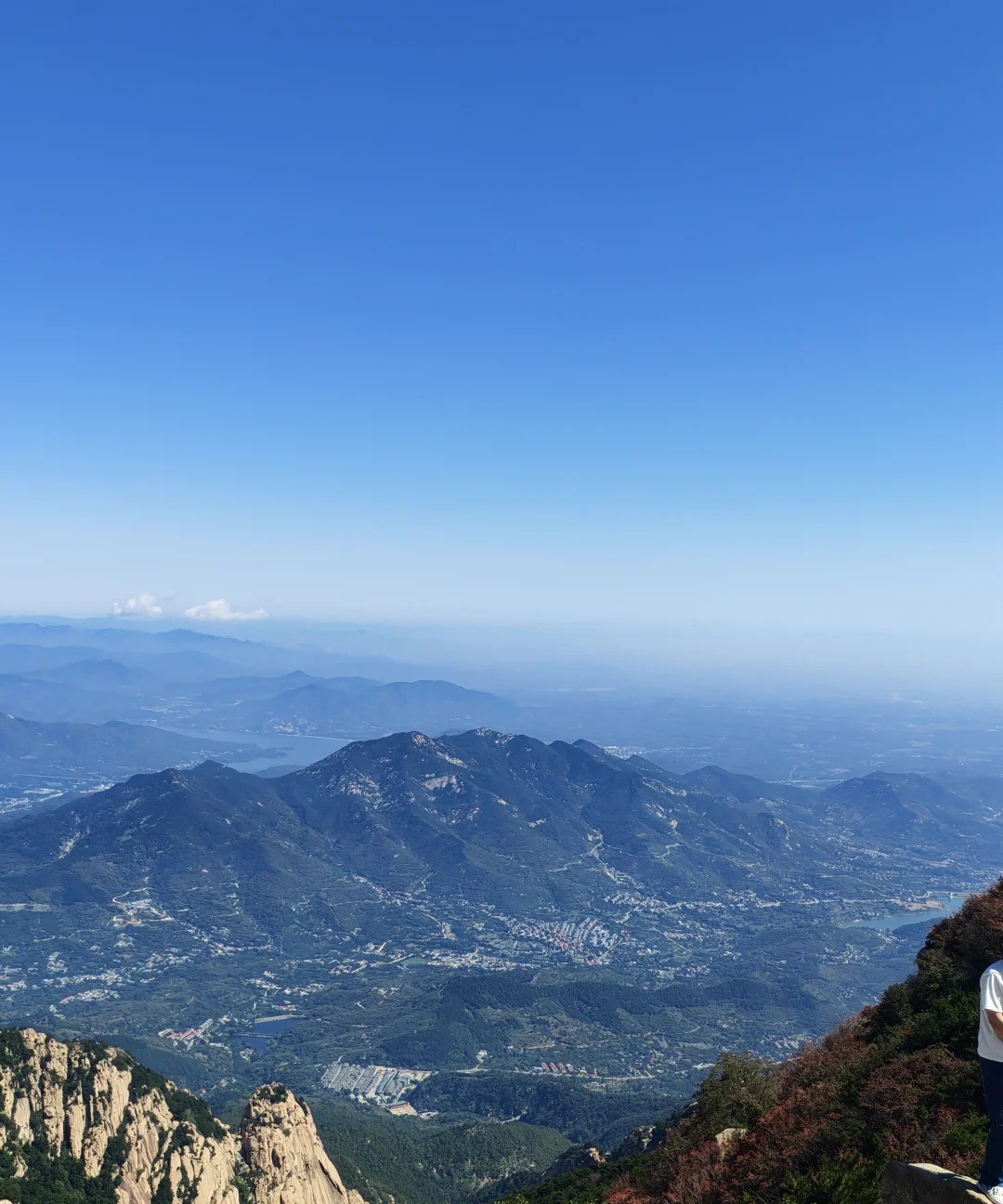
- Jufeng: The main peak of Mount Lao, at 1132.7 meters. Climbing to the top offers a panoramic view of mountains and sea, making it the best viewpoint on Mount Lao.