免费咨询旅行专家——定制行程、本地贴士、无忧规划。
通常24小时内回复
Huangshan (Yellow Mountain)
Huangshan, renowned for its four wonders of odd pines, bizarre rocks, sea of clouds, and hot springs, is hailed as the 'No. 1 Wonder Mountain under Heaven.' Ascending its peaks, visitors can witness sunrise glow, admire rime ice and snow scenes, and experience the poetic sentiment of 'After viewing the Five Sacred Mountains, no other mountains impress; after returning from Huangshan, no other mountains captivate.'
PRACTICAL INFO
Peak season (Mar 1 - Nov 30): 6:00-17:30 (cable car operates until 17:00); Off season (Dec 1 - Feb 28): 7:30-16:00 (cable car operates until 15:30)
Peak season: Full ticket ¥190/person, half ticket ¥95/person (students, seniors 60-65, etc.); Off season: Full ticket ¥150/person, half ticket ¥75/person; Cable car: Yungu, Yuping, and Taiping cable cars one-way ¥80-100/person (subject to seasonal fluctuation)
External Transportation: Huangshan Tunxi International Airport is about 60 km from the scenic area; Huangshan North Station (high-speed rail) is about 50 km away, with tourist shuttle buses directly to Tangkou Transfer Center. Internal Transportation: From Tangkou Transfer Center to Ciguang Pavilion and Cloud Valley Temple, there are scenic area buses, one-way 19 yuan/person, about 20 minutes.
Classic One-Day Tour: Take cable car from Cloud Valley Temple up → Beginning-to-Believe Peak → North Sea Scenic Area → Bright Summit → Sky Sea → Jade Screen Tower (Greeting Pine) → take cable car down to Ciguang Pavilion. In-Depth Two-Day Tour: Day 1: Up from Cloud Valley Temple → North Sea Scenic Area → West Sea Grand Canyon → Bright Summit (stay overnight); Day 2: Watch sunrise at Bright Summit → Sky Sea → Jade Screen Tower → Celestial Capital Peak → descend to Ciguang Pavilion. Notes: Huangshan weather is changeable; it is recommended to bring rain gear and warm clothing; wear non-slip shoes for climbing; smoking is prohibited in the scenic area, and open fires are strictly forbidden.
INTRODUCTION
Huangshan, anciently known as 'Yishan', is located in Huangshan City, southern Anhui Province, between 118°01'—118°17' east longitude and 30°01'—30°18' north latitude. It stretches about 40 kilometers from north to south and 30 kilometers from east to west, with a total mountain area of approximately 1,200 square kilometers, of which the core scenic area covers about 160.6 square kilometers. Huangshan is celebrated for its 'Five Wonders': odd pines, bizarre rocks, sea of clouds, hot springs, and winter snow, earning it the title 'No. 1 Wonder Mountain under Heaven.' In 1990, Huangshan was inscribed on the UNESCO World Heritage List as a mixed cultural and natural site, becoming the 18th globally and the 2nd in China to hold both 'World Cultural Heritage' and 'World Natural Heritage' titles.
The cultural history of Huangshan dates back to the Tang Dynasty. In the 6th year of Tianbao (747 AD), Emperor Xuanzong of Tang, based on the legend of the Yellow Emperor refining elixirs here, renamed 'Yishan' to 'Huangshan', meaning 'Mountain of the Yellow Emperor'. After the Song Dynasty, Huangshan gradually became a retreat and travel destination for literati. In the Ming Dynasty, geographer Xu Xiake climbed Huangshan twice and left the praise: 'Among famous mountains within and beyond the seas, none surpass the Huangshan of Hui. After ascending Huangshan, no other mountains impress; the viewing is complete!' From this, the saying 'After viewing the Five Sacred Mountains, no other mountains impress; after returning from Huangshan, no other mountains captivate' was derived.
During the Qing Dynasty, Buddhism flourished in Huangshan, with temples such as Ciguang Pavilion, Wenshu Temple, and Dabei Temple built successively, forming a pattern of 'thirty-six peaks and thirty-six temples'. In the Republic of China era, Huangshan began to be developed as a modern tourist area. In 1934, the Huangshan Construction Committee was established, and a road from Tangkou to Hot Spring was built. In 1979, Comrade Deng Xiaoping visited Huangshan and delivered an important speech, 'Put Huangshan's brand out there', marking a new stage of development for Huangshan tourism.
Huangshan Scenic Area is divided into six major scenic zones: Hot Spring, Cloud Valley, Jade Screen, North Sea, Pine Valley, and Diaogiao. The tour route forms a loop structure of 'up from the front, down from the back' or 'up from the back, down from the front'. The core sightseeing area is concentrated in the high mountain region above 1600 meters, including three major tourist distribution centers: Jade Screen Tower, Bright Summit, and North Sea Hotel.
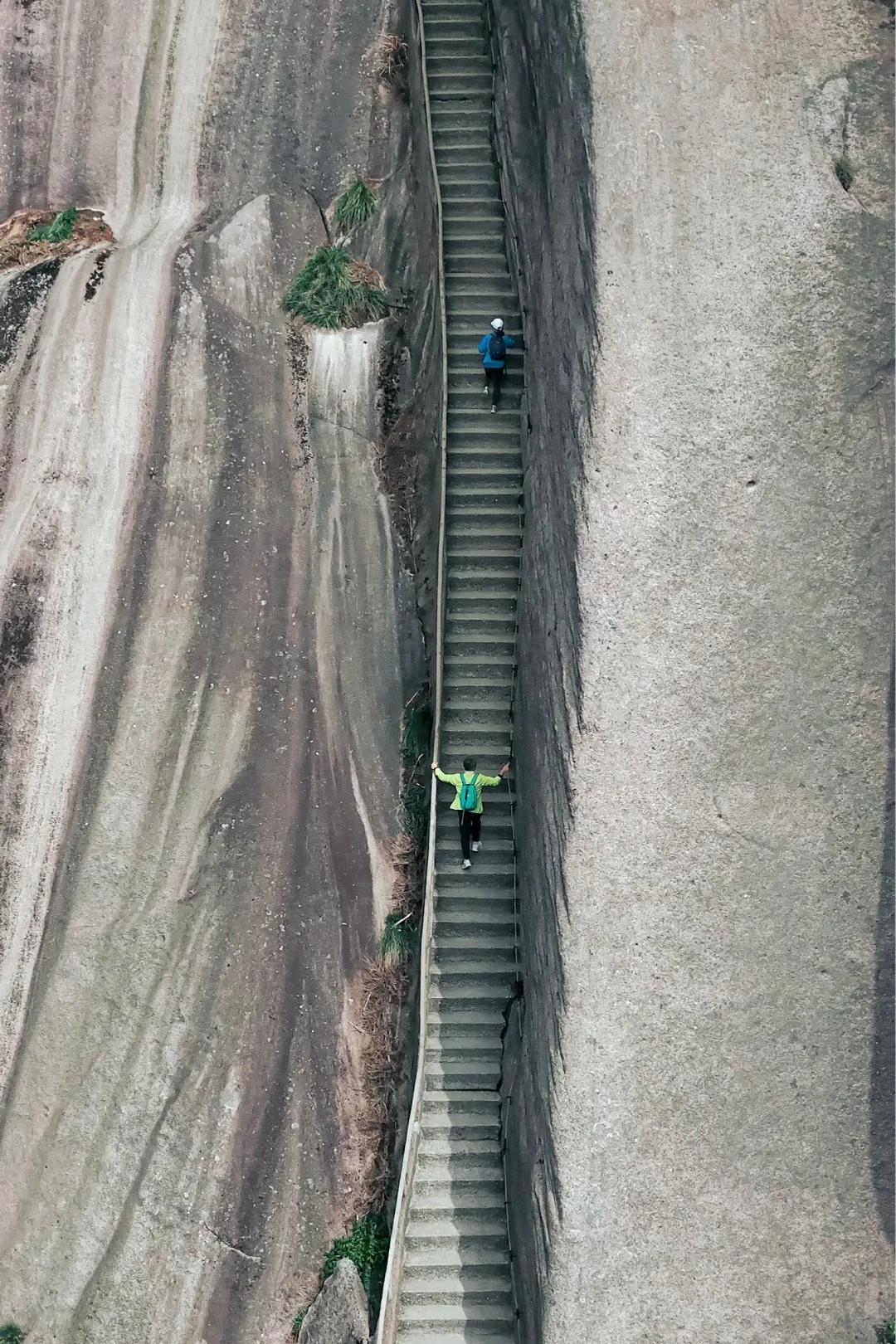
Huangshan Hot Spring, anciently called 'Zhusha Spring', maintains a water temperature of around 42°C year-round. The water is of sodium bicarbonate type, containing various trace elements. The Hot Spring Scenic Area is the southern entrance of Huangshan, featuring facilities such as Huangshan Hot Spring Resort Hotel and Huangshan Museum. From the hot spring, along the ancient climbing path 'Ciguang Pavilion—Half Mountain Temple—Jade Screen Tower', you can reach the front mountain core area, covering about 7.5 kilometers with approximately 5,800 stone steps.
Jade Screen Tower is the core viewing platform of the front mountain, backed by Jade Screen Peak and facing Celestial Capital Peak and Lotus Peak. Here are concentrated the most representative landscapes of Huangshan:
North Sea Hotel is located between Bright Summit and Beginning-to-Believe Peak, serving as the core hub for back mountain tours. Main attractions include:
West Sea Grand Canyon, also known as the 'Dreamlike Scenic Area', is about 3.6 kilometers long. The trail is carved along sheer cliffs, with the narrowest section allowing only one person to pass. Inside the canyon, strange rocks are jagged and clouds and mist swirl, making it a newly developed essence area of Huangshan. The scenic area has a sightseeing cable car, with the lower station at about 1200 meters and the upper station at about 1600 meters, with a one-way ride of about 8 minutes.
Huangshan pine is a unique species of Huangshan, growing in granite crevices above 800 meters. Its roots secrete organic acids to dissolve rocks for nutrients. The shape of Huangshan pines is influenced by wind and light, often appearing flat-topped, short-branched, and twisted. Famous pines include:
The granite body of Huangshan, after hundreds of millions of years of weathering, collapse, and glacial action, has formed various strange rocks. According to statistics, there are over 120 named strange rocks in Huangshan. Typical representatives include:
The Huangshan sea of clouds is the most meteorologically significant of the 'Five Wonders'. The high incidence period is from November to May of the following year, with an average of 50-60 occurrences per year. The formation of the sea of clouds requires three conditions: sufficient water vapor, a stable inversion layer, and appropriate wind force (usually less than level 3). Peaks above 1600 meters often stand above the cloud layer, forming a 'Five Seas' distribution:
Huangshan sunrise is one of the most anticipated sights for visitors. The best viewing times are 5:30-6:00 in spring and autumn (March-May, September-November), 4:30-5:00 in summer (June-August), and 6:00-6:30 in winter (December-February). Recommended sunrise viewing spots:
The best sunset viewing spots are Cloud-Dispelling Pavilion and Danxia Peak, usually between 17:30-18:30 (spring/autumn) or 18:00-19:00 (summer).
In winter (December to February), the average temperature in Huangshan is -3°C to -8°C, with about 30 snow days. After snowfall, Huangshan is covered in silver, and rime ice, glaze ice, and ice hanging are common. When rime forms, pine needles are wrapped in ice crystals, crystal clear, known as 'jade trees and silver branches'. Winter snow combined with sea of clouds and sunrise often creates the beautiful scene of 'snow sea sunrise'.
Huangshan holds multiple symbolic meanings in Chinese culture. First, as a famous Taoist mountain, Huangshan is closely linked to the legend of the Yellow Emperor, and the name itself carries the cultural memory of the 'ancestor of the Chinese nation'. Tang Dynasty poet Li Bai wrote the verse 'Huangshan has four thousand ren, thirty-two lotus peaks', and Ming Dynasty painters such as Shi Tao and Jian Jiang created numerous landscape paintings based on Huangshan, forming the 'Huangshan School of Painting'.
Second, Huangshan is a place where Buddhism and Taoism blend. After the Song Dynasty, temples proliferated, and Ciguang Pavilion and Cuiwei Temple still have incense burning today. Huangshan also preserves over 200 cliff inscriptions, among which 'Da Kuai Wen Zhang' (Great Splendid Writing) and 'Li Ma Kong Dong Hai' (Standing Horse over the East Sea) have high calligraphic art value.
In contemporary times, Huangshan has become an iconic symbol of Chinese tourism. After being listed as a World Heritage Site in 1990, Huangshan receives over 3 million visitors annually, driving economic development in Huangshan City and surrounding areas. Huangshan has also represented China's national image on international occasions, such as the 2008 Beijing Olympic torch relay and the 2019 International Horticultural Exhibition.
With its unparalleled natural wonders and profound cultural heritage, Huangshan has become a treasure of the Chinese nation. Whether it is the magnificence of sea of clouds and sunrise, or the elegance of odd pines and bizarre rocks, Huangshan interprets the oriental aesthetics of 'harmony between heaven and man' in its unique way. As UNESCO World Heritage Committee commented: 'Huangshan is one of China's most outstanding mountain scenic areas, and with its magnificent natural landscapes and rich cultural heritage, it has become a common treasure of all mankind.'
NEARBY