I. Founding and Early Development (1557-1644)
In 1557, the Portuguese were allowed to settle in Macao, initially establishing a foothold in the southwestern part of the peninsula near A-Ma Temple, gradually building houses, churches, and fortifications. In the 1580s, the Portuguese began constructing city walls, forming the prototype of the 'City of the Holy Name of God.' By the end of the Ming Dynasty, Macao had become an important trading hub connecting China with Japan, Southeast Asia, and Europe, with many Sino-Western architectural hybrids appearing, such as the College of St. Paul (founded in 1594, later destroyed by fire, leaving only the facade, i.e., the Ruins of St. Paul's).
II. Prosperity and Conflict (1644-1842)
In the early Qing Dynasty, Macao continued to serve as an outer port for Guangzhou, with trade volumes growing steadily. In 1783, the Portuguese Crown issued the 'Royal Charter,' strengthening administrative control over Macao, and successively built iconic structures such as the Dom Pedro V Theatre (1860) and the Guia Lighthouse (1865). During this period, Chinese and Portuguese communities intermingled spatially, forming a unique texture of interwoven 'front spaces' (squares) and 'streets and alleys.'
III. Modern Transformation and Heritage Conservation (1842-1999)
After the Opium War, Hong Kong rose, and Macao's trade status declined, but the urban layout remained largely unchanged. In the early 20th century, the Macao government began urban planning, paving roads and installing streetlights while preserving many historic buildings. After the Sino-Portuguese Joint Declaration was signed in 1987, the Macao government strengthened cultural heritage protection, and in 1992 promulgated the 'Macao Cultural Heritage List,' designating major buildings in the historic centre as protected monuments. After the handover in 1999, the SAR government continued to promote heritage conservation and nomination efforts.
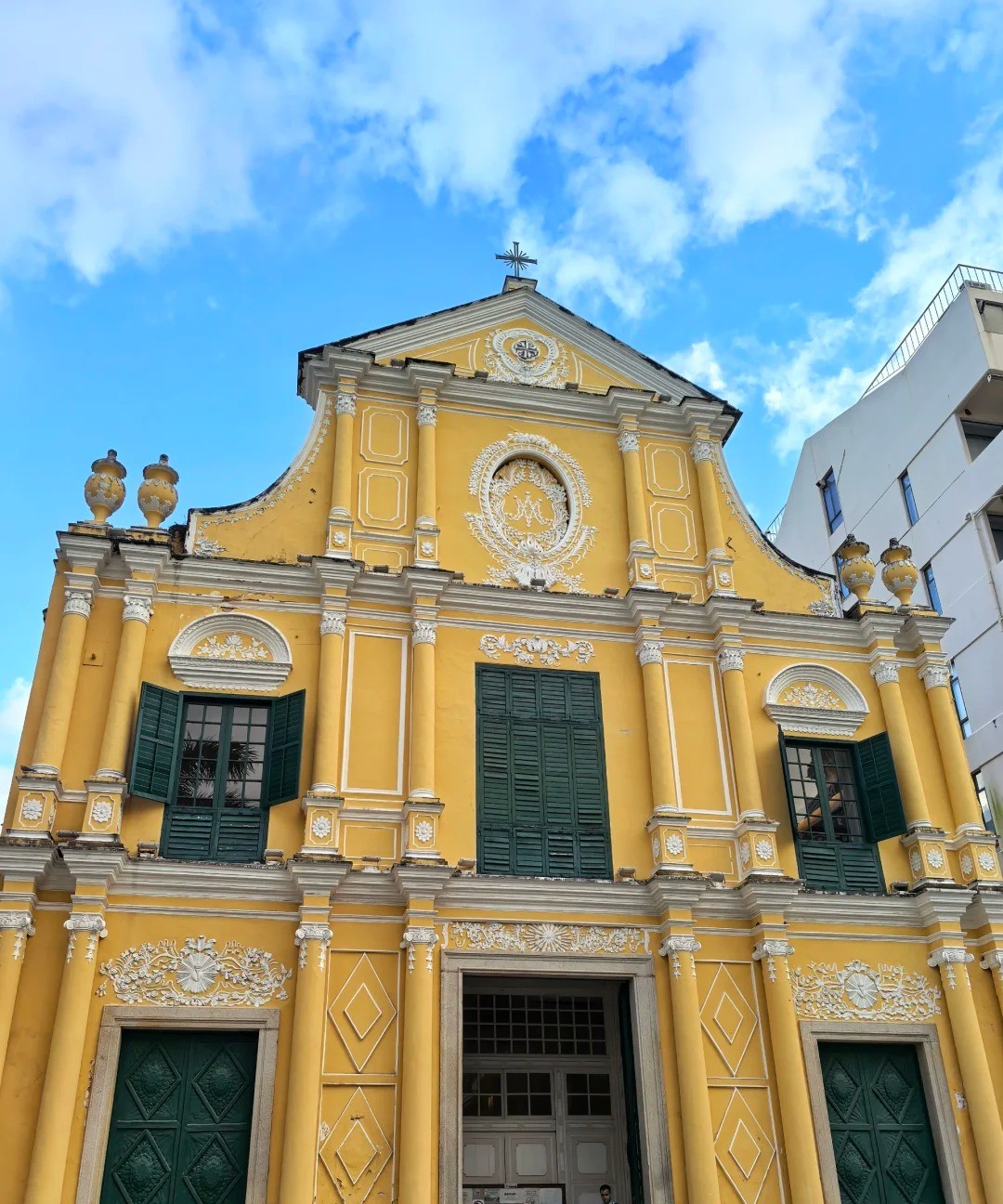
Recommended Route: Classic one-day route: A-Ma Temple → Moorish Barracks → Mandarin's House → St. Lawrence's Church → Dom Pedro V Theatre → Leal Senado Building → Senado Square → St. Dominic's Church → Ruins of St. Paul's → Mount Fortress → Macao Museum → Guia Fortress. The entire walk takes about 4-5 hours. Best Time: From October to December, the weather is cool and dry, ideal for outdoor walking. Avoid weekends and public holidays to reduce crowds. Notes: Keep quiet inside churches; some churches prohibit photography; do not touch statues in temples; in summer, protect yourself from the sun and stay hydrated; wear comfortable walking shoes. Food Recommendations: Near Senado Square, try 'Wong Chi Kei' congee and noodle shop (wonton noodles), 'Yee Shun Milk Company' (double-skin milk), and 'Margaret's Café e Nata' (Portuguese egg tarts), all time-honored establishments.