Free consultation with travel experts — custom itineraries, local tips, stress-free planning.
Usually replies within 24 hours
Or leave us a message
4A LevelModern Landmarks
Tianjin Eye Ferris Wheel
Tianjin Eye
Tianjin
0 views
Category:City Sightseeing
The Tianjin Eye Ferris Wheel, spanning the Hai River, is a landmark of Tianjin. Riding it offers a 360-degree panoramic view of the city's bustling scenery and the winding river, with particularly dazzling night views, making it an excellent choice for romance and sightseeing.
INTRODUCTION
About This Attraction
Tianjin Eye Ferris Wheel: A Shining Pearl on the Hai River
Overview: A Romantic Landmark of a Bridge and a City
The Tianjin Eye Ferris Wheel, officially named "Tianjin Yongle Bridge Ferris Wheel," is located on the main stream of the Hai River at the junction of Hebei District and Hongqiao District in Tianjin. It is a giant observation wheel built on the bridge body of Yongle Bridge (formerly Cihai Bridge). As the only Ferris wheel in the world built on a bridge, it has quickly become a landmark modern urban attraction in Tianjin and even North China since its completion in 2008. The wheel has a diameter of 110 meters, with 48 transparent cabins, each accommodating 8 people, and one full rotation takes about 28 minutes. When it slowly rotates to the highest point, it reaches about 120 meters above the ground, offering visitors a 360-degree view of the city skyline and the winding Hai River within a 40-kilometer radius.
Basic Data at a Glance
Official Name: Tianjin Yongle Bridge Ferris Wheel (commonly known as Tianjin Eye)
Location: Yongle Bridge, Sanchahekou, Hebei District, Tianjin (upper reaches of the Hai River)
Building Type: Composite structure of bridge and observation tower (bridge-wheel integration)
PRACTICAL INFO
Travel Essentials
Opening Hours
Peak season (Apr 1 - Oct 31): 9:00-22:00 (last entry at 21:30) Off-peak season (Nov 1 - Mar 31): 9:00-21:00 (last entry at 20:30) Special dates: On holidays such as Chinese New Year's Eve and National Day, operating hours may be extended. Please refer to official announcements.
Ticket Price
Adult tickets: 100 yuan/person (standard cabin), 150 yuan/person (VIP cabin, includes priority access and a drink). Discounted tickets: Children (1.2-1.4m), seniors (65+), and students (with student ID) are eligible for half-price tickets. Free admission: Children under 1.2m, active military personnel, and disabled individuals (with valid ID). Reservation: It is recommended to book in advance via the official WeChat public account of 'Tianjin Eye' or platforms such as Ctrip and Meituan. On-site ticket purchase may require waiting in line for 1-2 hours.
Highest Point Above Ground: Approximately 120 meters
Number of Cabins: 48 (all fully transparent air-conditioned cabins)
Capacity per Cabin: 8 people
Rotation Period: Approximately 28 minutes per revolution
Design Unit: Jointly designed by Japan's Kumagai Gumi and Tianjin Architectural Design Institute
Commissioning Time: April 2008 (trial operation), officially opened in April 2009
Bridge: Yongle Bridge (formerly Cihai Bridge, renamed in 2007)
Historical Evolution: From Transportation Hub to City Card
Sanchahekou: The Birthplace of Tianjin
The area where Tianjin Eye is located—Sanchahekou—is the confluence of the Hai River, South Canal, and North Canal, known as the "Cradle of Tianjin." According to the Ming Dynasty "Tianjin Wei Zhi," in the second year of Yongle (1404), Tianjin Wei was established, and a city was built nearby, thriving due to water transport. Sanchahekou has been a key waterway junction since ancient times, and in the Qing Dynasty, it became a core node for grain transport and salt distribution. In the early 20th century, with the rise of railways and highways, this area gradually transformed from a water transport hub into a city center. After 2000, Tianjin launched a comprehensive development and renovation project for the Hai River, planning Sanchahekou as the "First Scene of the Upper Hai River," aiming to activate the historical context through modern architecture.
The Birth of the Bridge: From Cihai Bridge to Yongle Bridge
The original bridge on the site was named "Cihai Bridge," built in the 1970s as an ordinary concrete beam bridge. Due to disrepair and inability to meet growing traffic demands, it was included in a demolition and reconstruction plan in 2005. In 2006, the Tianjin municipal government decided to incorporate sightseeing functions into the new bridge design, ultimately adopting the creative "bridge-wheel integration" scheme—mounting the Ferris wheel directly on the main arch of the bridge. In 2007, to commemorate the 600th anniversary of Emperor Yongle naming Tianjin, the new bridge was officially renamed "Yongle Bridge." In April 2008, the main structure of the Ferris wheel was completed and trial operation began; on April 18, 2009, it officially opened to the public, becoming the second tallest Ferris wheel in Asia at that time (after Japan's Sky Dream Fukuoka).
Operation and Upgrades
In the early days of opening, Tianjin Eye quickly became popular for its unique concept of a "Ferris wheel on a bridge," attracting over 3 million visitors annually. In 2015, the scenic area comprehensively upgraded the cabins, adding LED ambient lighting and air purification systems; in 2018, it introduced smart ticketing and time-slot reservation systems, effectively alleviating queue pressure. In 2020, it was temporarily closed due to the COVID-19 pandemic, but later resumed operations with measures such as flow control and disinfection, and launched special projects like "Night Light Shows." As of 2023, Tianjin Eye has received over 25 million visitors cumulatively, becoming a significant contributor to Tianjin's tourism revenue.
Architectural Layout and Structural Design: An Engineering Marvel of Bridge-Wheel Integration
Overall Layout: Trinity of Bridge, Wheel, and Tower
Tianjin Eye is not a standalone Ferris wheel but is deeply integrated with the bridge structure of Yongle Bridge. The entire complex consists of three parts:
Bridge Main Body (Yongle Bridge): Approximately 330 meters long and 32 meters wide, it is a two-way four-lane urban arterial bridge with pedestrian walkways and viewing platforms on both sides. The bridge adopts a through arch bridge structure, with the main arch made of steel box girders, spanning about 190 meters and rising about 45 meters.
Ferris Wheel Rim: A steel rim with a diameter of 110 meters, fixed to the tops of two support towers on the main arch via two giant rotating shafts with a diameter of 1.2 meters. The rim consists of 48 radial steel cables and a ring truss, with a total weight of about 1,200 tons.
Support Towers: Located at both ends of the main arch, each is an A-shaped steel tower about 50 meters high, with foundations extending 30 meters below the riverbed to ensure overall stability. The tops of the towers are equipped with drive motors and braking systems.
Key Dimensions and Parameters
Center Height of Wheel: About 70 meters above the bridge deck, about 85 meters above the water surface
Cabin Spacing: Approximately 7.5 meters (evenly distributed along the rim circumference)
Drive Method: Electric drive, transmitted via friction wheels in contact with the outer edge of the rim, with a design speed of about 0.2 meters per second
Wind Resistance: Can withstand typhoons of magnitude 12, with seismic fortification intensity of 8 degrees
Lighting System: Over 6,000 LED lamp beads installed on the outer edge of the rim, capable of dynamic color changes
Structural Innovation: Collaborative Design of Bridge and Observation Facility
Traditional Ferris wheels typically require independent foundations and towers, but Tianjin Eye directly transfers the load of the Ferris wheel to the bridge structure, a first globally. The design team optimized the cross-section shape of the bridge's main arch through finite element analysis, enabling it to withstand both vehicle traffic loads and the dynamic loads generated by the Ferris wheel's rotation. Additionally, flexible connection devices are installed between the rim and the bridge, allowing slight displacement under temperature changes or wind forces to avoid rigid collisions. This "bridge-wheel integration" design not only saves urban land but also creates a unique visual experience—visitors in the cabins can overlook the Hai River while feeling the dynamic sensation of vehicles passing beneath.
Architectural Features and Natural Scenery: The Blend of Modern Engineering and Riverside Beauty
Engineering and Technical Features
Fully Transparent Cabins: The cabins use double-layered laminated tempered glass with transparent floors, allowing visitors to look directly down at the bridge deck and river, creating a thrilling "floating" sensation. The cabins are equipped with air conditioning, a broadcast system, and emergency communication devices.
Night Lighting System: The LED light strips on the outer edge of the rim are programmable, with blue and white as the main colors on regular days, and switching to theme colors such as red and gold on holidays. During the National Day in 2019, a light show displaying the words "I Love You, China" was presented.
Seismic and Wind Resistance Design: Dampers are installed inside the support towers to absorb vibrations caused by earthquakes or strong winds. Measured data show that under level 8 winds, the horizontal displacement at the top of the rim does not exceed 15 centimeters.
Energy Saving and Environmental Protection: The drive motor uses variable frequency speed control technology, automatically adjusting the rotation speed based on passenger load, saving about 20% energy compared to traditional constant-speed motors.
Natural and Urban Scenery
Tianjin Eye is located at the widest section of the upper Hai River—Sanchahekou, where the river is about 200 meters wide, with numerous historical buildings and modern high-rises on both banks. Looking out from the cabins:
North: Visible are the dome of Tianjin West Railway Station, the confluence of the Ziya River and North Canal, and newly built residential areas in Hebei District.
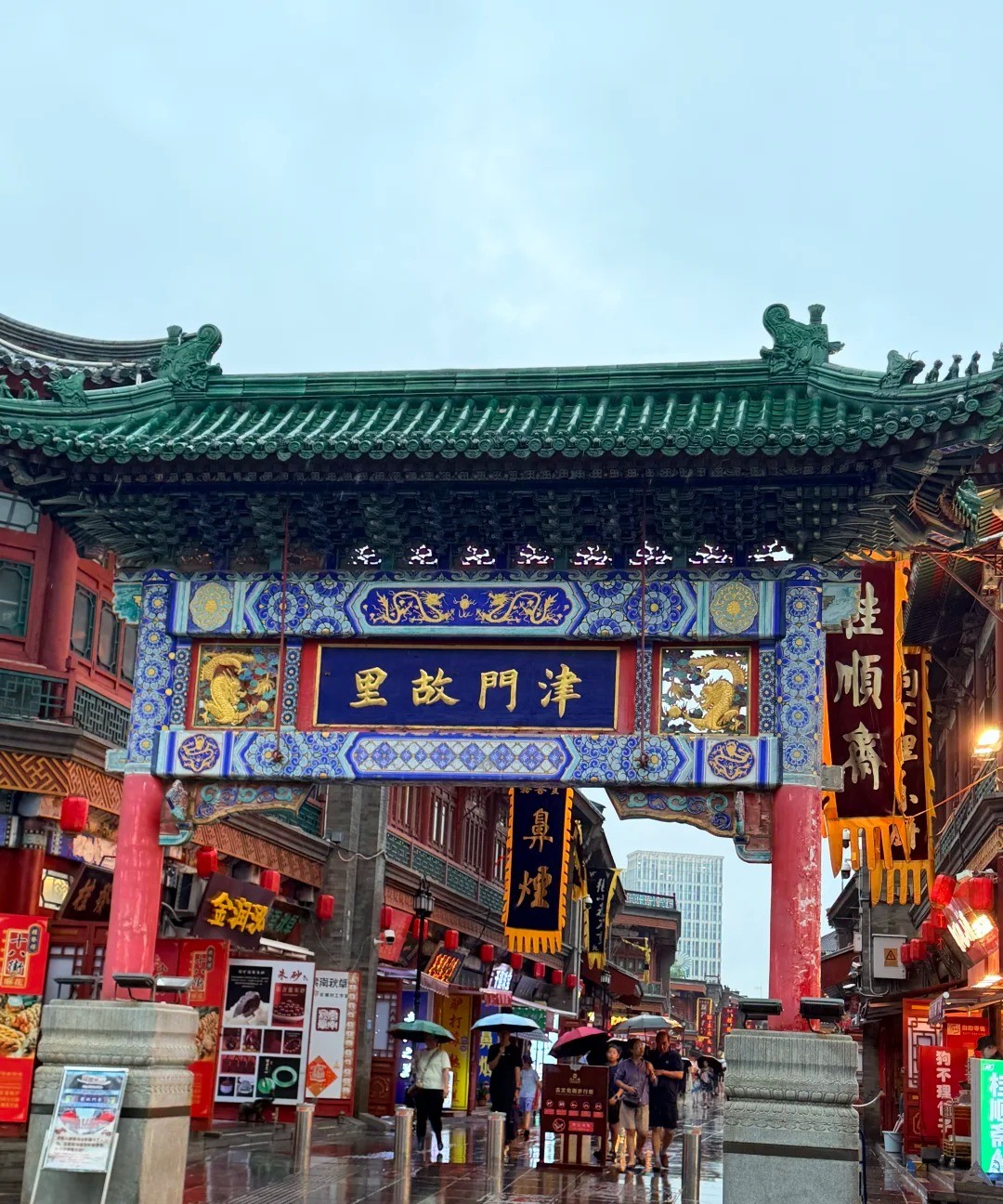
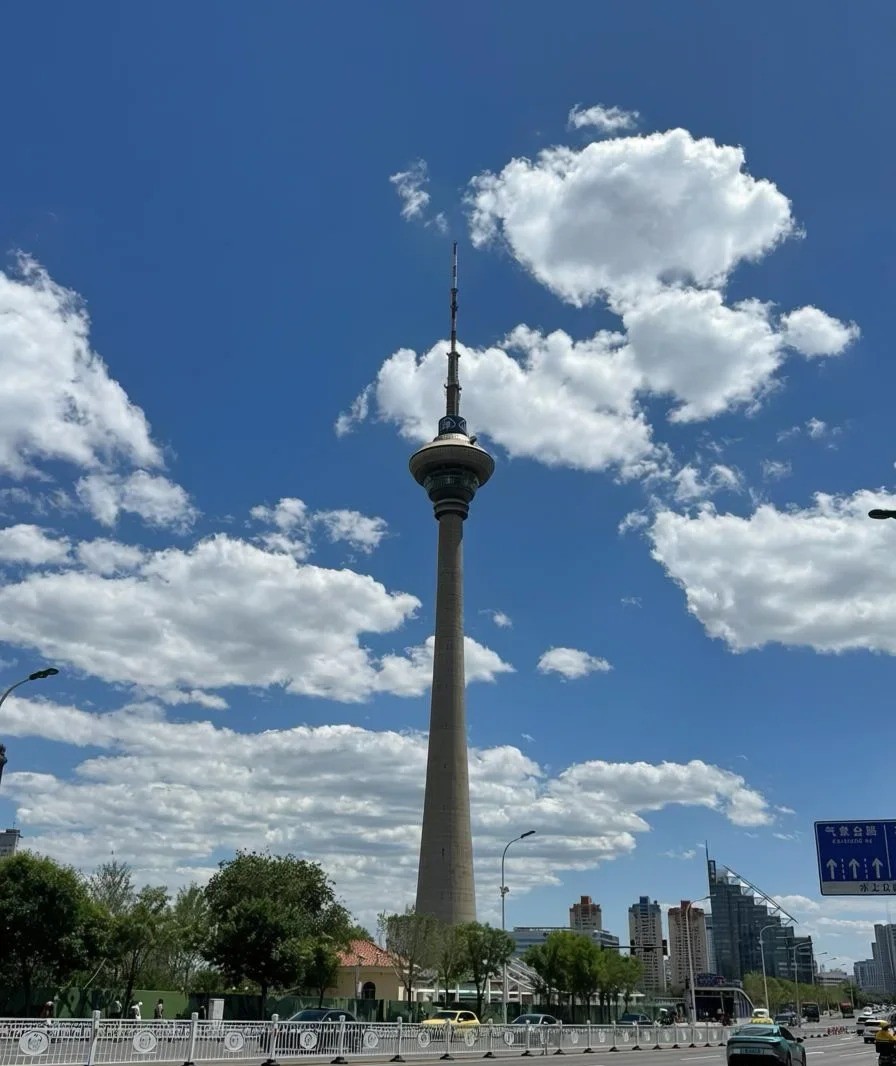
South: The Hai River winds southward, with attractions such as the Ancient Culture Street, Italian Style Area, and Jinwan Plaza lining the banks, and in the distance, the Tianjin Radio and Television Tower (Tianjin Tower) and the city center skyline.
East: The Gothic spire of the Wanghailou Church (built in 1869, a national key cultural relic protection unit) is clearly visible, with the steel outlines of Tianjin Station and Jiefang Bridge behind it.
West: The old bungalow area of Hongqiao District's old city contrasts with the newly built Lujiazui Financial Plaza, and at sunset, one can enjoy the magnificent view of "the long river and the setting sun."
Cultural Significance: From Industrial Heritage to Symbol of Urban Spirit
The Origin of the Name "Tianjin Eye"
The nickname "Tianjin Eye" derives from its unique shape and location. The circular rim of the Ferris wheel and the winding course of the Hai River complement each other, resembling an "eye" overlooking the city. In 2007, the Tianjin municipal government solicited names from the public, and "Tianjin Eye" stood out from thousands of candidates, symbolizing "seeing Tianjin's past and future through this eye." The name was quickly accepted by the media and citizens, becoming a city symbol alongside "Tianjin Station" and "Tianjin Tower."
Modern Interpretation of Bridge Culture
Tianjin is known as the "Museum of Bridges," with dozens of bridges of various styles spanning the Hai River, including Jiefang Bridge, Jintang Bridge, and Shizilin Bridge, many of which are national key cultural relic protection units. Yongle Bridge, where Tianjin Eye is located, breaks the traditional limitation of bridges as mere transportation facilities, integrating sightseeing functions with the bridge structure, creating a new paradigm of "landscape bridges." This design concept has influenced the construction of bridges in many other Chinese cities, such as Guangzhou's Haixin Bridge and Chongqing's Chaotianmen Bridge, which have borrowed its "bridge + sightseeing" composite model.
Carrier of Urban Memory
For Tianjin citizens, Tianjin Eye is not only a tourist attraction but also a witness to urban changes. During the 2008 Olympic Games, it served as the image window for the Tianjin competition area, showcasing the modern face of this northern industrial city to the world. Since then, the annual New Year's Eve "Ferris Wheel Countdown" event and the "Romantic Cabin" service for marriage proposals have gradually integrated it into citizens' daily lives. In 2022, Tianjin Eye was included in the "Tianjin Historical Architecture Protection List," becoming the first Ferris wheel facility recognized as a "modern architectural heritage."
International Influence
As the "world's only Ferris wheel on a bridge," Tianjin Eye has been featured in international media multiple times, such as being rated as one of the "Top 10 Coolest Ferris Wheels in the World" by National Geographic. In 2015, it appeared in the promotional video of the China Pavilion at the Milan World Expo as a representative of modern Chinese engineering. Additionally, its design concept has been included in architectural textbooks in several countries, becoming a classic case of cross-disciplinary design between bridges and observation facilities.
Visitor Information: Practical Guide and Tour Suggestions
Opening Hours
Peak Season (April 1 - October 31): 9:00-22:00 (last entry at 21:30)
Off Season (November 1 - March 31): 9:00-21:00 (last entry at 20:30)
Special Dates: On holidays such as New Year's Eve and National Day, operating hours may be extended; please refer to official announcements.
Ticket Information
Adult Ticket: 100 yuan/person (standard cabin), 150 yuan/person (VIP cabin, includes priority access and a drink)
Discounted Tickets: Children (1.2-1.4 meters), seniors (over 65), and students (with student ID) can enjoy half-price discounts
Free Admission: Children under 1.2 meters, active military personnel, and disabled persons (with valid certificates)
Reservation: It is recommended to book in advance through the official WeChat public account of "Tianjin Eye" or platforms such as Ctrip and Meituan; on-site ticket purchase may require waiting in line for 1-2 hours.
Transportation Guide
Metro: Take Tianjin Metro Line 6 to "Tiantailu Station," exit from Gate C, and walk about 800 meters; or take Line 1 to "Xibeijiao Station" and transfer to a bus.
Bus: Take buses 1, 4, 12, 18, 34, etc., and get off at "Yongle Bridge Station" or "Santiaoshi Station."
Driving: Navigate to "Tianjin Eye Ferris Wheel Parking Lot" (Ligongci Street, Hebei District); parking spaces are limited, so it is recommended to travel during off-peak hours.
Water Transport: Hai River cruise ships have a "Tianjin Eye Pier," which can be reached directly from piers such as Tianjin Station and Ancient Culture Street.
Tour Suggestions
Best Time: Ride 1 hour before sunset (approximately 17:00-18:00) to enjoy both daytime and nighttime views; after the lights come on at night (approximately 19:00-22:00) is suitable for photographing the city night scene.
Nearby Attractions: Within a 10-minute walk, you can reach Ancient Culture Street (Tianhou Temple, Clay Figure Zhang), Wanghailou Church, and Li Shutong's Former Residence Memorial; a 15-minute bike ride takes you to the Italian Style Area.
Notes: Smoking and pets are prohibited in the cabins; visitors with acrophobia, heart disease, or hypertension should choose carefully; it is recommended to wear comfortable shoes as you need to walk across the bridge walkway to board.
Photography Tips: The best shooting spot is on the riverside walkway on the east side of Yongle Bridge (Hebei District side), where you can capture the complete reflection of the Ferris wheel and the bridge; at night, use a tripod to capture light trails and star effects.
Service Facilities
Dining: Under the bridge, there is a "Tianjin Eye Commercial Street" offering Tianjin snacks such as jianbing guozi and Erduoyan fried cake, as well as chain restaurants like Starbucks and KFC.
Souvenirs: The official store sells cultural products such as Ferris wheel models, postcards, and fridge magnets, priced from 20 to 200 yuan.
Accessibility Facilities: Accessible ramps and dedicated cabins are available; wheelchair users can contact staff in advance for assistance boarding.
The Tianjin Eye Ferris Wheel, with its engineering wisdom of "bridge-wheel integration," perfectly combines modern industrial aesthetics with the thousand-year cultural heritage of the Hai River. It is not only a city viewpoint but also a window into Tianjin's history and future. Whether overlooking the water transport relics of Sanchahekou during the day or indulging in the dazzling urban neon at night, this "Eye on the Hai River" always tells the story of Tianjin's past, present, and future from its unique perspective.
How to Get There
Metro: Take Tianjin Metro Line 6 to "Tiantailu Station," exit from Gate C, and walk about 800 meters; or take Line 1 to "Xibeijiao Station" and transfer to a bus. Bus: Take buses 1, 4, 12, 18, 34, etc., and get off at "Yongle Bridge Station" or "Santiaoshi Station." Driving: Navigate to "Tianjin Eye Ferris Wheel Parking Lot" (Ligongci Street, Hebei District); parking spaces are limited, so it is recommended to travel during off-peak hours. Water Transport: Hai River cruise ships have a "Tianjin Eye Pier," which can be reached directly from piers such as Tianjin Station and Ancient Culture Street.
Travel Tips
Best Time: Ride 1 hour before sunset (approximately 17:00-18:00) to enjoy both daytime and nighttime views; after the lights come on at night (approximately 19:00-22:00) is suitable for photographing the city night scene. Nearby Attractions: Within a 10-minute walk, you can reach Ancient Culture Street (Tianhou Temple, Clay Figure Zhang), Wanghailou Church, and Li Shutong's Former Residence Memorial; a 15-minute bike ride takes you to the Italian Style Area. Notes: Smoking and pets are prohibited in the cabins; visitors with acrophobia, heart disease, or hypertension should choose carefully; it is recommended to wear comfortable shoes as you need to walk across the bridge walkway to board. Photography Tips: The best shooting spot is on the riverside walkway on the east side of Yongle Bridge (Hebei District side), where you can capture the complete reflection of the Ferris wheel and the bridge; at night, use a tripod to capture light trails and star effects.