3. Architectural Layout and Scenic Area Structure: Bagua City, Water Pass, and Mountain-top Great Wall
3.1 Bagua Pass: A Maze-like Military Fortress
The core of Huangyaguan is the "Bagua Pass," also known as "Bagua City." This is a military defense city designed by Qi Jiguang based on the Eight Trigrams of the I Ching, unique among Great Wall passes in China.
City Scale: The pass has an irregular quadrilateral plan, with a perimeter of about 890 meters and an area of about 38,000 square meters. The walls are about 7-9 meters high, 6 meters wide at the base, and 4.5 meters wide at the top, all faced with brick and stone.
Gate Settings: The pass has four gates: east, west, south, and north. The south gate is the main gate, with a plaque reading "Huangyaguan"; the north gate is "Xuanwu Gate," leading to the main wall; the east gate is "East Yuanyang Gate," and the west gate is "West Yuanyang Gate." All four gates have gate towers or arrow towers.
Bagua Layout: The streets inside the city are not traditional cross or grid patterns, but are designed according to the eight trigram directions (Qian, Kan, Gen, Zhen, Xun, Li, Kun, Dui) as "T"-shaped streets, "swastika"-shaped streets, and other winding paths, with varying widths and many forks. Once an enemy breaks into the city, they easily lose their way and are divided and surrounded. The city originally contained government offices, military camps, granaries, stables, temples, and other buildings, many of which have been restored or rebuilt, forming the "Bagua Street" tourist area.
Core Buildings: In the center of the pass is the "Tidiao Gongshu" (Qi Jiguang's office and command post), now the "Huangyaguan Great Wall Museum," displaying Ming Dynasty weapons, garrison daily utensils, and Great Wall brick carvings. In the northwest corner of the city is the "Phoenix Tower," a two-story brick-and-wood structure, one of the commanding heights of the pass.
3.2 Water Pass: A Defensive Masterpiece on the Ju River
The most unique building at Huangyaguan is the "Water Pass." The Ju River flows from north to south through the pass, dividing the Great Wall into eastern and western sections. To prevent enemy attacks along the river valley, Qi Jiguang built a water pass on the riverbed.
Structure: The water pass consists of three parts: a dam, an enemy tower, and a water gate. The dam is stone-built, about 5 meters high and 8 meters wide, spanning the river, raising the water level for easy access and forming a barrier. On the dam stands a hollow enemy tower (Water Pass Enemy Tower), about 12 meters high, with arrow slits on all four sides, overlooking the entire valley. Below the tower is a water gate, about 3 meters wide, normally open for boat passage, but closed during wartime and equipped with iron grilles or rolling logs and stones.
Function: The water pass achieved "dual defense of water and land" - obstacles on water, towers on land, with the enemy tower connected to the walls on both banks, forming a three-dimensional crossfire network. This design is extremely rare in Ming Dynasty Great Wall and reflects Qi Jiguang's military wisdom of adapting to local conditions.
3.3 Wall and Enemy Towers: A Dragon on the Mountain Ridge
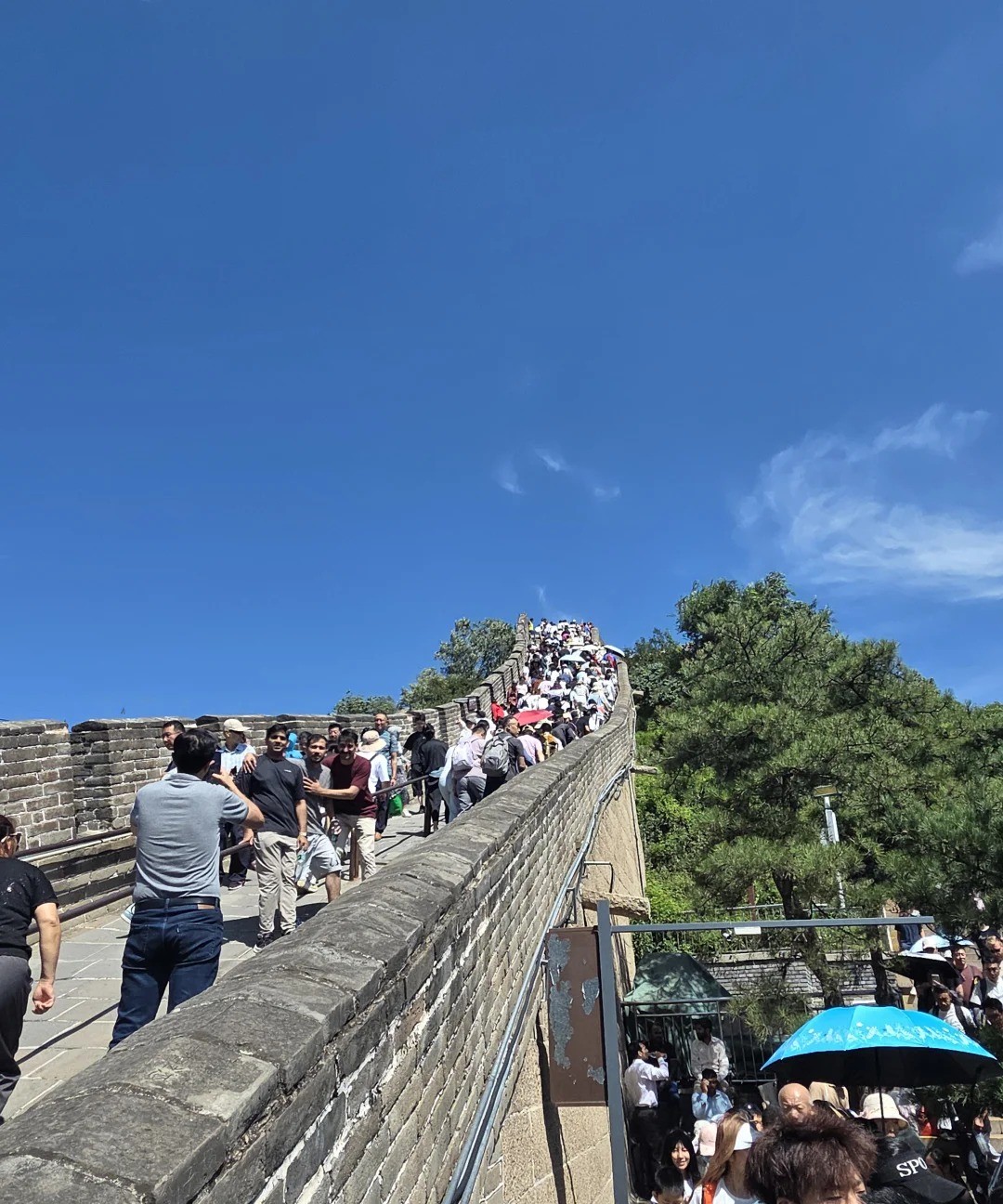
Huangyaguan Great Wall winds along the Yan Mountains, with walls built according to the mountain terrain, with steep slopes, some sections exceeding 60 degrees. The open section starts from the north gate of the pass, extends east to "Wangmaoding," and connects west to "Widow Tower."
Wall Types:
- Brick-faced Wall: The main sections are standard Ming Dynasty brick-faced walls, with the outer side built of city bricks, the inner side of rubble or rammed earth, and the top paved with square bricks, with crenellations, parapets, and drainage channels. The top width is about 4-5 meters, allowing five horses or ten people to walk side by side.
- Stone Wall: On extremely steep ridges, dry-stacked rubble walls are used without brick facing, using local mountain stone to save labor. This type is more common on the unopened section east of "Wangmaoding."
- Precipitous Wall: Some sections utilize natural cliffs, with only low walls or parapets built on the ridge, forming a "natural barrier."
Enemy Towers: The enemy towers at Huangyaguan are all Qi Jiguang-style hollow towers, mostly square or rectangular in plan, with sides of about 8-12 meters and heights of about 10-15 meters. The towers have two or three floors: the lower floor is a brick vaulted chamber for storing weapons, grain, and housing troops, with ventilation holes and drainage channels; the upper floor is a platform with crenellations and shooting holes around, and a small brick-and-wood house (pufang) in the center for soldiers to rest and shelter from rain. Famous enemy towers include:
- Widow Tower: Located on the ridge west of the pass, it is said to have been built in memory of the widows of twelve soldiers who died under Qi Jiguang's command. Inside, there are statues of twelve women, making it one of the few enemy towers named after women on the Great Wall.
- Wangmaoding Enemy Tower: Located at the highest point of the Great Wall, about 800 meters above sea level, the tower is partially damaged, but the view is excellent, overlooking the entire Huangyaguan basin.
- Phoenix Tower: The commanding height within the pass, connected to the wall, serving both observation and command functions.
3.4 Overall Scenic Area Layout
The Huangyaguan Great Wall Scenic Area, with Bagua Pass as its core, is divided into three major tourist areas:
- Pass City Tourist Area: Includes Bagua City, Tidiao Gongshu (Great Wall Museum), Phoenix Tower, and the Wall Ruins Park, where visitors can experience the maze-like layout of Ming Dynasty military fortifications.
- Main Wall Tourist Area: Starting from the north gate of the pass, climb the Great Wall east or west. The eastern route to "Wangmaoding" is about 1.5 kilometers with a gentler slope, suitable for ordinary tourists; the western route to "Widow Tower" is about 2 kilometers with a steep slope, suitable for those with good physical fitness.
- Water Pass Tourist Area: Located on the Ju River north of the pass, visitors can closely view the Water Pass Enemy Tower, the dam, and the river valley scenery.