Free consultation with travel experts — custom itineraries, local tips, stress-free planning.
Usually replies within 24 hours
Or leave us a message
5A LevelHistorical Sites
Badaling Great Wall
Badaling Great Wall
Beijing
0 views
Category:Historical Sites
The Badaling Great Wall, a Ming Dynasty fortress, winds majestically through rugged mountains. Ascend the beacon towers to overlook the dragon-like wall and feel the weight of millennia and the spirit of the Chinese nation.
INTRODUCTION
About This Attraction
Badaling Great Wall: The Essence of the Great Wall and the Peak of Chinese Military Defense
Overview: A Model of the Great Wall in World Cultural Heritage
The Badaling Great Wall, located at the northern entrance of the Guanggou Ancient Road in the Jundu Mountains, Yanqing District, Beijing, is the best-preserved and most representative section of the Ming Dynasty Great Wall, and the first section opened to tourists. In 1987, the Great Wall was inscribed on the UNESCO World Heritage List, and Badaling, as one of its most outstanding sections, became a core component of this world heritage. In 1961, the Badaling Great Wall was designated by the State Council as one of the first batch of National Key Cultural Relics Protection Units.
The Badaling Great Wall is renowned as the "essence of the Great Wall" for its magnificent scenery, exquisite construction techniques, and comprehensive military defense system. It is not only a symbol of the indomitable spirit of the Chinese nation but also a masterpiece of ancient Chinese military engineering and architectural art. Here is an overview of its key data:
Geographical location: Northern entrance of the Guanggou Ancient Road, Jundu Mountains, Yanqing District, Beijing, at an altitude of about 1000 meters
Construction period: Large-scale construction from the 18th year of Hongzhi (1505) to the Wanli period (1573-1620) of the Ming Dynasty
PRACTICAL INFO
Travel Essentials
Opening Hours
Peak season (Apr 1 - Oct 31): 6:30-19:00; Off season (Nov 1 - Mar 31): 7:30-18:00
Ticket Price
Peak season ¥40 / off season ¥35, half price for students (subject to official announcements)
How to Get There
Bus: Take bus No. 877 from Deshengmen in downtown Beijing directly to Badaling Great Wall, about 1.5 hours. High-speed rail: Take the Beijing-Zhangjiakou high-speed railway from Beijing North Station or Qinghe Station to Badaling Great Wall Station, about 20 minutes. Self-driving: Take the Beijing-Tibet Expressway (G6) to the Badaling Great Wall exit; the scenic area has a large parking lot.
Total length: The wall open to tourists is about 3,741 meters long
Number of enemy towers: 19 in total (4 on the south section, 12 on the north section, and 3 near the pass)
Average wall height: About 7.8 meters
Wall base width: About 6.5 meters
Wall top width: About 5.7 meters (allowing five horses or ten people to walk side by side)
Pass area: About 5,000 square meters
Year of World Heritage inscription: 1987
Batch of National Key Cultural Relics Protection Units: First batch (1961)
Historical Evolution: From Pre-Qin Beacon Towers to Ming Dynasty Fortress
Early Great Wall Remains
The history of Great Wall construction in the Badaling area dates back to the Warring States period. According to the Records of the Grand Historian, the Yan State built walls along its northern border to defend against nomadic peoples such as the Donghu. Archaeological surveys have found rammed earth remains of the Yan Great Wall on the ridges on both sides of the Guanggou, which laid the foundation for later Ming Dynasty construction. During the Northern Qi period (550-577 AD), the wall in this area was also repaired and expanded to defend against the Turks and Khitans.
Ming Dynasty: The Heyday of the Badaling Great Wall
The Ming Dynasty was the culmination of Great Wall construction. After founding the Ming Dynasty, Emperor Zhu Yuanzhang adopted the strategy of "building high walls and storing abundant grain" and began large-scale construction of northern defenses. As the northern gate guarding the capital (Beijing), the strategic importance of the Badaling Great Wall was paramount. After Emperor Zhu Di moved the capital to Beijing, Badaling became the first barrier north of the capital.
The construction of the Badaling Great Wall can be divided into three main phases:
Hongzhi period (1488-1505): Emperor Zhu Youcheng adopted the advice of his ministers and began large-scale construction of the Badaling pass and the walls on both sides. In the 18th year of Hongzhi (1505), the Badaling pass was basically completed, with a garrison commander stationed there.
Jiajing period (1522-1566): To resist the frequent incursions of the Mongol leader Altan Khan, Emperor Zhu Houcong ordered the reinforcement of the Badaling Great Wall, adding enemy towers and beacon towers, and upgrading the wall from rammed earth to brick-faced. In the 30th year of Jiajing (1551), the entire Badaling Great Wall was reinforced with brick.
Wanli period (1573-1620): During the reign of Emperor Zhu Yijun, Great Wall construction techniques reached their peak. Under the supervision of Qi Jiguang, Commander-in-Chief of the Jizhen garrison, the Badaling Great Wall underwent a comprehensive upgrade, including raising the wall, adding hollow enemy towers, and improving the drainage system. Qi Jiguang's book "Records of Military Training" details the construction standards and defense tactics for Great Wall enemy towers.
Protection and Opening Since the Qing Dynasty
After the establishment of the Qing Dynasty, the Great Wall gradually lost its military defense function. Emperor Kangxi issued an edict "not to repair the Great Wall," but Badaling, as an important pass, still had garrison troops to maintain order. From the late Qing to the Republic of China period, the Great Wall fell into disrepair, and some sections collapsed. In 1953, the People's Republic of China government began large-scale restoration of the Badaling Great Wall, restoring the pass, walls, and enemy towers to their original appearance. In 1961, Badaling was listed as a National Key Cultural Relics Protection Unit. In 1987, the Great Wall was inscribed on the World Heritage List. Today, Badaling has become one of the most visited sites by heads of state and foreign dignitaries, with a cumulative total of over 200 million visitors.
Architectural Layout: A Rigorous Three-Dimensional Defense System
The Wall: The Main Structure of the Great Wall
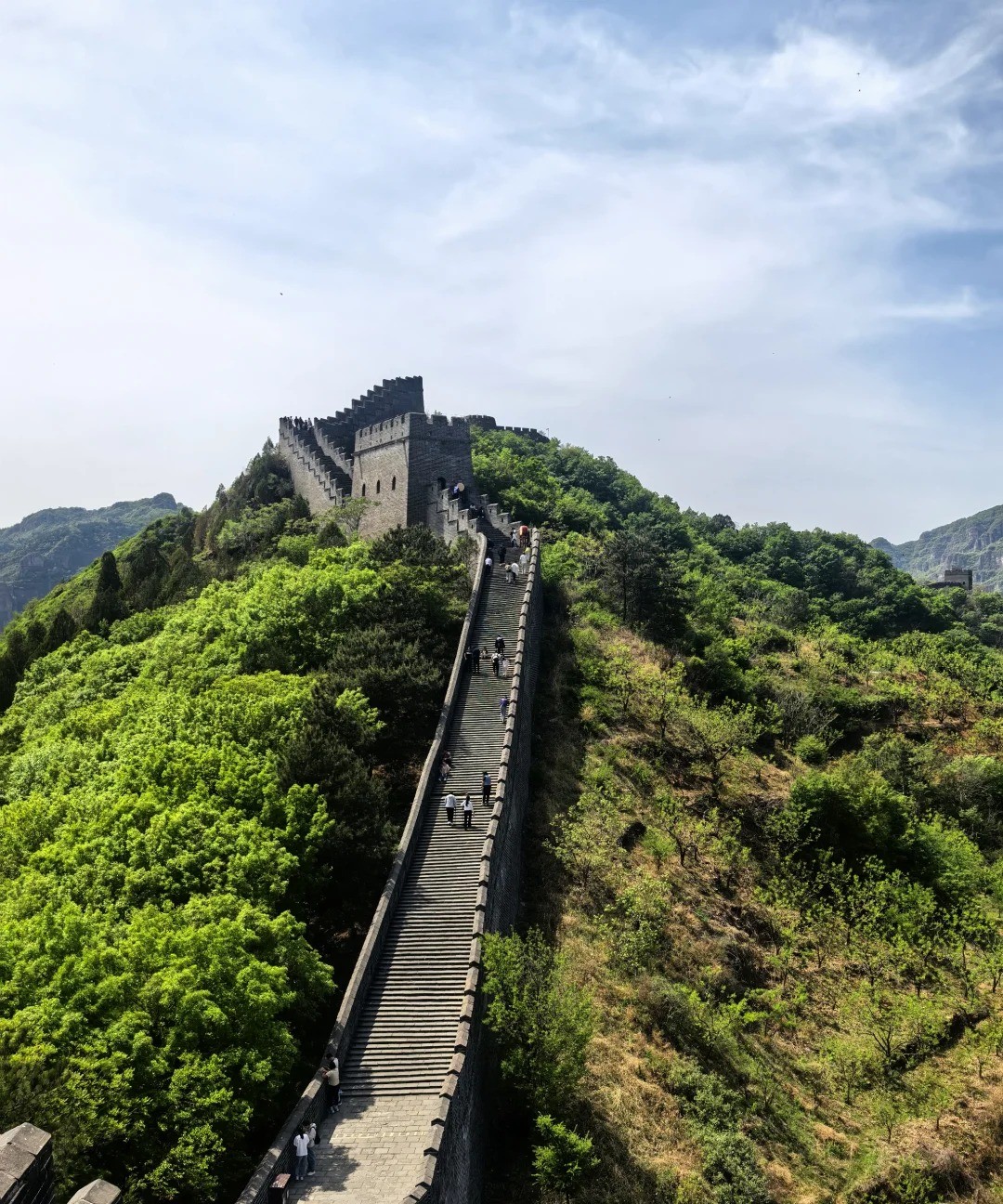
The wall of the Badaling Great Wall is a typical Ming Dynasty standard form, with a rammed earth core and brick facing. The wall is divided into three parts from bottom to top: the foundation, the body, and the crenellations.
Foundation: Built with large stone strips, extending about 1.5 meters underground to prevent enemy tunneling. The stones are filled with lime mortar and glutinous rice juice, making them extremely solid.
Body: The interior is rammed earth, and the exterior is faced with city bricks. The bricks are of uniform size, 38-42 cm long, 18-20 cm wide, and 9-10 cm thick, weighing about 15 kg. The joints are filled with lime mortar, making them watertight.
Crenellations: On the outer side of the wall top, there is a parapet about 2 meters high, with a loophole between every two crenellations. Below the crenellations are observation holes for watching the enemy. On the inner side, there is a low wall about 1 meter high to prevent defenders from falling.
Horse path: The top of the wall is a horse path paved with square bricks, slightly sloping outward for drainage. The path is about 5.7 meters wide, allowing five horses or ten people to walk side by side.
Enemy Towers: Core Nodes of Three-Dimensional Defense
There are 19 enemy towers along the Badaling Great Wall, divided into solid platforms and hollow towers. Among them, the hollow towers were advanced defensive works promoted by Qi Jiguang during the Wanli period.
Hollow enemy towers: About 12-15 meters high, divided into two levels. The lower level is a brick and stone arch structure with arrow windows and cannon ports, used to store weapons, ammunition, and grain. The upper level is an observation platform with crenellations on all sides, used to observe the enemy and direct operations. Inside, a staircase connects the levels, narrow enough for only one person to pass, making it easy to defend.
Solid enemy platforms: Mostly built in the early period, with rammed earth interiors and brick exteriors. The top area is small, accommodating only a few soldiers.
Representative towers: North Tower No. 4 (starting point of the Hero Slope), North Tower No. 8 (the highest point of Badaling, about 888 meters above sea level), South Tower No. 4 (with the most precipitous scenery), etc.
Beacon Towers: The Nerve Endings of Information Transmission
Dozens of beacon towers are distributed along the Badaling Great Wall and on the hilltops on both sides of the Guanggou. Beacon towers were an important part of the ancient military communication system, used to transmit warnings of enemy invasion.
Structure: Beacon towers are square or circular, about 8-10 meters high, with a base side length of about 10 meters. The top has piles of firewood and wolf dung (the main material for smoke signals), and there is a ladder leading to the top.
Signal rules: In the Ming Dynasty, it was stipulated that an enemy force of fewer than 100 would raise one beacon (light one pile of firewood), 100 or more would raise two beacons, 1,000 or more would raise three beacons, and 10,000 or more would raise four beacons. At night, torches were used instead of smoke, with the number of torches corresponding to the level.
Transmission speed: The beacon signal from Badaling to Beijing could be transmitted in as little as 2 hours, demonstrating the efficiency of the Ming military communication system.
The Pass: The Defense Hub of Badaling
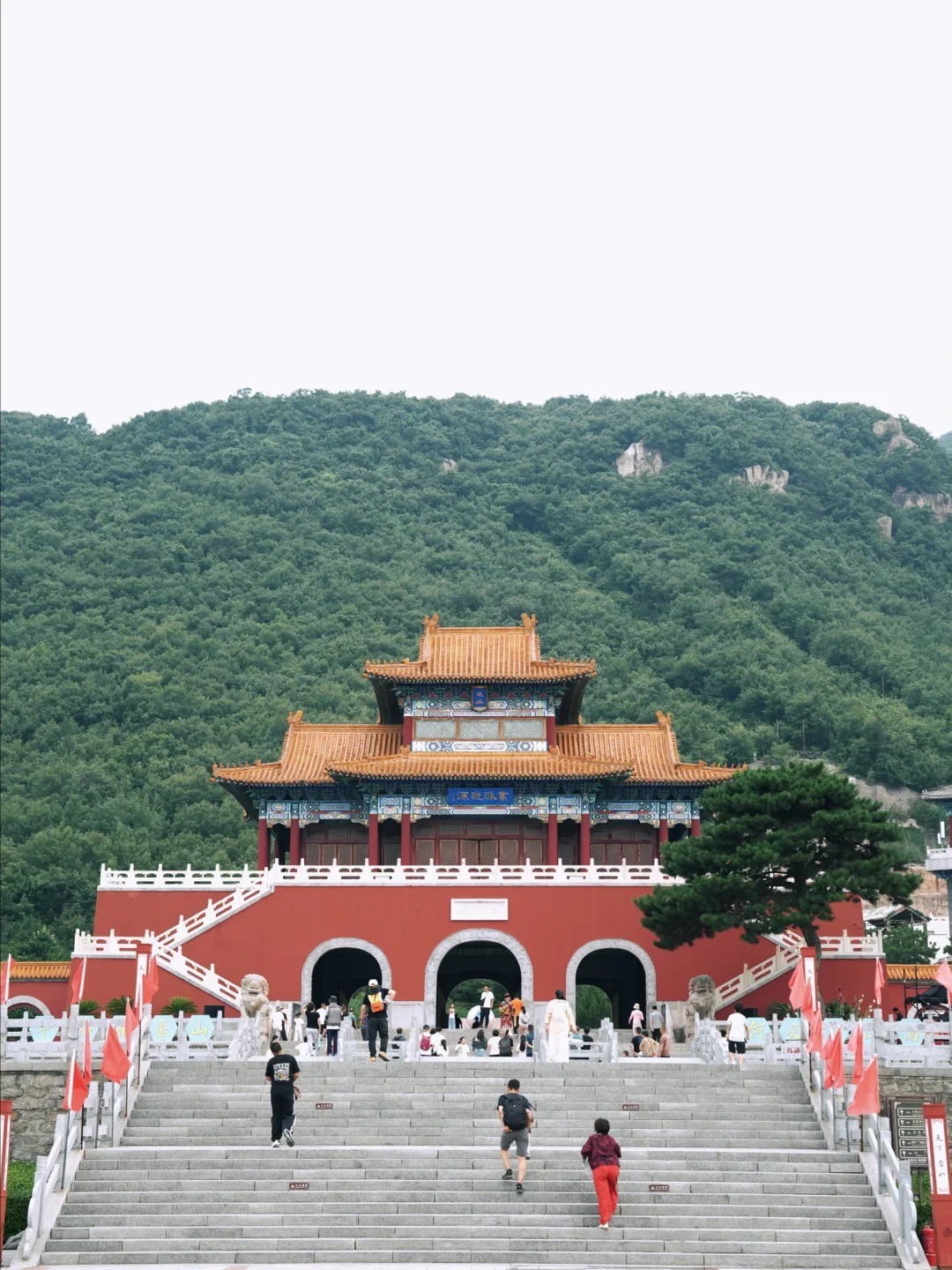
The Badaling pass is the core defensive node of the Great Wall, located at the northern entrance of the Guanggou, guarding the throat of the road from Beijing to the frontier. The pass is trapezoidal in plan, covering an area of about 5,000 square meters.
East Gate: Inscribed with "Juyong Outer Barrier," meaning the outer defense of Juyongguan. The gate opening is about 4 meters wide and 5 meters high, built with stone strips and city bricks, with an arched top.
West Gate: Inscribed with "Northern Gate Lock," meaning the key to the northern gate. The gate opening has the same structure as the east gate but is taller and more solid.
Barbican: Inside the pass, there is a barbican, semicircular in plan, about 8 meters high. The barbican has hidden doors and loopholes, so once the enemy enters, defenders can shoot from all sides, creating a "catch a turtle in a jar" situation.
Garrison Office: The pass originally had a garrison office, barracks, and warehouses, but only ruins remain. According to the Yanqing Prefecture Annals, the Badaling pass had a standing garrison of about 500 soldiers, which could exceed 2,000 in wartime.
Architectural Features: The Culmination of Ming Dynasty Great Wall Technology
Rammed Earth and Brick Facing Technology
The wall of the Badaling Great Wall uses a "rammed earth core with brick facing" structure, a major innovation in Ming Dynasty Great Wall construction. The rammed earth core is made of loess, lime, and sand mixed and compacted in layers of about 20 cm thick, pounded repeatedly with stone pestles to achieve high density and hardness. The exterior bricks are laid with lime mortar and glutinous rice juice, whose stickiness makes the joints extremely strong, remaining intact after centuries of weathering.
Drainage System
The Badaling Great Wall has a comprehensive drainage system to prevent water damage. The horse path on top of the wall slopes slightly outward, and rainwater drains through drainage holes into ditches outside the wall. The drainage holes are set below the crenellations, about every 5 meters, carved from stone strips. The tops of enemy towers have gutters and downspouts to direct rainwater to the ground. Inside the pass, there are underground channels to drain water to the Guanggou river. This drainage system is scientifically designed and still functions today.
Standardization and Modularization of Defensive Works
Ming Dynasty Great Wall construction achieved a high degree of standardization and modularization. The dimensions of city bricks, the shape of enemy towers, and the height of crenellations were all uniformly specified. Qi Jiguang's "Records of Military Training" detailed the dimensions of enemy towers: base width 12 meters, top width 10 meters, height 13 meters, wall thickness 2 meters. This standardization facilitated rapid construction and repair, and ensured uniform quality of defensive works.
Selection and Processing of Stone and Brick Materials
The stone used in the Badaling Great Wall was mainly sourced from local limestone and granite, which are hard and weather-resistant. The city bricks were fired in nearby kilns using a refined clay process, resulting in dense bricks that ring like metal when struck. It is estimated that each brick required a firing temperature of over 1000°C, and after cooling, the bricks had extremely high strength. The Badaling Great Wall used about 40 million city bricks, each inscribed with the kiln name and craftsman's name, reflecting a strict quality traceability system.
Military Value: The Iron Defense Line Guarding the Capital
Strategic Position
The Badaling Great Wall is located at the northern entrance of the Guanggou in the Jundu Mountains, the only passage from Beijing to the frontier. The Guanggou is about 20 kilometers long, with steep mountains on both sides, forming a natural military barrier. The Badaling pass guards the northern entrance, while Juyongguan at the southern entrance forms a pincer formation, together constituting the "Northern Gate Lock" guarding the capital. Ming military strategists believed that "Juyongguan is the gate of the capital, and Badaling is the lock of Juyongguan," highlighting its strategic importance.
Beacon System
The Badaling Great Wall had a comprehensive beacon system, an important part of the Ming military communication system. Beacon towers were placed every 2.5 kilometers, forming a chain from Badaling to Beijing. The Ming stipulated five levels of beacon signals: one beacon (fewer than 100 enemies), two beacons (100 to 1,000), three beacons (1,000 to 5,000), four beacons (5,000 to 10,000), and five beacons (over 10,000). At night, torches were used instead of smoke, with the number of torches corresponding to the level.
Troop Deployment and Logistics
The Ming Dynasty stationed heavy troops at the Badaling Great Wall, with about 500 soldiers in peacetime and 2,000-3,000 in wartime. The garrison was divided into three types: wall defenders, patrols, and beacon soldiers. Wall defenders were responsible for defending the wall and enemy towers, patrols for patrolling the Guanggou, and beacon soldiers for watching and signaling. For logistics, the pass had granaries, armories, and wells, sufficient for three months of operations. According to the Yanqing Prefecture Annals, the well in the Badaling pass was 30 meters deep, with sweet water that is still usable today.
Recorded Battles
The Badaling Great Wall witnessed several major battles during the Ming Dynasty. In the 29th year of Jiajing (1550), the Mongol leader Altan Khan broke through Gubeikou and approached Beijing, an event known as the "Gengxu Incident." After that, the Ming strengthened the defenses of Badaling. In the 17th year of Chongzhen (1644), Li Zicheng's peasant army attacked Beijing through Juyongguan, and the Badaling defenders surrendered without a fight, marking the fall of the Ming Dynasty. These events fully demonstrate the central role of the Badaling Great Wall in military defense.
Visitor Information
Opening Hours
Peak season (April 1 - October 31): 6:30-19:00
Off-season (November 1 - March 31): 7:30-18:00
Transportation
Bus: Take bus No. 877 from Deshengmen in downtown Beijing directly to Badaling Great Wall, about 1.5 hours.
High-speed rail: Take the Beijing-Zhangjiakou high-speed railway from Beijing North Station or Qinghe Station to Badaling Great Wall Station, about 20 minutes.
Self-driving: Take the Beijing-Tibet Expressway (G6) to the Badaling Great Wall exit; the scenic area has a large parking lot.
Tour Suggestions
Best seasons: Spring (April-May) and autumn (September-October), with pleasant weather and magnificent scenery.
Recommended route: Start from the pass, first climb the north section (North Tower No. 1 to No. 8), then the south section (South Tower No. 1 to No. 4), taking about 3-4 hours in total.
Notes: The steps are steep, so wear sports shoes; pay attention to sun protection and hydration; protect cultural relics and do not carve or scribble.
Nearby Attractions
Juyongguan Great Wall: Located about 20 kilometers south of Badaling, it is the southern entrance of the Guanggou, forming a complete defense system with Badaling.
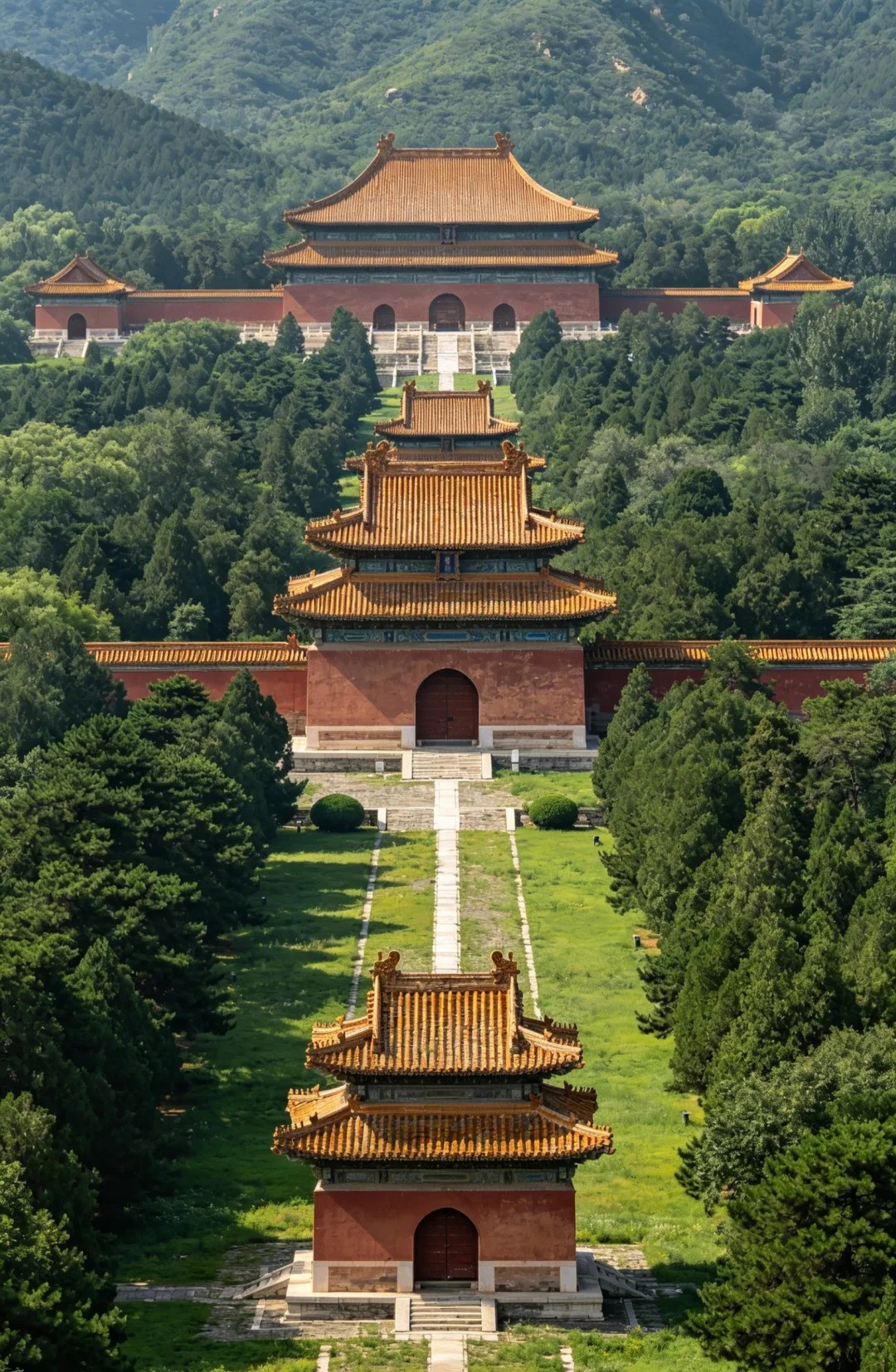
Ming Tombs: Located in Changping District, they are the burial site of 13 Ming emperors and are also a World Heritage site.
Badaling Wildlife Park: Located at the foot of the Badaling Great Wall, it is one of the largest mountain wildlife parks in China.
The Badaling Great Wall is not only a great architectural wonder but also a symbol of the indomitable and self-improving spirit of the Chinese nation. It has witnessed more than two thousand years of Chinese history and carries the wisdom and sweat of countless ancestors. Today, when we climb the Badaling Great Wall and overlook the rolling mountains and winding wall, we can not only feel the grandeur of ancient military defense engineering but also appreciate the unyielding and forward-moving spirit of the Chinese nation. The Badaling Great Wall, as the essence of the Great Wall and the peak of Chinese military defense, will forever stand in the East, showing the world the greatness and brilliance of Chinese civilization.
Travel Tips
Best seasons: Spring (April-May) and autumn (September-October), with pleasant weather and magnificent scenery. Recommended route: Start from the pass, first climb the north section (North Tower No. 1 to No. 8), then the south section (South Tower No. 1 to No. 4), taking about 3-4 hours in total. Notes: The steps are steep, so wear sports shoes; pay attention to sun protection and hydration; protect cultural relics and do not carve or scribble.