4. Architectural Features and Artistic Value
Wooden Construction Techniques: A "Living Fossil" of Liao Architecture
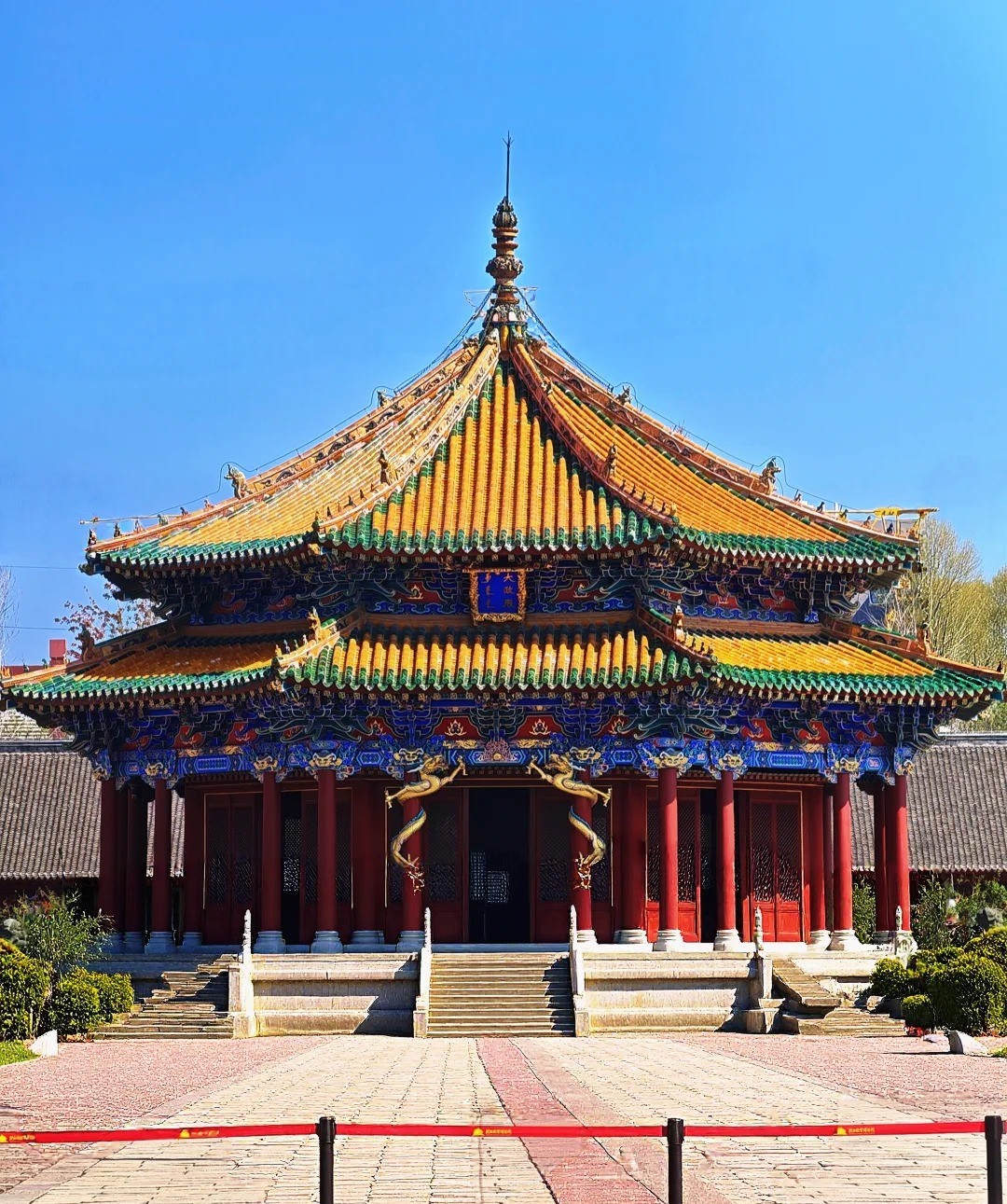
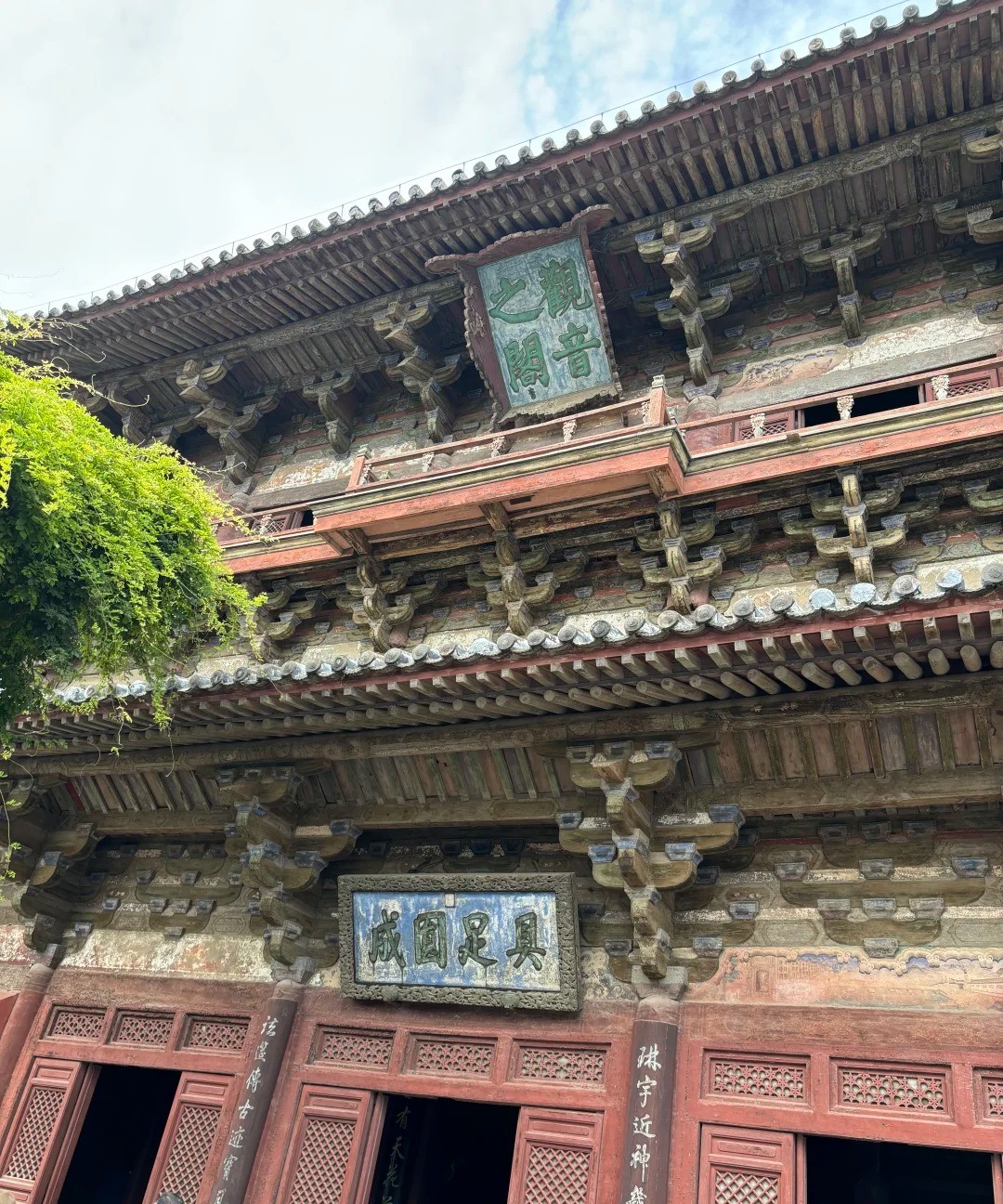
The wooden frame of the Mahavira Hall is an outstanding representative of ancient Chinese architectural technology. Its beam structure uses "fork hands" and "supporting feet," with massive bracket sets (dougong) reaching seven tiers and four jumps, a typical Liao style. The roof's curvature is gentle, with a ratio of only 1:4.5, much lower than the steep roofs of the Ming and Qing dynasties, embodying the majestic beauty of Liao architecture, "like a bird spreading its wings, like a pheasant in flight." Additionally, the column bases are carved from bluestone in a bowl shape with lotus patterns, well preserved.
Paintings and Murals: The Swan Song of Millennial Colors
The beams and bracket sets inside the Mahavira Hall retain a large amount of Liao Dynasty painted decorations, primarily in vermilion, malachite green, and indigo, featuring flying apsaras, scrollwork, dragons, and phoenixes, with colors still vivid. The four walls originally had Yuan Dynasty murals depicting Buddhist stories, but most have peeled off, leaving only fragments. During the 2008 restoration, original Liao paintings were discovered in hidden areas of the beam frame, providing precious material for studying Liao painting.
Painted Clay Buddha Statues: The World's Largest
The seven Liao Dynasty painted clay Buddha statues enshrined in the Mahavira Hall are the most awe-inspiring artistic treasures of Fengguo Temple. Each Buddha sits cross-legged on a sumeru throne, with a total height of about 9.5 meters (including the base), and the easternmost statue reaches 9.8 meters, making it the world's largest group of painted clay Buddha statues. The seven Buddhas are: Vipashyin, Sikhin, Vishvabhu, Krakucchanda, Kanakamuni, Kasyapa, and Shakyamuni. Each Buddha has a plump face, long earlobes, spiral hair and a fleshy protuberance (ushnisha), wearing a monastic robe that covers both shoulders, with smooth drapery lines, typical of Liao Dynasty sculptural style – blending the fullness of Tang with the realism of Song. The thrones are waist-belted sumeru thrones carved with reliefs of muscular guardians, flying apsaras, and lotus flowers, showcasing exquisite craftsmanship.
Flanking the seven Buddhas are fourteen attendant bodhisattvas, about 3 meters tall, in various poses – some with hands clasped, some holding ritual objects, with benevolent expressions. The offering tables, incense burners, and other vessels in front of the Buddhas are mostly relics from the Ming and Qing dynasties. The entire hall integrates the statues, architecture, paintings, and murals into a complete Liao Dynasty Buddhist art sanctuary.