Free consultation with travel experts — custom itineraries, local tips, stress-free planning.
Usually replies within 24 hours
Or leave us a message
5A LevelKarst Caves
Maijishan Grottoes
Maijishan Grottoes
Gansu
0 views
Category:Natural Scenery
Maijishan Grottoes, one of China's four great grottoes, is renowned for its clay sculpture art. The perilous cliffside plank roads and thousand-year-old Buddha statues with varied expressions have earned it the title 'Oriental Sculpture Gallery'.
INTRODUCTION
About This Attraction
Maijishan Grottoes: The Oriental Sculpture Gallery on the Cliff
About 45 kilometers southeast of Tianshui City, Gansu Province, at the western end of the Qinling Mountains, a solitary red peak shaped like a farmer's wheat stack rises abruptly from the ground. This is the famous Maijishan (Wheat Stack Mountain). Although the mountain is only 142 meters high, it is densely covered with honeycomb-like caves and tens of thousands of clay sculptures, earning it the title 'Oriental Sculpture Gallery'. As one of China's four great grottoes, Maijishan Grottoes holds an irreplaceable position among world cultural heritage sites due to its unique clay sculpture art, perilous elevated plank roads, and a historical lineage spanning over a thousand years.
1. Overview: An Artistic Miracle on the Cliff
Maijishan Grottoes is an outstanding example of the fusion of Buddhism's eastward transmission and local culture. Its core value lies in preserving an uninterrupted sequence of clay sculpture art spanning over 1,600 years, from the Later Qin to the Ming and Qing dynasties. The following is a list of basic data:
Geographical location: Maiji District, Tianshui City, Gansu Province, at the northern foot of the western Qinling Mountains, in the core area of the Xiaolongshan National Nature Reserve.
PRACTICAL INFO
Travel Essentials
Opening Hours
Peak season 8:30-17:00, off season 8:30-16:30, closed on Mondays (recommend confirming before your visit)
Ticket Price
Reference price ¥70, half price for students (subject to official announcements)
How to Get There
Maijishan Grottoes is located in Maiji District, Tianshui City, Gansu Province, about 45 km from the city center. You can first take a flight or high-speed train to Tianshui. Tianshui Airport has flights to Beijing, Shanghai, Xi'an, etc.; Tianshui South Station (high-speed rail) has high-speed trains to Xi'an, Lanzhou, etc. From the city, take bus No. 5, 34, or a tourist shuttle directly to the scenic area, about 1 hour. Self-driving: take G30 Lianhuo Expressway to Tianshui West exit and follow the signs. The scenic area has a shuttle bus (one-way 10 yuan) from the mountain gate to the foot of the grottoes, or you can walk about 30 minutes. During the tour, you need to climb the elevated plank roads, so wear comfortable sports shoes.
Excavation period: First carved during the Later Qin period of the Sixteen Kingdoms (384-417 AD), and continuously built over more than ten dynasties including Northern Wei, Western Wei, Northern Zhou, Sui, Tang, Five Dynasties, Song, Yuan, Ming, and Qing.
Existing scale: 221 caves, 10,632 clay sculptures and stone carvings, and over 1,000 square meters of murals.
Core feature: Clay sculpture art (accounting for over 90% of the statues), known as the 'Museum of Chinese Painted Sculpture'.
Protection level: Listed as one of the first batch of National Key Cultural Relics Protection Units in 1961; in 2014, as part of the 'Silk Roads: the Routes Network of Chang'an-Tianshan Corridor', it was inscribed on the World Heritage List.
Cliff characteristics: The mountain is composed of Tertiary red sandstone, which is soft and unsuitable for fine carving, so clay sculpture became the main form of expression.
Plank road wonder: The highest point of the elevated plank roads is about 84 meters above the ground, with a total length of about 1,300 meters, made of a mixed structure of wood and reinforced concrete.
2. Historical Evolution: The Rise and Fall of a Thousand-Year Buddhist Kingdom
1. Initial Period: The Foundation of Later Qin and Northern Wei
The construction of Maijishan Grottoes is closely related to the flourishing of Buddhism during the Sixteen Kingdoms period. The Later Qin ruler Yao Xing was a devout Buddhist, established a translation center in Chang'an, and ordered the excavation of caves and carving of statues at Maijishan. According to the 'Biographies of Eminent Monks', famous monks such as Xuan Gao and Tan Hong once lived here in seclusion for meditation, gathering over three hundred disciples, making Maijishan one of the Buddhist centers in the northwest. After the Northern Wei unified the north, Buddhist art reached its first peak. The earliest existing caves at Maijishan (such as Caves 74 and 78) date from the early Northern Wei, with statue styles clearly influenced by Gandhara and Gupta art, featuring delicate faces and clinging robes, showing transitional characteristics of 'elegant bones and pure appearance'.
2. Heyday: Royal Projects of Western Wei and Northern Zhou
During the Western Wei period (535-556 AD), Empress Yifu, who lost favor with Emperor Wen (Yuan Baoju), became a nun and was eventually buried at Maijishan in a 'carved cave'. Her son, Prince Wudu (Yuan Wu), built the grand Cave 43 (known as 'Jiling') for his mother, a rare case in Chinese grottoes where a royal mausoleum and Buddhist cave are combined. During the Northern Zhou period (557-581 AD), Li Yunxin, the Grand Governor of Qinzhou, built the Seven Buddha Pavilion (Cave 4) for his deceased father, employing thousands of craftsmen over several years, making it the largest and most spectacular cave at Maijishan. The famous writer Yu Xin wrote the 'Inscription for the Buddhist Shrine at Maiji Cliff, Qinzhou Tianshui Commandery' for this, and the stele still exists in the cave, serving as important literature for studying Northern Zhou Buddhist art and literature.
3. Continuation Period: Repairs and Additions from Sui and Tang to Ming and Qing
During the Sui and Tang dynasties, the Maijishan Grottoes continued to be excavated, but on a smaller scale than before. An earthquake in the Tang Dynasty caused a large collapse in the middle of the cliff face, dividing the caves into eastern and western cliffs, destroying many plank roads, and isolating some caves from the world. The Song Dynasty was another peak in Maijishan's clay sculpture art. Craftsmen, when restoring earlier caves, incorporated secularized and realistic styles, such as the donor figures in Cave 165, with plump faces and vivid expressions, completely breaking away from the stylized constraints of religious statues. The Yuan, Ming, and Qing dynasties mainly focused on repairs and repainting. Although the artistic level declined, the incense continued, making Maijishan an important Buddhist pilgrimage site in the northwest.
3. Architectural Layout and Scenic Area Structure
The Maijishan Grottoes are carved according to the mountain's contours, distributed in a 'U' shape, divided into three parts: the eastern cliff, the western cliff, and the central collapse area. The caves are connected by elevated plank roads that stack layer upon layer, with the highest point 84 meters above the ground, known as the 'castle in the air'.
1. Core Cave Groups on the Eastern Cliff
The eastern cliff is centered on Cave 4 (Sanhua Tower / Seven Buddha Pavilion), the largest and most representative area of Maijishan.
Cave 4 (Sanhua Tower): Excavated during the Northern Zhou, it is seven bays wide (about 31 meters), four bays deep (about 8 meters), and about 16 meters high, a cliff-side pavilion imitating wooden architecture. In front of the cave are eight stone columns with bracket sets (dougong) supporting the eaves, making it one of the earliest existing examples of a large seven-bay palace-style Buddhist hall in China. Inside, there are seven Buddhas (each about 3.5 meters high), with attendant bodhisattvas between them, and flying apsaras (celestial beings) suspended above, with graceful postures. The 'thin relief' flying apsaras on the ceiling, combining shallow relief and painting, are a unique art form of Maijishan.
Cave 5 (Niu'er Hall): Excavated during the Sui Dynasty, named after a statue of a 'golden-hoofed, silver-horned calf' in front of the cave. The statues inside are typical of the Sui style, with plump bodhisattvas and ornate clothing, reflecting the transition from the Northern Dynasties to the Tang.
Cave 3 (Thousand Buddha Corridor): Excavated during the Northern Zhou, located at the entrance of the eastern cliff, it is a corridor 36.5 meters long, with a thousand Buddhas (now 297) inside. Although repainted in later periods, the majestic spirit of Northern Zhou sculpture can still be seen.
2. Essential Cave Groups on the Western Cliff
The western cliff caves are mainly small and medium-sized, but preserve a large number of fine clay sculptures from the Northern Wei to Western Wei periods, making it a core area for studying early Buddhist art.
Cave 121 (Northern Wei): The main wall has a Buddha flanked by two bodhisattvas, and the side walls each have a attendant bodhisattva and a disciple. The most astonishing is the 'whispering' group statue outside the niche: a bodhisattva and a disciple stand close together, their heads slightly turned toward each other as if whispering, with extremely vivid expressions, completely breaking the solemnity of Buddhist statues and full of human warmth. This group is about 1.2 meters high and is a representative work of the secularization of Maijishan clay sculpture.
Cave 123 (Western Wei): The statues in this cave are famous for the 'boy and girl'. The boy wears a small crown and has a delicate face; the girl has double buns and an innocent expression. They are not Buddhist deities but appear as donor figures, reflecting the closeness of Western Wei Buddhist art to real life. The statues are about 1.1 meters high, with smooth clothing lines and relatively well-preserved colors.
Cave 133 (Ten Thousand Buddha Cave): Excavated during the Northern Wei, it is one of the largest caves in Maijishan (about 5.6 meters high and 11 meters deep). There are over a thousand statues inside, hence the name 'Ten Thousand Buddha Cave'. Among the most precious are 18 steles with carvings, especially the No. 10 stele (Buddha Life Story Stele), which depicts the complete story of Sakyamuni from birth to nirvana in relief, with dense composition and numerous figures, a masterpiece of Northern Wei stone carving. The cave also houses a Song Dynasty wooden statue of Guanyin, about 1.8 meters high, finely carved, a rare wooden sculpture treasure.
Cave 135 (Paradise Cave): Excavated during the Western Wei, located at the highest point of the western cliff, about 80 meters above the ground. The statues inside are large, with a Buddha and two bodhisattvas on the main wall, the Buddha about 3.2 meters high, imposing. On the ceiling is a Ming Dynasty mural of the 'Western Paradise', though faded, the original brilliant colors can still be discerned.
3. Plank Road System
The plank roads of Maijishan are an important part of its architectural marvel. Ancient craftsmen chiseled holes in the vertical cliff, inserted beams, and laid wooden planks, forming a 'flying bridge' passage system. The existing plank roads have a total length of about 1,300 meters, with the highest point 84 meters above the ground and a width of only 0.8-1.2 meters. From 1977 to 1984, the state allocated funds for a comprehensive reinforcement and renovation, replacing some decayed wooden beams with reinforced concrete structures, but the appearance retains the ancient style, ensuring safety while preserving the historical appearance. When climbing the plank roads, you can closely observe the beam holes on the cliff, which are square or round, about 30-50 centimeters deep and spaced about 1.5 meters apart, direct evidence of ancient craftsmen's wisdom.
4. Architectural Features and Natural Features
1. Clay Sculpture Art: The Peak of Oriental Painted Sculpture
The most prominent architectural and artistic feature of Maijishan Grottoes is its clay sculpture system. Because the mountain is made of sandstone, which is soft and unsuitable for carving, craftsmen adopted the 'wooden skeleton clay sculpture' technique: first chiseling holes in the cliff and inserting stakes, binding bamboo and wood frames, then layering local loess mixed with fibers such as hemp, wheat straw, and cotton, shaping layer by layer, and finally applying color. This technique gives the statues strong plasticity, allowing for delicate skin texture, flowing robes, and subtle facial expressions.
Complete chronological sequence: From the 'elegant bones and pure appearance' of the Northern Wei to the 'gentle and reserved' of the Western Wei, from the 'vigorous and strong' of the Northern Zhou to the 'plump and gorgeous' of the Sui and Tang, and then to the 'realistic and secular' of the Song, Maijishan fully presents the 1,600-year evolution of Chinese clay sculpture art.
Thin relief flying apsaras: The 'thin relief' flying apsaras in Cave 4 are a unique art form of Maijishan. The exposed parts of the apsaras, such as faces, arms, and feet, are sculpted in very shallow relief (only 2-5 millimeters thick), while the ribbons, streamers, and clouds are painted. This combination of sculpture and painting gives the apsaras a three-dimensional feel while maintaining the lightness and elegance of murals, a true masterpiece.
Secularization tendency: A major feature of Maijishan statues is the perfect fusion of 'divinity' and 'humanity'. The 'whispering' group in Cave 121, the boy and girl in Cave 123, and the Song Dynasty donors in Cave 165 all exude a strong sense of life, as if they are not deities but ordinary people around us. This artistic orientation gives Maijishan clay sculpture an eternal charm that transcends religion.
2. Cliff Pavilion Architecture: A 'Stone Specimen' of Early Chinese Wooden Architecture
Maijishan has several cliff pavilions imitating wooden structures, such as Cave 4 (Seven Buddha Pavilion), Cave 5 (Niu'er Hall), Caves 28 and 30. These pavilions have columns, beams, bracket sets, and eaves carved on the cliff, providing valuable physical materials for studying Chinese architectural forms from the Northern Dynasties to the Sui and Tang. Taking Cave 4 as an example, the eight stone columns in the front corridor are octagonal, with one-step three-bracket sets on the column tops, and intercolumnar brackets in the shape of a herringbone, features that exactly match wooden architecture from the Northern Wei to Northern Zhou, providing a reliable basis for reconstructing contemporary ground buildings.
3. Natural Landscape: Danxia Landform and Forest Wonderland
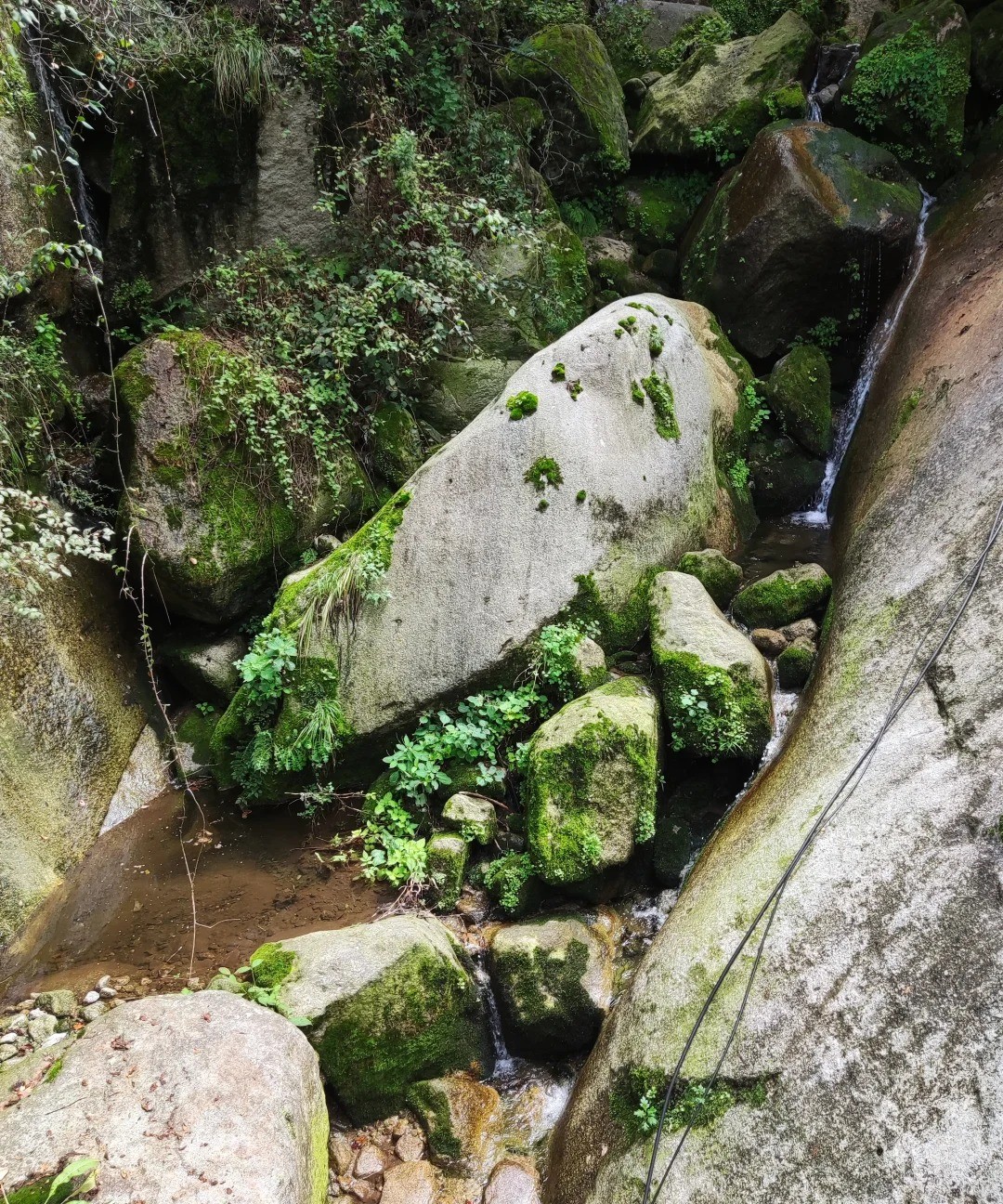
The area where Maijishan is located belongs to the Xiaolongshan forest region in the western Qinling Mountains, with a forest coverage rate of over 90%, a typical composite landscape of Danxia landform and forest ecology. The mountain is red, striking against the green trees. The scenic area has dense vegetation, including rare species such as lacebark pine, yew, and ginkgo, with extremely high negative oxygen ion content, known as the 'Jiangnan of Longshang'. Every autumn, the forests are dyed in layers of color, and the red cliffs and colorful forests complement each other, creating a magnificent scene. This unique combination of 'grottoes + forest' is unparalleled among China's four great grottoes.
5. Cultural Significance: A Meeting Point of Civilizations on the Silk Road
The value of Maijishan Grottoes far exceeds religious art itself. It is an important cultural node on the southern route of the eastern section of the Silk Road, witnessing the grand historical process of Buddhism's eastward transmission, ethnic integration, and Sino-foreign cultural exchange.
A living fossil of the Sinicization of Buddhism: The evolution of Maijishan statue styles clearly reflects the process of Buddhist art, after being introduced from India and Central Asia, gradually merging with Central Plains aesthetics, Confucian ethics, and Taoist thought. From the 'Indian appearance' of the early Northern Wei to the 'Sinicization' of the Western Wei, and then to the 'secularization' of the Song, each step bears the mark of Chinese civilization's absorption and re-creation of foreign culture.
The wisdom of ancient craftsmen: In ancient times without modern machinery, how craftsmen excavated caves and erected plank roads on an 84-meter-high cliff remains a mystery in architectural history. The distribution of beam holes, the drainage system of the caves, and the moisture-proof technology of the clay sculptures all reflect ancient craftsmen's profound understanding of mechanics, materials science, and environmental science.
A carrier of multicultural fusion: Maijishan Grottoes not only contain Buddhist statues but also traces of Taoism, Confucianism, and folk beliefs. The 'Seven Buddhas' and the name 'Seven Buddha Pavilion' in Cave 4 echo the political concept of 'the emperor is Buddha' during the Northern Zhou; Cave 43's 'Jiling' reflects the combination of Buddhism and royal burial systems. This coexistence of multiple cultures is a unique feature distinguishing Maijishan from other grottoes.
The universal value of world heritage: In 2014, Maijishan Grottoes, as one of the 33 heritage sites of the 'Silk Roads: the Routes Network of Chang'an-Tianshan Corridor', was inscribed on the World Heritage List. UNESCO's evaluation noted that Maijishan Grottoes, 'with its outstanding clay sculpture art, demonstrates the unique development trajectory of Buddhist art in northwest China and is an outstanding example of cultural exchange along the Silk Road'.
6. Visitor Information
To facilitate visitors' in-depth experience of the charm of Maijishan Grottoes, the following is practical visitor information:
Opening hours: Peak season (April 1 - October 31) 8:30-17:30; off-season (November 1 - March 31) 9:00-17:00. It is recommended to arrive early in the morning to avoid peak crowds.
Ticket information: Peak season full-price ticket 80 yuan/person, off-season 40 yuan/person. The scenic area shuttle bus costs 15 yuan/person round trip (from the mountain gate to the foot of the grottoes, walking takes about 30 minutes). Special caves (such as Caves 4, 133, 135, etc.) require separate tickets, each costing 100-200 yuan, and need to be booked in advance.
Transportation:
From Tianshui city center (Qinzhou District), take bus No. 5 or 34 directly to the Maijishan Scenic Area, about 1 hour.
From Tianshui South Station (high-speed rail station), there is a tourist shuttle bus, about 40 minutes.
Self-driving visitors can navigate to 'Maijishan Grottoes Parking Lot', and the scenic area has a large parking lot.
In-depth route (about 4-5 hours): Based on the essential route, add visits to special caves (need to book in advance), and visit the Maijishan Grottoes Art Exhibition Hall in Ruiying Temple to learn about the history and conservation of the grottoes.
Notes:
Flash photography is prohibited inside the caves to avoid damaging the painted sculptures and murals.
The plank roads are steep, and some sections only allow one person to pass. It is recommended to wear comfortable, non-slip shoes. Visitors with high blood pressure or heart disease should be cautious.
The scenic area has dense vegetation, and there are many mosquitoes in summer. It is recommended to bring insect repellent; in winter, the plank roads may be icy, so be careful to prevent slipping.
Do not touch the statues and murals. Protecting cultural relics is everyone's responsibility.
Nearby attractions: Around the Maijishan Scenic Area, there are also attractions such as Xianren Cliff, Shimen Mountain, and Jingtu Temple, which can be visited together. In Tianshui city, there are Fuxi Temple, Nanguo Temple, Yuquan Temple, and other famous sites. It is recommended to arrange a 2-3 day itinerary.
Maijishan Grottoes, this Oriental Sculpture Gallery that has stood on the cliff for 1,600 years, attracts countless pilgrims and travelers with its unparalleled clay sculpture art, perilous and unique architectural landscape, and profound cultural connotations. As you slowly climb along the elevated plank roads and gaze into the eyes of those smiles that have crossed a thousand years, you will understand that this is not just a journey, but a deep dialogue with history.
Travel Tips
The best time to visit is spring and autumn (April-May, September-October) when the weather is pleasant. In summer, it rains a lot, so bring rain gear; in winter, it is cold, so keep warm. Photography is prohibited inside the caves; please comply. The plank roads are steep; those with acrophobia should be cautious. It is recommended to reserve 2-3 hours for the visit. You can also visit nearby attractions such as Xianren Cliff and Shimen. There are few dining options in the scenic area, so bring your own food and water. Protect cultural relics; do not touch the murals and statues.