Free consultation with travel experts — custom itineraries, local tips, stress-free planning.
Usually replies within 24 hours
Or leave us a message
5A LevelCultural Heritage
Dujiangyan Scenic Area
Dujiangyan Irrigation System
Sichuan
0 views
Category:Cultural Heritage
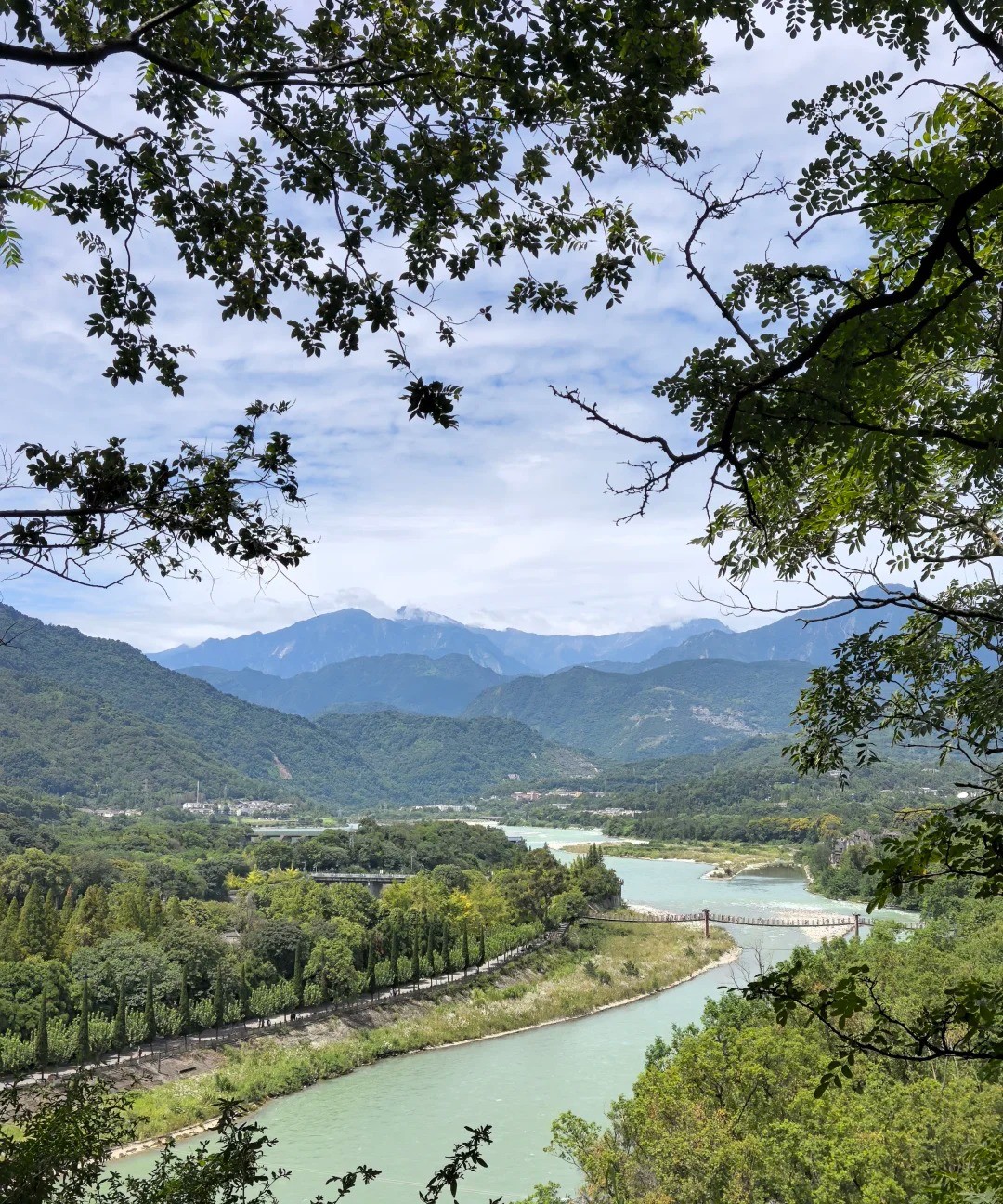
Dujiangyan, a millennium-old water conservancy marvel, is renowned for its dam-free water diversion and gravity-fed irrigation. The Fish Mouth divides the river, the Flying Sand Weir discharges floods, and the Bottle Neck controls flow, cleverly harnessing nature to create the Land of Abundance. Strolling through the site, you can appreciate the wisdom of the ancients and the harmony between humans and nature.
INTRODUCTION
About This Attraction
Dujiangyan: A Living Textbook of World Irrigation Heritage
On the main stream of the Min River at the western edge of the Sichuan Basin lies a water conservancy project that has remained vibrant for over 2,200 years—Dujiangyan. It is not only the oldest and only surviving large-scale water conservancy project in the world characterized by dam-free water diversion, but also a perfect example of the combination of ancient Chinese labor wisdom and natural philosophy. As a key national cultural relic protection unit, Dujiangyan still irrigates millions of acres of fertile farmland in the Chengdu Plain and is hailed as the 'Source of the Land of Abundance.'
I. Project Overview: The Millennium Miracle Behind the Numbers
Dujiangyan is not an isolated structure but a vast systematic project composed of the headwork hub, various levels of irrigation channels, various types of engineering structures, and large, medium, and small reservoirs and ponds. Its core headwork hub is located in the west of Dujiangyan City, Sichuan Province, and mainly consists of three major structures: the Fish Mouth Dividing Dike, the Flying Sand Weir Spillway, and the Bottle Neck Intake.
Geographical Location: West of Dujiangyan City, Chengdu, Sichuan Province, at the outlet of the Min River from the mountains.
PRACTICAL INFO
Travel Essentials
Opening Hours
Dujiangyan Scenic Area is open year-round. Summer (Apr 1 - Oct 31): 08:00-18:00; Winter (Nov 1 - Mar 31): 08:00-17:30. Visitors are advised to allow at least 3-4 hours for the tour.
Ticket Price
Full-price ticket is 80 yuan/person (subject to the latest announcement on the official website). Students, seniors, and other special groups may enjoy half-price or free admission. It is recommended to book tickets in advance through official channels.
How to Get There
Self-driving: From Chengdu, take the Chengguan Expressway to Dujiangyan City, about 1 hour by car. The scenic area has parking lots. High-speed rail: Take the intercity train from Chengdu Xipu Station to Dujiangyan Station, about 30 minutes. After exiting the station, you can transfer to a bus or taxi to the scenic area. Bus: There are several tourist shuttle buses from Chengdu directly to Dujiangyan Scenic Area, such as from Chadianzi Bus Station and Xin'nanmen Station.
Construction Period: Late Warring States period (approximately 256–251 BC), during the reign of King Zhaoxiang of Qin, under the supervision of Li Bing and his son, the governor of Shu.
Core Function: Achieves automatic water diversion, sediment discharge, and flow control through 'dam-free water diversion.'
Irrigation Area: Historically irrigated over 3 million mu (about 200,000 hectares), now expanded to over 10 million mu (about 667,000 hectares).
World Heritage: Listed as a UNESCO World Cultural Heritage site in 2000; listed as a World Irrigation Heritage site in 2018.
Key Dimensions: The Fish Mouth Dividing Dike is about 80 meters long and up to 40 meters wide; the Flying Sand Weir is about 240 meters wide at the top and about 2.15 meters high; the Bottle Neck is only about 20 meters wide on average, with the narrowest point at about 14.3 meters.
II. Historical Evolution: From Ancient Shu Water Management to Modern Inheritance
(I) Water Management Attempts in the Ancient Shu Period
Before the construction of Dujiangyan, the area at the outlet of the Min River frequently suffered from floods. According to the 'Book of Documents: Tribute of Yu,' Yu the Great once managed water in the Min River basin. During the ancient Shu kingdom, Bieling (also known as Kaiming) also 'cut through Yulei Mountain to eliminate water damage,' providing preliminary geographical knowledge and engineering experience for the later Dujiangyan project.
(II) The Great Feat of Li Bing and His Son
In 256 BC, King Zhaoxiang of Qin appointed Li Bing as the governor of Shu. Li Bing summarized the water management experience of his predecessors and led the people to 'cut through the Lijian (separate mound) at the outlet of the Min River to avoid the harm of the torrent, and dig two rivers through Chengdu.' He cleverly utilized the natural terrain of Yulei Mountain to cut the Bottle Neck, dividing the Min River into two; built the Fish Mouth Dividing Dike to achieve 'four-six water division'; and set up the Flying Sand Weir to discharge sediment and floods using the principle of curved channel circulation. This series of projects laid the foundation for Dujiangyan's water management philosophy of 'taking advantage of the situation and adapting to the times.'
(III) Maintenance and Expansion Through the Dynasties
Dujiangyan was not built overnight but was continuously improved by successive dynasties. In the Han Dynasty, Wen Weng 'cut through the Jianjiang River mouth, irrigating 1,700 qing of fertile fields,' expanding the irrigation area. During the Three Kingdoms period, Zhuge Liang set up a 'Yan Guan' (weir official) at Dujiangyan and sent troops to protect the weir, marking the first time a dedicated management official was established in history. In the Tang Dynasty, Gao Jian; in the Song Dynasty, Zhao Buyou; in the Yuan Dynasty, Ji Dangpu; and in the Ming Dynasty, Shi Qianxiang all carried out large-scale repairs and renovations. Since the Qing Dynasty, a 'yearly repair' system has been formed, with routine inspections and repairs conducted during the winter dry season each year, a tradition that continues to this day.
(IV) Modern Protection and World Heritage Application
Since the 20th century, while preserving the core functions of the ancient weir, Dujiangyan has gradually introduced modern water conservancy technology for reinforcement and information management. In 1974, the Waijiang Gate was completed, enabling precise regulation of the Min River flow. In 2000, Dujiangyan was listed as a World Cultural Heritage site as part of the 'Mount Qingcheng and the Dujiangyan Irrigation System.' Today, it is not only a water conservancy project but also a comprehensive heritage site integrating ecology, tourism, and culture.
III. Architectural Layout: The Exquisite Coordination of the Three Major Structures
The layout of the Dujiangyan headwork hub fully utilizes natural conditions such as river bends and riverbed elevation differences. The three major structures each have their own functions and coordinate with each other to form an organic whole.
(I) Fish Mouth Dividing Dike—The Wisdom of Four-Six Water Division
The Fish Mouth is a dividing dike built in the middle of the Min River, named for its fish-mouth shape. It is about 80 meters long and up to 40 meters wide, dividing the Min River into the inner river (for irrigation) and the outer river (for flood discharge). Its subtlety lies in the fact that during the dry season, about 60% of the water flows into the inner river and 40% into the outer river; during the flood season, this ratio is exactly reversed, with about 60% of the floodwater flowing into the outer river and 40% into the inner river. This automatic 'four-six water division' function is achieved entirely by the position, shape, and riverbed morphology of the Fish Mouth, without any manual control equipment.
(II) Flying Sand Weir Spillway—A Masterpiece of Sediment Discharge and Flood Release
The Flying Sand Weir is located between the Fish Mouth and the Bottle Neck. It is a spillway about 240 meters long and about 2.15 meters high. Its core functions are twofold: First, secondary sediment discharge. Using the centrifugal force generated by curved channel circulation, about 80% of the sediment in the inner river is thrown into the outer river with the current, and the remaining sediment is discharged through the 'flying sand' effect of the Flying Sand Weir. According to actual measurements, the Flying Sand Weir can throw pebbles with a diameter of less than 20 centimeters out of the weir. Second, automatic flood discharge. When the water volume of the inner river exceeds the capacity of the Bottle Neck, the excess water overflows the Flying Sand Weir into the outer river, ensuring the safety of the Chengdu Plain. The design height of the Flying Sand Weir is precisely calculated to keep the water level of the inner river within a safe range.
(III) Bottle Neck Intake—The Man-Made Throat
The Bottle Neck is a man-made intake cut into the body of Yulei Mountain by Li Bing and his followers, named for its bottle-neck shape. It has an average width of only about 20 meters, with the narrowest point at only 14.3 meters, and a length of about 36 meters. This narrow passage serves a 'flow-limiting' function: no matter how much water comes from the Min River, the Bottle Neck can only pass a flow of about 700 cubic meters per second, ensuring that the water entering the Chengdu Plain is not excessive. At the same time, the narrow passage of the Bottle Neck creates a 'backwater' effect, raising the upstream water level, which is beneficial for sediment discharge and flood release at the Flying Sand Weir. The isolated hill on the right side of the Bottle Neck, formed after the cutting, is called 'Lijian' (separate mound) and is now an important landscape within the scenic area.
(IV) Auxiliary Structures and Landscapes
Anlan Suspension Bridge: Spanning the inner and outer rivers, originally a bamboo rope bridge, now a steel cable bridge, with a total length of about 261 meters. It is a representative of ancient bridge technology in the southwestern region.
Erwang Temple: Located at the foot of Yulei Mountain, it is a temple built to commemorate Li Bing and his son. It was first built during the Northern and Southern Dynasties, and the existing buildings are mostly rebuilt in the Qing Dynasty.
Fulong Temple: Built on the Lijian (separate mound), it is said that Li Bing subdued a dragon here. The existing buildings are from the Qing Dynasty, and it houses precious cultural relics such as the stone statue of Li Bing.
Lijian Park: Located downstream of the Bottle Neck, the park is full of ancient trees, including the thousand-year-old 'Zhang Song Ginkgo,' and is a good place for visitors to rest.
IV. Architectural Features: The Perfect Fusion of Natural Philosophy and Engineering Science
(I) The Unique Paradigm of 'Dam-Free Water Diversion'
Unlike most ancient water conservancy projects in the world, Dujiangyan does not have a dam across the river. It uses the clever coordination of the Fish Mouth, Flying Sand Weir, and Bottle Neck to achieve water diversion, sediment discharge, and flow control. This 'dam-free water diversion' approach minimizes damage to the natural river ecology and embodies the ancient Chinese philosophy of 'following nature's way.'
(II) The Water Management Philosophy of 'Taking Advantage of the Situation'
The construction of Dujiangyan followed the principle of 'guiding according to the situation and adapting to local conditions.' Li Bing did not choose to fight the flood head-on but used the topography of the Min River outlet to divide the river into two, allowing the flood to divert itself. This concept of 'dredging' rather than 'blocking' is in line with the ancient Yu the Great's water management thought.
(III) Precise Engineering Calculations
Every dimension of Dujiangyan was precisely calculated. The length, height, and position of the Fish Mouth determine the water division ratio; the height of the Flying Sand Weir determines the water level at which flood discharge begins; the width of the Bottle Neck determines the maximum flow into the irrigation area. These parameters were determined over 2,000 years ago with only naked-eye observation and accumulated experience, which is astonishing. Even more amazing is that these dimensions are still applicable today, indicating that the ancients had achieved a very high level of understanding of hydrological laws.
(IV) The Yearly Repair System and the 'Three-Character Classic'
The long-term operation of Dujiangyan relies on a scientific maintenance system. Since the Song Dynasty, a 'yearly repair' system has been formed, with routine inspections and repairs conducted during the winter dry season each year. In the Ming Dynasty, the six-character formula 'deeply dredge the shoal, build the weir low' was summarized. In the Qing Dynasty, it developed into eight-character maxims such as 'cut corners at bends, straighten the main flow.' These experiences were compiled into the 'Three-Character Classic of Water Management,' which became the operation manual for weir workers of all generations.
V. Cultural Significance: The Cornerstone of the Land of Abundance and a Symbol of National Wisdom
(I) Creating the 'Land of Abundance'
The completion of Dujiangyan transformed the Chengdu Plain from a waterlogged area 'where water and drought follow the people, and famine is unknown' into a vast fertile 'Land of Abundance.' It irrigates millions of acres of fertile farmland in the Chengdu Plain, making Sichuan an important grain-producing region in China. It can be said that without Dujiangyan, there would be no prosperity and richness of the Chengdu Plain.
(II) A Miracle in the History of World Water Conservancy
Dujiangyan is the only water conservancy project in the world that has been in use for over 2,000 years and still plays a huge role today. Compared with the Nile irrigation system in ancient Egypt, the Hammurabi Canal in ancient Babylon, and the aqueducts of ancient Rome, Dujiangyan is the only ancient large-scale water conservancy project that still operates at its original site with its original function. It has been evaluated by UNESCO as 'the oldest, only surviving, and dam-free water diversion project in the world.'
(III) The Crystallization of Ancient Science, Technology, and Philosophy
Dujiangyan embodies the ancient Chinese philosophical thought of 'harmony between heaven and man.' It does not conquer nature but follows nature; it does not destroy ecology but utilizes ecology. This concept of 'harmonious coexistence between humans and nature' still has important practical significance today. At the same time, the construction of Dujiangyan also demonstrates the outstanding achievements of ancient China in water conservancy engineering, hydrological observation, and material mechanics.
(IV) The Living Inheritance of Intangible Cultural Heritage
Dujiangyan is not only a tangible heritage but also a living cultural inheritance. Every year during the Qingming Festival, a grand 'Water Release Festival' is held at Dujiangyan, recreating the scene of opening the weir to release water after the yearly repair. This tradition has continued for thousands of years and has been listed as a national intangible cultural heritage. In addition, the 'yearly repair' system and the 'Three-Character Classic' water management formula are all living intangible cultural heritage.
VI. Visitor Information: A Practical Guide
(I) Opening Hours
Dujiangyan Scenic Area is open all year round. Summer (April 1–October 31) opening hours are 08:00–18:00; winter (November 1–March 31) are 08:00–17:30. Visitors are advised to reserve at least 3–4 hours for the tour.
(II) Ticket Information
The full-price ticket is 80 yuan per person (subject to the latest announcement on the official website). Students, seniors, and other special groups may enjoy half-price or free admission. It is recommended to book tickets in advance through official channels.
(III) Recommended Tour Routes
Classic Route: Lijian Park → Fulong Temple → Bottle Neck → Flying Sand Weir → Fish Mouth → Anlan Suspension Bridge → Erwang Temple → Songmao Ancient Road → Yulei Pass → City God Temple → South Bridge. The whole journey takes about 3–4 hours.
Essential Route: Lijian Park → Fulong Temple → Bottle Neck → Flying Sand Weir → Fish Mouth → Anlan Suspension Bridge → Erwang Temple. The whole journey takes about 2–3 hours.
(IV) Transportation Guide
Self-driving: From Chengdu, take the Chengguan Expressway to Dujiangyan City, about 1 hour by car. The scenic area has parking lots.
High-speed rail: Take the intercity train from Chengdu Xipu Station to Dujiangyan Station, about 30 minutes. After exiting the station, you can transfer to a bus or taxi to the scenic area.
Bus: There are several tourist shuttle buses from Chengdu directly to Dujiangyan Scenic Area, such as from Chadianzi Bus Station and Xin'nanmen Station.
(V) Best Time to Visit
Dujiangyan is suitable for visiting all year round. Spring (March–May) has pleasant temperatures and you can watch the Water Release Festival; summer (June–August) has abundant water, allowing you to feel the majestic momentum of the Min River; autumn (September–November) is clear and crisp, suitable for mountain climbing and sightseeing; winter (December–February) has fewer tourists, allowing you to quietly appreciate the vicissitudes and tranquility of the ancient weir.
(VI) Notes
Some sections of the scenic area are steep, so it is recommended to wear comfortable flat shoes.
In summer, pay attention to heatstroke prevention; in winter, keep warm.
Please do not litter in the scenic area; protecting the world heritage is everyone's responsibility.
It is recommended to hire a professional guide or rent an audio guide device to gain a deeper understanding of the history and culture of Dujiangyan.
Dujiangyan, a water conservancy project that has traversed over 2,000 years of time, still delivers the water of life to the Chengdu Plain today. It is not only the crystallization of the wisdom of ancient working people but also a vivid embodiment of the Chinese nation's philosophy of 'harmony between heaven and man.' When you stand on the Fish Mouth and watch the Min River water being cleverly divided into two, you will sincerely exclaim: this is not just a project, but a living epic.
Travel Tips
Some sections of the scenic area are steep, so it is recommended to wear comfortable flat shoes. In summer, pay attention to heatstroke prevention; in winter, keep warm. Please do not litter in the scenic area; protecting the world heritage is everyone's responsibility. It is recommended to hire a professional guide or rent an audio guide device to gain a deeper understanding of the history and culture of Dujiangyan. Dujiangyan, a water conservancy project that has traversed over 2,000 years of time, still delivers the water of life to the Chengdu Plain today. It is not only the crystallization of the wisdom of ancient working people but also a vivid embodiment of the Chinese nation's philosophy of 'harmony between heaven and man.' When you stand on the Fish Mouth and watch the Min River water being cleverly divided into two, you will sincerely exclaim: this is not just a project, but a living epic.